A part of the Atelier Joaquín Lorda sample to the public, for the first time, drawing and construction tools from the XVII to XX centuries.
The sample can be visited at entrance hall of the Main Library from May to September.

The exhibition "Instruments for creativity. Drawing and construction utensils from the 17th to the 20th centuries" presents a tour of a selection of drawing and construction utensils from the 17th to the 20th centuries from the collection of Joaquín Lorda (1955-2016) that he himself called Atelier, and various works from the Archive of the Service of Library Services of the University of Navarra.
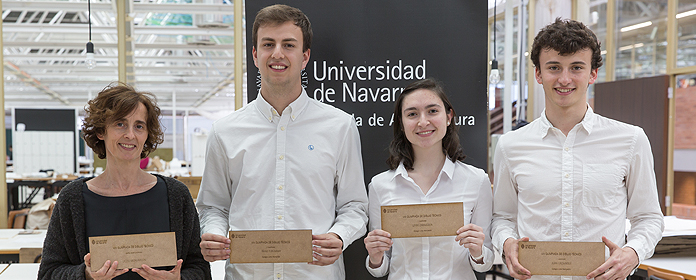
Captained by Professor María Angélica Martínez Rodríguez, this is the first time that a part of the Joaquín Lorda Atelier Collection is exhibited outside the School of Architecture María Angélica Martínez Rodríguez, this is the first time that part of the Joaquín Lorda Atelier Collection is exhibited outside the School of Architecture of the University of Navarra. The Atelier consists of a collection of valuable objects and documents, illustrative of the teaching and internship of architecture in the 17th, 18th and 19th centuries, as well as in the first quarter of the 20th century. It refers to the work of the architect in Europe, in all its phases, methodically gathered by Professor Joaquín Lorda during several years of research. A research that is being continued by the group ART T&H to which he himself belonged.
The compilation of this sample focuses specifically on: drawing pencils, stilettos, pencil holders, dry-point and tracing compasses, squares and rulers, curvigraphs, measuring instruments (rulers, protractors, proportion compasses) and copying, reduction or enlargement instruments (pantograph, reduction compass). Also included are some construction and carpentry tools that illustrate ancient techniques.
At the same time, a selection of books of similar nature and subject matter has been made from Archive of the University of Navarra: Treatises on Architecture and other Arts, books on Iconography or allegorical representations, books on Drawing and Construction Instruments or manuals, which constitute the adequate period representation and description of such utensils, as well as some pieces and cases from the sales catalogs of the great manufacturers of drawing instruments in Europe published since 1860 -Haff, Riefler, Kern, or Stanley- as sample of the perfection, precision and beauty of these instruments for creativity.
Drawing as a toolThroughout history, artists, architects and designers of different disciplines have used drawings to create, transform, elaborate and detail ideas and concepts; these are complex configurations developed from the imagination that require drawing as a means prior to their materialization or construction. From agreement to the idea communicated to the client or client of the work, through these drawings, the builder had his own tools that allowed him to work the material and give it shape and consistency.
Today we have extraordinary computer tools that allow us to perform the same task of the past: to capture the ideas of their creators; the rules of geometry remain the same, but not architecture, design and its conventions of representation, which are changing and consequently the tools used for drawing or construction evolve and are designed to meet the demands of new needs agreement . Thus, for example, the double drawing pen is manufactured to easily trace the route of the railroad tracks; or the volutor or curve tracer is conceived in the 19th century to facilitate the drawing of the volute of the Ionic order, so popular in the revivals or historicisms of that century.