
Entries with Categories Global Affairs .
Chinese companies develop four mining projects on the island; Trump offered to buy it out
The melting of the Arctic ice opens up new sea routes and makes certain territories, such as Iceland and especially Greenland, whose enormous size also conceals vast natural resources, particularly valuable. Chinese mining companies have been present in the 'Green Land' since 2008; the Danish government has sought to curb Beijing's increasing influence by directly taking over the construction of three airports instead of having them placed under management . Copenhagen veiled fears that China will encourage Greenlandic independence, while the White House has offered to buy the island, as it has tried to do at other times in history.
![Population of Oqaatsut, on the east coast of Greenland [Pixabay].](/documents/10174/16849987/groenlandia-blog.jpg "Population of Oqaatsut, on the east coast of Greenland [Pixabay].")
▲ Population of Oqaatsut, on the east coast of Greenland [Pixabay].
article / Jesús Rizo Ortiz
Greenland is the largest island in the world, with more than 2 million square kilometres, while its inhabitants are less than 60,000, making it the least densely populated territory in the world. This reality, together with the natural wealth still to be exploited and the geographical location, give this Green Earth great geostrategic importance. Moreover, global warming and the struggle for the new world order between the US, China and Russia place this territory dependent on Denmark at the centre of geopolitical dynamics for the first time in its history.
Due to the melting of the Arctic Ocean, new communication routes are emerging between the American, European and Asian continents. These routes, although they will remain subject to limitations in the future, are becoming more and more accessible for longer periods of the year. Greenland is a strategic control and supply point for both the Northern route (following the northern contour of Russia) and the Northwest route (through the northern Canadian islands), not only for goods and commercial ships, but also in terms of security, as the melting of the ocean ice significantly shortens the distances between the main international players.
Greenland's geographical position is core topic, but also what lies beneath the ice that covers 77% of its surface. It is estimated that 13% of the world's oil reserves are found in Greenland, as well as 25% of the so-called rare earths (neodymium, dysprosium, yttrium...), which are essential in the production of new technologies.
Interest from China and the US
The prospects opened up by the increased possibility of navigation through the Arctic have led Arctic powers to develop their strategies. But also China, interested in a Polar Silk Road, has sought ways to be present in the Arctic circle, and has found a gateway in Greenland.
China's foreign policy is largely focused on implementing projects in areas where its financial power is needed, and it is doing so in places where it is needed, such as Africa and Latin America, development . This subject action is also being carried out in Greenland, where Chinese companies have been present since 2008. The main Danish political parties view this connection with Beijing with reticence, but the reality is that many of the Greenlandic population, more than 80 per cent of whom are of Inuit origin, value positively the possibilities for local development investment opened up by Chinese investment. This different perspective was particularly evident when in 2018 the Greenland government promoted three international airports (expansion of the airport in the capital, Nuuk, and construction in the tourist sites of Ilulimat and Qaqortog), which together represented the largest public works contract in its history. Although an offer from the state-owned construction company CCCC was quickly received from China, Copenhagen finally decided to provide Danish public funds and to participate in the ownership of the airports, given the misgivings about the Chinese initiative.
China is in any case present in four previous mining-related projects run by both state-owned and private companies, all of them following the geopolitical purposes of the Chinese government, whose Ministry of Information Technology and Industry has expressed its interest in Greenlandic activity. These four projects are the Kvanefjeld project for rare earth mining, mainly financed by Shenghe Resources; the Iusa project for iron ore mining, fully financed by General Nice; the Wegener Halvø project for copper mining, supported by Jiangxi Zhongrun after a agreement with Nordic Mining in 2008; and finally, the so-called Citronen Base Metal project, at position of China Nonferrus Metal Industry's Foreign Engineering and Construction (NFC).
The United States is not lagging behind in its interest in Greenland. As early as the 1860s, US President Andrew Johnson highlighted Greenland's importance in terms of resources and strategic position. Almost a century later, in 1946, Harry Truman offered the Danish government to buy Greenland for $100 million in gold. Although Denmark rejected the offer, it did agree to the establishment of a US air base at Thule in 1951. This is the northernmost military base in the world, which was core topic during the Cold War and is still in operation today. This base gives the US an advantage not only in the face of the commercial opening of new sea crossings, but also in the face of a hypothetical Sino-Russian coalition seeking to dominate the Northern route. In other words, given Greenland's dual importance (natural resources and security), it is understandable that someone as unconventional as Donald Trump has once again suggested the possibility of buying the huge island, something that Copenhagen has declined to do.
![Projected pathways through the Arctic; the top row corresponds to the melting that could occur with low emissions, the bottom row in the case of high emissions [Arctic Council].](/documents/10174/16849987/groenlandia-mapa.jpg "Projected pathways through the Arctic; the top row corresponds to the melting that could occur with low emissions, the bottom row in the case of high emissions [Arctic Council].")
Projected pathways through the Arctic; the top row corresponds to the melting that could occur with low emissions, the bottom row in the case of high emissions [Arctic Council].
At the centre of a 'Great Game
Aside from the current unfeasibility of such an operation subject without taking into account, among other things, the will of the population, it is true that a Great Game is taking place between the main international players to count Greenland among their geostrategic cards.
1) The US already has a military presence in Greenland, as well as good relations with NATO members Denmark and Iceland, so control of the Denmark Strait is guaranteed, as well as the space between Greenland, Iceland and the UK (known as the GIUK Gap), which connects the Arctic with the North Atlantic. However, Washington will have to change its strategy if it wants to take control of Greenland, starting by improving its relations with the Danish government and funding projects on the island.
2) Although not prominent in relation to Greenland, Russia enjoys pre-eminence in the entire Arctic region. It is by far the country with the largest military presence in the area, having reused some of the Soviet installations. It is the hegemonic power along the entire Northern route, considered by the Kremlin to be the main national communication route. Given Russia's absolute empire over this route, the ice that still covers it for much of the year, and US control of its Atlantic side, this route will not (at least in principle) be a real and profitable alternative to the Strait of Malacca, much to China's discomfort.
3) China presented its Arctic policy white paper in 2018, in which it defined itself as a 'quasi-Arctic power'. For the time being, it has set its sights on Greenland as a key point on its Polar Silk Road. The northern route would cut transport time between Asian and European ports by about a week and would be a much-needed alternative to the Strait of Malacca. The big island has so far focused on resource extraction, following its own cautious modus operandi. Moreover, the Chinese funds provide Greenlanders with an alternative to absolute dependence on Denmark, which additionally favours the island's nationalist pretensions.
[Eric Rutkow, The Longest Line on the Map: The United States, the Pan-American Highway and the Quest to Link the Americas. Scribner. New York, 2019. 438 p.]
REVIEW / Marcelina Kropiwnicka
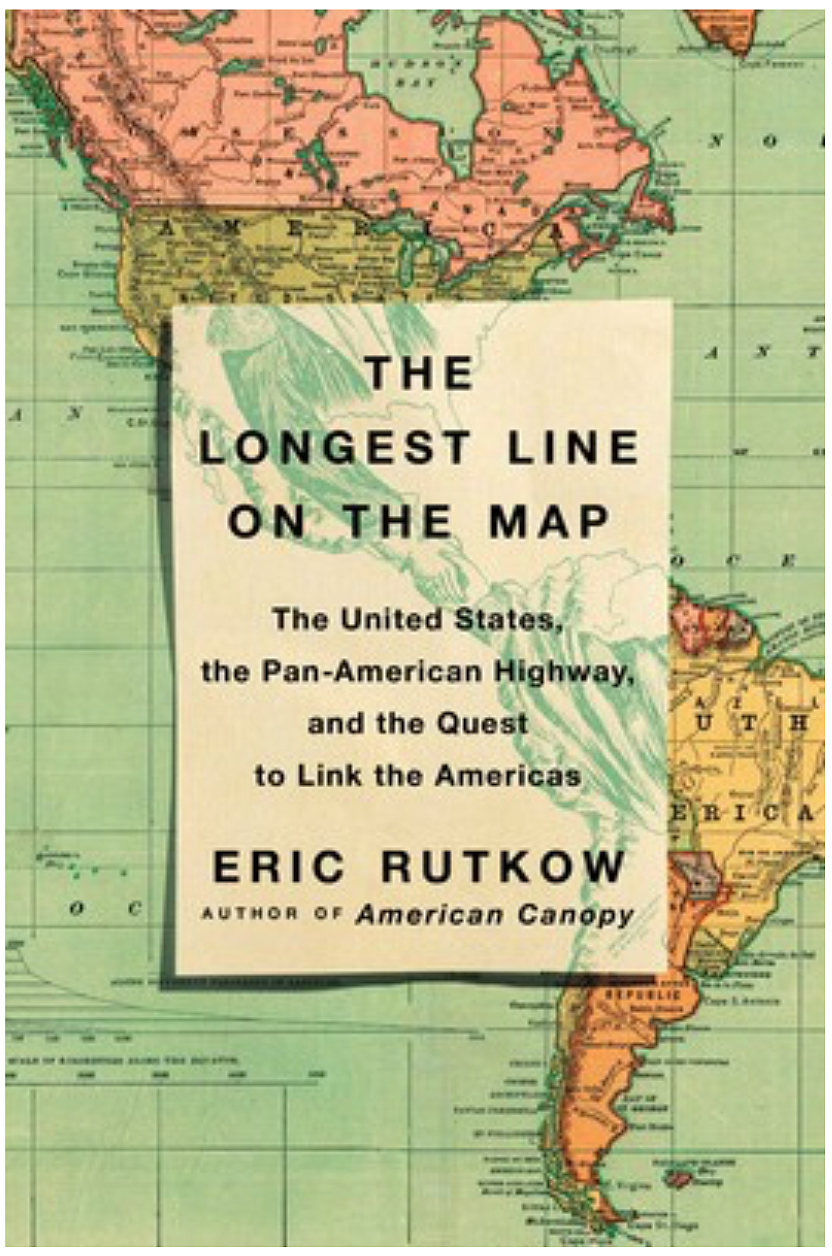 Though the title tries to convince the reader that they will merely be exploring the build-up to the largest link between the United States of America and its southern neighbours, The Longest Line on the Map: The United States, the Pan-American Highway and the Quest to Link the Americas covers much more. The book is written in more of a novel-fashion than a textbook-fashion. Author Eric Rutkow, rather than simply discussing the nitty-gritty development of the highway alone, is able to cover historical events from political battles in the homeland of the US to economic hardships encountered among the partner countries. Divided into three main blocks, the book chronologically introduces the events that took place during the Pan-American Highway's construction, beginning with the dream that a railway would connect the two hemispheres.
With the New World just barely beginning to grasp its potential, writer Hinton Rowan Helper's first-hand experience of traveling from the United States to Argentina in the mid-1800s made him come to the realization that there must be an alternative method of traveling between the two countries. After enduring the long voyage, he came to the conclusion, "Why not by rail?" The first quarter of the book hence explains the early attempts made towards linking the wide span between North America and Southern Argentina through the use of a railroad. Thus, when in 1890 the Intercontinental Railway Commission was created, the idea of a Pan-American railway began to flourish and preliminary work began.
The idea was passed on from one indefatigable supporter to another, keeping in mind the cooperative aim of pan-Americanism and the potential for US economic expansion. Yet still by the early 1900s, over half of the projected length of the railway remained unassembled. Despite multiple attempts and investment in building and rebuilding the rail (mainly due to logistical purposes), the project came to a final halt with the realisation that the Pan-American Railway was beginning to look like what it was: an unfeasible dream. President Theodore Roosevelt had concluded similarly in 1905, when he gave preference to developing the Panama Canal, regulating the rules of the railway and building the US Navy. In the subsequent and comparatively short chapter of the book, Rutkow introduces the era when automobiles and bicycles were on the rise, causing a demand for the increased construction of roads and exhaustive efforts to build decent thoroughfare within the US. Also made note of in the book was the diverging attention from the rail as a result of the outbreak of the First World War. These events combined would ultimately cease continuation of the railway's assembly.
The second half of the book is dedicated to the continuation of the dream of connecting the two spheres using a different method: the building of the Pan-American Highway. Although only a sister to the railway project, the two ideas arise from the same ideal. The new project seemed especially tangible due to the growth of the 'motoring generation' and the strengthened advocacy of Pan-Americanism. The belief was that the highway would foster "closer and more harmonious relations" among the nations in the Americas. Nevertheless, the highway remains unfinished due to a mere 50-mile wide gap, known as the Darien Gap, located between Panama and Colombia ("mere" considering the highway today stretches more than 20,000 miles, connecting Alaska to the southern tip of Argentina).
The most engaging part of the book emerges in the last chapter, when Rutkow attempts at connecting the missing link between the two worlds, but isn't able to, which reminds us that the road remains unfinished. The chapter, which is committed to the Darien Gap, is able to give light to the idea that once, the two spheres had a dream of connecting, contrasting to what we see today with the pressure of erecting walls along the southern US border. Though the dream continues to overcome the gap and finish the road, a new challenge had finally emerged: Panama had changed its policy and refused to finish the pavement.
As for such a well-researched book of one of the largest projects on the American continent, there's a peculiar laxity: the coverage on South America is far less complete in comparison to all the focus that the United States' government efforts to organizing and funding the link received. In terms of critiquing the book as a literary piece, not every quotation within the book would be considered absolutely necessary to telling the story. Ironically there's a certain scarcity when it comes to describing the road itself or its surrounding environment. Perhaps the author makes up for this blunder with his meticulous choosing of maps and images to provide the reader with a context of the environment and era in which the dream was being pursued.
With its mega-city and technology zone project , the Saudis are seeking to consolidate an economic alternative to oil.
NEOM, an acronym for New Future, is the name of the new economic-technological city and area , with an area three times the size of Cyprus, which Saudi Arabia is promoting in the north-west of the country, opposite the Sinai Peninsula. In addition to seeking alternatives to oil, with NEOM the Saudis aim to rival the urban innovations of Dubai, Abu Dhabi and Doha. The project also involves shifting Saudi interest from the Persian Gulf to the Red Sea and closer neighbourhoods with Egypt, Jordan and Israel.
![The future NEOM megacity, from agreement with the vision of its promoters [NEOM Project].](/documents/10174/16849987/neom-blog.jpg "The future NEOM megacity, from agreement with the vision of its promoters [NEOM Project].")
▲ The appearance of the future NEOM megacity, from agreement with the vision of its promoters [NEOM Project].
article / Sebastián Bruzzone Martínez
Middle Eastern states are seeking to diversify their revenues and avoid potential collapse of their economies in order to counteract the end-of-oil crisis expected in the mid-21st century. Arabs' preferred sectors are renewable energy, luxury tourism, modern infrastructure and technology. Governments in the region have found ways to unify these four sectors, and Saudi Arabia, along with the United Arab Emirates, seems to want to position itself at the forefront of the Arab technology degree program .
While the world looks towards Sillicon Valley in California, Shenzhen in China or Bangalore in India, the Saudi government has begun preparations for the creation of its first independent economic and technological zone: NEOM (short for the Arabic term Neo-Mustaqbal, New Future). The project was until recently headed by Klaus Kleinfeld, former CEO of Siemens AG, who has been replaced by Nadhmi Al Nasr as CEO of NEOM since his appointment as an advisor to the Saudi Crown.
On 24 October 2017, at the Future Investment Initiative lecture in Riyadh, Saudi Crown Prince Mohammed bin Salman announced the $500 billionproject , part of the Saudi Vision 2030 policy programme. average The territory where NEOM will be located is in the border area between Saudi Arabia, Egypt and Jordan, on the shores of the Red Sea, through which almost ten percent of world trade flows, has a temperature 10ºC lower than that of the rest of the countries of the Gulf Cooperation committee , and is located less than eight hours' flight from 70% of the world's population, so it could become a major passenger transport hub.
As announced by the Saudi government, NEOM will be a special economic city, with its own civil and tax laws and Western social customs, covering 26,500 square kilometres (the size of Cyprus multiplied by three). The main objectives are to attract foreign investment from multinational companies, diversify the oil-dependent Saudi Economics , create a free market space and home to millionaires, "a land for free and stress-free people; a start-up the size of a country: a blank sheet of paper on which to write the new era of human progress", says a promotional video on project. All this under the slogan: "The world's most ambitious project: an entire new land, purpose-built for a new way of living". According to the website and official accounts of project, the 16 sectors of energy, mobility, water, biotechnology, food, manufacturing, communication, entertainment and fashion, technology, tourism, sport, services, health and wellness, Education, and livability will generate 100 billion dollars a year.
Thanks to a report published by The Wall Street Journal and prepared by the consulting firms Oliver Wyman, Boston Consulting Group and McKinsey & Co., which, according to them, had access to more than 2,300 confidential planning documents, some of the ambitions and luxuries that the futuristic city will have have have have come to light. These include flying cars, holograms, a Jurassic Park-style robot dinosaur theme park and edition Genetics , never-before-seen technologies and infrastructure, luxury hotels, resorts and restaurants, cloud-creating mechanisms to cause rainfall in arid areas, glow-in-the-dark sandy beaches, and even an artificial moon.
Another aim of project is to make NEOM the safest city on the planet, through state-of-the-art surveillance systems including drones, automated cameras, facial and biometric recognition machines and AI capable of reporting crimes without the need for citizens to report them. Similarly, the leaders of the urban development initiative themselves predict that the city will be an ecological centre of great projection, basing its power supply system solely on solar and wind energy obtained from panels and windmills, as they have a whole desert to install them in.
At the moment, NEOM is only a project in its infancy. The land on which the big city will be located is a desert terrain, mountains up to 2,500 metres high and 468 kilometres of pristine coastline of turquoise blue water, with a palace and a small airport. NEOM is being built from scratch, with an initial outlay of $9 billion from the Saudi Arabian sovereign wealth fund Saudi Arabia Monetary Authority (SAMA). Apart from foreign business investment, the Saudi government is looking for workers from all professional sectors to help in their respective fields: Jurists to draft a civil, criminal and tax code; engineers and architects to design a modern, efficient and technological infrastructure and energy plan; diplomats to collaborate in its promotion and cultural coexistence; scientists and doctors to encourage clinical and biotechnological research and welfare; academics to promote Education; economists to make income and expenditure profitable; personalities specialising in tourism, fashion and telecommunications... But, above all, people and families to inhabit and give life to the city.
As reported by the Arabic daily Rai Al Youm, Mohammed bin Salman has C a proposal prepared by a joint Saudi legal committee with the UK, which consists of providing a VIP document that will offer special visas, residency programrights to investors, senior officials and workers in the future city. Contracts business have already been awarded to the US engineering firm Aecom and construction contracts to the UK's Arup Group, Canada's WSP, and the Netherlands' Fugro NV.
However, not everything is as ideal and straightforward as it seems. Despite the strong interest of 400 foreign companies in project, according to the local government, there is uncertainty about its profitability. Problems and scandals related to the Saudi crown, such as the imprisonment of family members and dissidents, corruption, unequal rights, the military intervention in Yemen, the case of the murder of journalist Khashoggi and the possible political crisis following the future death of King Salman bin Abdulaziz, Mohammed's father, have caused investors to tread carefully. Moreover, in the region where the city is to be built there are villages of locals who would be relocated, and "compensated and supported by social programmes", according to the Saudi government, which will be criticised by human rights groups.
In conclusion, NEOM is a unique project and a match for the Arab sheikhs themselves, who have adopted a far-sighted economic vision. It is expected that by 2030 it will be possible to live in the city, even if construction is still underway and not yet fully completed. According to the markets, the project, still far from completion, seems to be on track. It already has a structural financing commitment with BlackStone of 20 billion euros, and a technology financing commitment with SoftBank of 45 billion euros. Because such a project has never been seen before and therefore there are no references, it is difficult to determine whether the visionary plan will be successfully consolidated or whether it will remain just smoke and mirrors and a huge loss of money.
The management given to a Chinese business prompts US threat not to sell technology to Israel.
The Trump administration's protests over the awarding of management of the port of Haifa to a Chinese business have so far not prompted the Netanyahu government to review the contract, which was dealt with at ministerial level without plenary session of the Executive Council knowledge of its geopolitical implications. China's penetration of Israel - in the wider Middle East context - as well as the US reaction, highlights a complicated triangle of relations: Israel wants Chinese investment, but fears losing US favour.
![management container port in the port of Haifa, northern Israel [Wikipedia].](/documents/10174/16849987/haifa-blog.jpg "management container port in the port of Haifa, northern Israel [Wikipedia].")
▲ management of containers in the port of Haifa in northern Israel [Wikipedia].
article / María Martín Andrade
The port of Haifa is one of the main ports in Israel in terms of volume of goods handled. It also has a strategic character: the port, in the north of the country, hosts the US Sixth Fleet in its movements. The latter could be altered following the announcement of Israel's contract with the Chinese business Shanghai International Port Group (SIPG) to operate the port for the next 25 years from 2021, which has not been very well received by Washington. management The company, which has pledged to invest $2 billion to expand the facility into Israel's largest port, describes its functions as including the construction and installation of equipment and the day-to-day running of port activities, classifying this project as part of the One Belt, One Road initiative.
This initiative has its origins in the Silk Road, a trade pathway linking China with various Asian countries all the way to Europe, dating back to the first centuries BC. The new version is based on the early schemes and aims to boost China by creating a network of infrastructure, investment and trade, and by establishing multilateral and bilateral ties with the various states along the Silk Road, as well as with international companies.
All of the above, added to the growing industrial and transport expansion that China is experiencing, also justifies the Asian country's interest in some of the natural resources that the Middle East offers, such as oil, the import of which amounts to 50%, constituting another of the reasons why China wants to gain a presence in different parts of the region and which is manifested in, among other ways, investment in canals and ports such as those of Haifa and Ashdad in Israel, Cherchell in Algeria, Said and Alexandria in Egypt, and Kumport in Turkey. Specifically, its commitment to the port of Haifa is also contributing to the development of what is known as the Israel-Gulf Economic Corridor (IGEC), whose goal is to create a railway line running from the port of Haifa to the Jordanian-Israeli border, linking up with the Jordanian railway system.
However, China's ambitions to gain a greater presence in the Middle East collide with the pretensions of another "robust rival", the United States, which is also driven by economic and security interests and has no intention of sharing it. Thus, after learning of the plans in the port of Haifa, the US response is manifested in threats that it might stop sharing data intelligence with Israel and reconsider holding future long deadline exercises by the US navy in that port.
It is important to note that this is not the first time that the US has intervened to hinder relations between China and Israel. The conditions under which the latter country was established, coupled with the hostile environment surrounding it and the need to possess weapons to maintain and protect it, have contributed to the development of its technology, especially in subject defence, whose broad scope is due in part to the United States, which has been supplying the country with the latest military technology since the 1960s. This has contributed to Israel's exports of subject technology, mainly defence subject technology, becoming the source main source of revenue for its industry.
During the 1970s, China's Economics began to modernise, and the next step was to extend this modernisation to the military domain, and China began importing defence developments from Israel. These relations continued to expand until 2000, when the Middle Eastern country, due to US pressure, decided to cancel the agreement that allowed China to obtain four Phalcon radar systems. The reason given by the US at the time for opposing the agreement was the possibility that China would benefit from the technology in a military conflict in Taiwan. However, China is not the only country with which Israel has had difficulties exporting its technology. In 2008 Washington denied that it could submit Heron drones to Russia.
Despite all this, Sino-Israeli relations have managed to survive, with China becoming Israel's second largest trading partner in 2012, partner and developing new partnership R&D ties, consisting of a series of agreements and collaborations between academic institutions and companies in both countries.
However, considering the US reaction to China's involvement in the port of Haifa, it is not unthinkable to envisage a scenario in which American pressure would be repeated and in this case would succeed in abolishing the existing agreement with the business Shanghai International Port. If this happens, Israel would lose an important part of the investments it receives and trade relations with China would cool, while Beijing could see one of its plans to create its ambitious Silk Road frustrated, although this would not mean its decline in the Middle East.
What is unquestionable is that the United States no longer enjoys hegemony in this part of the world and has to come to terms with the idea that it will have to share influence with other great powers. It may therefore make more sense to engage in new forms of cooperation with China in order to establish mutually favourable terms.
In conclusion, this new Chinese investment affirms what was already known: China's international presence is growing and increasing in volume, and it is wiser to adapt to the new changes than to get involved in love triangles that never have a happy ending for anyone.
Poland-Germany struggle to gain influence in the European region between the Baltic, the Adriatic and the Black Sea
The latest summit of the Three Seas Initiative (TTI) was attended by the president of the European Commission, which sample was an endorsement from Brussels that did not seem complete until now. German representatives also attended attendance , although Germany is not part of the twelve-nation club of Central and Eastern European countries. Poland, backed by the United States, wants to lead the ongoing effort to reduce the region's energy dependence on Russian gas; in reaction, Germany has announced a timid bid to import liquefied gas from the US.
article / Paula Ulibarrena
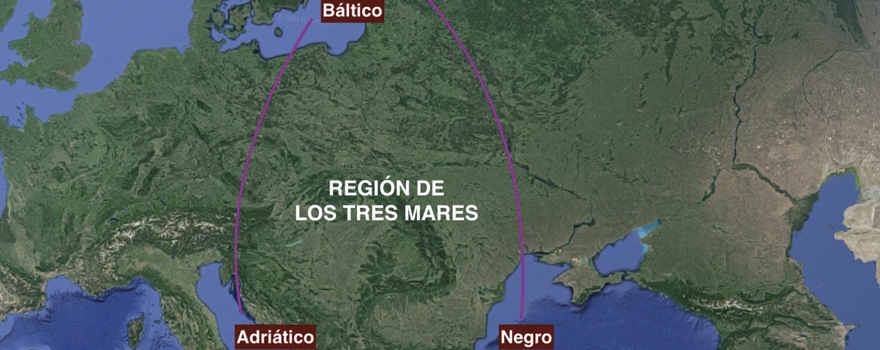
On 17-18 September 2018, the third summit of the Three Seas Initiative took place in Bucharest, aiming at the economic development of the area of the European Union (EU) between the Baltic, Adriatic and Black Seas. The meeting was attended by nine heads of state, two presidents of national parliaments, a prime minister and a foreign minister, along with several senior European officials, led by European Commission President Jean-Claude Junker, and a large German representation, as well as US leaders.
The Three Seas Initiative (BABS-Initiative: Baltic, Adriatic, Black Sea) was launched in 2015 and consists of twelve countries: Austria, Bulgaria, Croatia, Czech Republic, Estonia, Hungary, Lithuania, Latvia, Poland, Romania, Slovakia and Slovenia.
According to the Polish Foreign Affairshigh school , the EU's initial reticence about the MTI seems to have been overcome, as the summit was endorsed by the European Commission and the European Parliament's Commissioner for Regional Policy. This recognises the role of the MTI in cohesion and in strengthening the EU.
The importance of energy supply
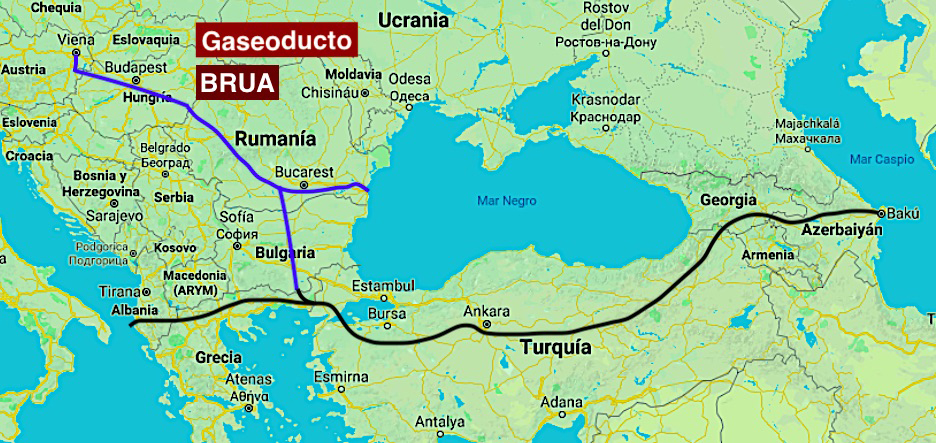
One of the main aspects that the ITM deals with is energy. Its goal is to have agile access to energy, but also to ensure supply from various points, so as not to depend on a single provider, and also to try to play a diversifying role in supplying other European regions. At present, its efforts are mainly focused on the so-called project BRUA, which aims to open up the possibility of transporting gas from the Caspian Sea area to Romania's southern border, and from there to Romania's north-western border with Hungary.
BRUA is an acronym for Bulgaria, Romania, Hungary and Austria, and aims to diversify the natural gas supply system in the region. "We are creating a distribution network ," said Miguel Arias Cañete, European Commissioner for Energy and Climate Change, "it is not just a big classical pipeline but small reverse flow pipelines that allow gas to be sent south, east, west, so the region will have more sources of energy and cheaper energy.
The BRUA pipeline would be, to some extent, a replacement for the failed project Nabucco. This project consisted of the development of a natural gas transport capacity between existing interconnection points with the natural gas transport networks of Bulgaria (at Giurgiu) and Hungary (Csanadpalota), through the construction of a new pipeline with a total length of 550 km, on the route Giurgiu-Podisor-Corbu-Hurezani-Hateg-Recas-Horia, and three compressor stations located along its route (at Corbu, Hateg and Horia). It planned to reach a gas flow of 4.4 million cubic metres per year in the direction of Hungary, and 1.5 million cubic metres to Bulgaria.
The BRUA pipeline will only account for a third of the flow that Nabucco would have provided, thus minimising the risk of market loss for Russia. The route, which crosses Romania from east to west and from north to south, is estimated to cost a total of €560 million. Romania anticipates that the Black Sea exploration activities of OMV Petrom ExxonMobil could lead to the finding of new natural gas fields. To this end, it is envisaged to extend the BRUA pipeline by a further 300 kilometres from Giurgiu to the Black Sea perimeters.
Germany sent its foreign minister to the summit as an observer. Germany's interest is to strengthen its economic presence in the eastern region of the EU in order to prevent the growing weight of China, secure its energy supply and play an important role in the network gas distribution within Europe, in a context of conflict over Russian gas supplies, and the dependence that this entails for European countries. The construction of the second North European pipeline, known as project NS2 (Nord Stream 2), which will carry liquefied gas from Vyborg (western Russia) to Greifswald on the Baltic coast of Germany, is currently being finalised. civil service examination This project has always been opposed by the United States, which dislikes the EU's energy dependence on Russia, which is why the US is inclined to promote the ITM as area of development and entrance of energy sources that are not dependent on Russia.
|
BRUA pipeline, marked in blue, and TANAP (Turkey) and TAP (connection to Greece) pipelines, both in black, on an image taken from Google Maps. |
Poland comes into play
Poland is aligning itself with the US and trying to reduce Eastern European countries' economic and energy dependence on Russia. But it is also trying to reduce Germany's weight in the region; this is reminiscent of the Intermarium that Poland promoted in the years between the two world wars. Poland's aim is to become a new gas distribution hub for the EU, where its ports would be used for the unloading of liquefied natural gas of US origin. These ports would be connected to the project BRUA, replacing Ukraine as entrance of gas to the EU and in turn replacing Russian gas with US gas (9).
Precisely this project of the ITM, together with pressure from the US president, has provoked a reaction from Berlin. German Chancellor Angela Merkel counterattacked in October with the advertisement that Germany is once again opening the door to US gas by deciding to co-finance the construction of a 500 million euro liquefied natural gas ship terminal in the north of the country. This would strengthen Germany's alliance with the US, but could also reduce its dependence on nuclear energy and greenhouse gas emissions.
The TTI projects are financed by a financial fund provided by six of the member states (Croatia, Czech Republic, Poland, Romania, Slovakia and Latvia), but open to the participation of all the countries that make up the group. Its goal is to provide financial support for the development of trans-national infrastructures in which at least three ITM member states participate. The institutional contribution exceeds 5 billion euros, and aims to attract external investment, from private funds, to strengthen the fund itself. With a thirty-year perspective, the aim is to exceed 100 billion euros.
After breaking off relations with Taipei, the Salvadoran government could give Beijing the management of a strategic port in the region.
Until a few years ago, China had no interest in Central America, basically due to the lack of raw materials. The region's quasi-bloc diplomatic relationship with Taiwan also diverted its attention. But the dynamics have changed. Encouraged by Chinese promises, in August El Salvador joined other neighbouring countries that have been closing their embassies in Taipei. Why is China now interested in Central America? The Salvadoran case points to a desire to gain weight in a area of historic US influence.
article / Jimena Villacorta
"After this careful analysis, advertisement that my government has taken the decision to break the so-called diplomatic relations maintained until today between the Republic of El Salvador and Taiwan and to establish diplomatic relations between the Republic of El Salvador and the People's Republic of China". This is how Salvadoran President Salvador Sánchez Cerén announced the establishment of diplomatic ties with Beijing on 20 August. The decision followed those taken in May by the Dominican Republic and in 2017 by Panama, breaking the Central American countries' support for Taiwan.
Taiwan responded to this advertisement by asserting that the government of El Salvador had demanded an "astronomical sum" of money to finance the Salvadoran port of La Unión and the 2019 presidential election campaign of the government party, the Farabundo Martí National Liberation Front (FMLN), which the Salvadoran government denied. The Taiwanese foreign minister, Joseph Wu, presented the rupture of relations as a decision by Taipei, due to its refusal to yield to these pressures, even though everything indicates that the initiative was Salvadoran.
The internship of hidden payments is, of course, nothing new in the links between Taiwan and Central America, as it has been demonstrated that submission cheques have been given to leaders of El Salvador and other countries to maintain diplomatic recognition that is so convenient for the Asian island. In any case, this is a margin of corruption that, sometimes in the form of commissions, has also accompanied China's disembarkation in various countries.
The Salvadoran government's move was criticised by civil service examination. The mayor of San Salvador, Ernesto Muyshondt of the Nationalist Republican Alliance (ARENA), described the decision as "terrible" and regretted that the FMLN leaders not only support "the repressive and murderous dictatorships of Cuba, Venezuela and Nicaragua", but also that "now they are breaking with a democratic country to establish relations with another dictatorship".
partner The civil service examination criticised the government for being motivated by partisan interests and leaving in the air the treaties and agreements signed with Taiwan, which has been a strategic partner for the country for 85 years and one of its main cooperating partners in the areas of technology, health, agriculture and Education. Thus, there has been a loss of cooperation projects, financial resources and other aid, such as the scholarship scheme for Salvadoran students in Taiwan.
US Alert
The change of partner is expected to mean the replacement of Taiwanese programmes with Chinese investment projects. In recent years, El Salvador has imported much more from China (804 million dollars in 2016) than from Taiwan (135 million dollars), but has exported similarly to both countries (around 50 million dollars to each). It is likely that Taiwan will now stop favouring the purchase of Salvadoran products, which it used to prioritise, and that China will compensate for the new relationship with investment in infrastructure.
This is where the possibility that China could take over the concession for the port of La Unión Centroamericana, in the south-eastern corner of El Salvador, in the Gulf of Fonseca, comes in. The government has acknowledged Chinese interest in the port, while civil service examination criticises the lack of information in the negotiations. The US Embassy has even raised suspicions about the risk that, given the lack of transparency in the negotiations, China could use the facilities as a military base. Ambassador Jean Manes stated that "China's strategy of expansion in the region, not only economically but also militarily, is alarming". In fact, Washington has been warning for some time about China's increased presence in Central America, as in the case of the Panama Canal, in principle with civilian projects but which in certain circumstances could call into question US security.
The US Embassy has also indicated Chinese interest in buying Perico Island, located next to the port of La Unión. Last October, Ezequiel Milla, mayor of La Unión, declared that he had met with Bo Yang, a Chinese businessman and vice-president of the China-El Salvador Chamber of Commerce, to discuss the sale of the island to build hotels. For his part, the businessman admitted to having discussed purchase intentions with the owners of the private part of the island, where several families reside, who must be willing to vacate their homes. The island contains an important flora and fauna reservation .
Untapped port
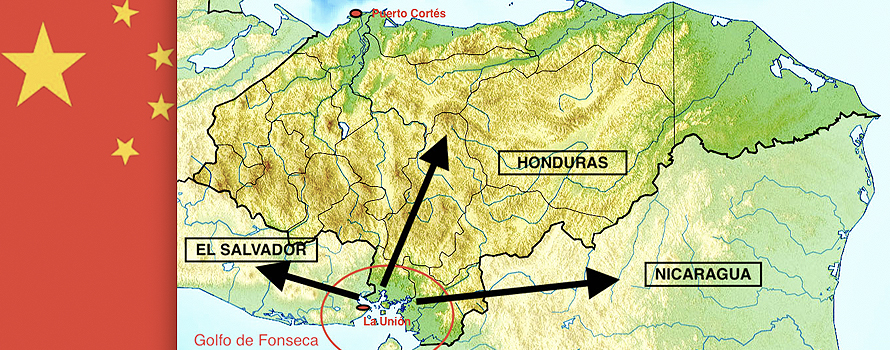
The port of La Unión is strategically located on the Gulf of Fonseca, where El Salvador, Nicaragua and Honduras meet (it is Honduras' only access to the Pacific). In addition, it can connect in a matter of a few kilometres to the dry canal that Honduras is about to complete by widening the road linking its facilities at Puerto Cortés on the Atlantic to the Gulf of Fonseca. Honduras' coastline in the Gulf is not suitable for a deep-water port, so the natural outlet for its goods to the Pacific would be La Unión.
The project construction of the port started in 1994, under the presidency of Armando Calderón Sol, with the goal aim of becoming the future "hub of the Americas", so that ships larger than the Panama Canal could dock there. Thanks to a loan from the Japan Bank for International Cooperation (JBIC), the project was launched. The port was built between 2005 and 2008 and inaugurated in 2010.
Under the presidency of Antonio Saca, there were two decrees for its concession. The first, in 2008, was a master concession formula, i.e. there would only be one operator managing the port for 25 years; however, it was not possible to reach an agreement in the Legislative Assembly, agreement . In 2009, the second decree was presented, proposing a company composed of the state-owned Autonomous Port Executive Commission (CEPA) and an international operator, with a 10% and 90% shareholding, respectively. But due to the change of government and other internal complications it was not approved either.
In June 2010, with Mauricio Funes as president, the port of La Unión was inaugurated under state administration, in the hope that a concession could be agreed that same year. In the end, it was decided to apply the master concession. In September, the Assembly approved decree 834, containing the port concession law. Due to the lack of approval of the instructions tender and the contract by other institutions, the port concession was postponed for a couple of years, during which time the interested companies dropped out of the talks.
The bidding process was finally launched in 2014, but the tender was declared void in 2015 because there were no bids to operate the infrastructure. In 2017, some laws were amended to attract investors, given the urgency of operating the port, which has cost the country almost $20 million to maintain over the past decade.
|
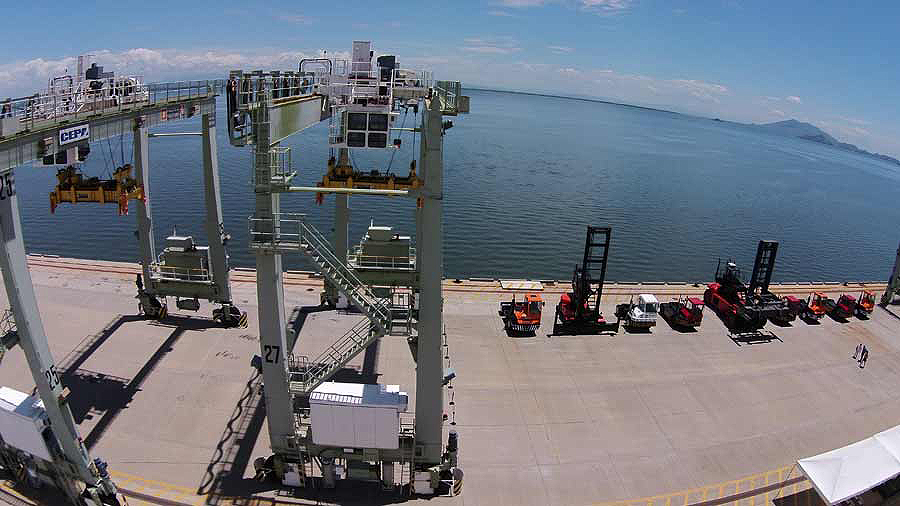
Port of La Unión, in the Gulf of Fonseca, in the Central American Pacific [ECA]. |
Special Economic Zone
If the facilities have so far attracted so little interest from investors, what benefit could China see in La Unión? ARENA deputy Mauricio Vargas does not believe that Beijing has any economic interest in the port, but rather that it is pursuing strategic objectives, as the Gulf of Fonseca provides access to three Central American countries and is part of the area which the US considers important for its own security.
To make the option of La Unión more attractive, in July 2018 the FMLN government presented the Special Economic Zone Law for the South Eastern Region of El Salvador, area corresponding to La Unión and a score of neighbouring municipalities. Thanks to tax advantages, China could turn this Pacific point into a distribution centre for its products in the Central American Northern Triangle and Nicaragua. The connection through the Honduran dry canal would facilitate connections with the Atlantic.
The civil service examination believes that the creation of this special economic zone, which in case of a massive influx of Chinese products could negatively affect local manufacturing, has been agreed in advance with China. The ECA president, however, denies any obscurantism in the process. "We have nothing to hide. The process we are going through is transparent; we have entered a stage of enquiry. The interest of our administration is that the port of La Unión is operated and we must see it as project of the country". He assured that there are companies interested in the concession also from Europe and America, not only from Asia.
The EU has backed down on the project, but Germany still gives support to the Russian initiative
The project of a second set of gas pipelines through the Baltic Sea, in order to transport Russian gas to the European Union without crossing Ukraine, has divided the EU governments. Some Eastern and Central European countries, backed by the United States, argue against any dependency on Russian gas supplies, but Germany keeps its support to the Russian plans.
![The routes of the Nord Stream and the planned Nord Stream 2 pipelines from Russia to Germany [Gazprom].](/documents/10174/16849987/nordstream-blog.jpg "The routes of the Nord Stream and the planned Nord Stream 2 pipelines from Russia to Germany [Gazprom].")
▲The routes of the Nord Stream and the planned Nord Stream 2 pipelines from Russia to Germany [Gazprom].
ARTICLE / Ane Gil Elorri
The natural gas consumption for nowadays is essential to have basic necessities covered. Therefore, it's imperative for everyday life. Nevertheless, it goes through a laborious process before it reaches the consumers. The gas needs to be extracted from the land or sea subsurface, and transported, before it reaches its destiny, being pipelines the most common via of transportation.
The EU's domestic gas production has been declining and the reserves in the North Sea depleted. Therefore, in order to meet demands, the EU has turned to other suppliers; being the most important Russia, Saudi Arabia and Norway. In fact, a lot of countries in the European Union are heavily dependent on Russian imports, especially of natural gas, which often go through transit countries such as Ukraine and Belarus. The decisions are all make through the EU-Russia Energy Dialogue. Russia has the largest gas reserves in the world. With 44,600 billion cubic meters, Russia has 23.9 percent of the world's currently known gas reserves, followed by Iran (15.8 percent), Qatar (13.5 percent), the United States, and Turkmenistan (4.3 percent each).
The most prominent European energy supply is the Nord Stream Pipelines. Nord Stream are a twin set of pipelines that provide gas transportation capacity for the natural gas, which comes from the Western Russia (Vyborg) into Lubmin, Germany, for the distribution into the European gas grid. This system is composed by a set of 1,224-kilometre pipelines through the Baltic Sea, and each hold the capacity to transport 27.5 billion cubic metres of natural gas a year. Line 1 became operational in November 2011 and by October 8, 2012 the system was fully operational, having taken the construction of these pipelines 30 months.
The desire of a grand-scale gas transport between Russia and the western Europe goes back to the 1970's, to the contract between a German company (Ruhrgas AG) and Gazprom (national Russian gas company) to supply natural gas. In 2000 the European Commission recognized the need for a pipeline in the Baltic Sea. In December 2005, the North European Gas Pipeline Company was established and by October 4, 2006, the North European Gas Pipeline was officially renamed Nord Stream. It was finally completed and functional in October 2012.
The Nord Stream project was very ambitious. Nevertheless, it was completed on time, on budget, and without permanently impacting the environment. The Nord Stream Pipeline system is fully operational and capable of transporting up to 55 billion cubic metres (bcm) of natural gas every year to Europe.
Now, a new project is developing based on the success of the Nord Stream Pipelines: Nord Stream 2. This project will benefit from the experience of the previous pipeline, which has set a new high for the environmental, technical and safety standards throughout its planning, construction and operation. The idea is to add a new set of twin pipelines along the Baltic Sea route to increase the capacity of gas transportation in order to meet the demands of Europe. In fact, this new pipeline will create a direct link between Gazprom and the European consumers.
The Nord Stream 2 project is implemented by the Nord Stream 2 AG project company, where Gazprom is the sole shareholder. In October 2012, the shareholders of the Nord stream project examined the possibility of constructing a third and fourth pipeline and came to the conclusion that it was economically and technically attainable. In April 2017, Nord Stream 2 AG signed the financing agreements for the Nord Stream 2 gas pipeline project with ENGIE, OMV, Royal Dutch Shell, Uniper, and Wintershall. These five European energy companies will provide long-term financing for 50 per cent of the total cost of the project.
The entry point into the Baltic Sea of the twin pipeline will be the Ust-Luga area of the Leningrad Region. Then the pipeline will stretch across the Baltic Sea. Its exit point in Germany will be in the Greifswald area close to the exit point of the original Nord Stream. The route covers over 1,200 kilometres.
The total capacity of the second twin set of pipelines is 55 billion cubic metres of gas per year. Therefore, the sum with the prior pipelines would give an outstanding number of 110 billion cubic metres of gas per year. Nord Stream 2 will be operational before late 2019.
This project is defended with the argument that it supposed a diversification of the routs transporting natural gas to Europe and to elevate the energetic security due to the instability of the transit of gas through Ukraine. For now, a lot of the natural gas consumed by Europe comes from Russia through Ukraine. Nevertheless, if this project goes through, Ukraine will lose 2,000 million dollars for the transit of natural gas, and even the proportion of gas will decrease (which is also for staff use) leading to the collapse and finalization of the transit of natural gas through Ukraine. Furthermore, if Hungary, Slovakia and Poland receive natural gas through the Nord Stream 2 pipelines instead of through Ukraine, it will be very difficult that Ukraine receives gas from the west, seeing as Gazprom along with others controls EUGAL (European Gas Pipeline Link) can reduce the supply of gas to those companies that provide gas to Ukraine.
The cost of 1,000 cubic meters in 100 kilometres through Nord Stream 2 would cost 2.1 million dollars while through Ukraine it costs 2.5 million dollars. The tariff of transportation of natural gas through Nord Stream is 20% lower than through Ukraine.
|
The main Russian gas pipelines to Eastern and Central Europe [Samuel Bailey/CC]. |
![The main Russian gas pipelines to Eastern and Central Europe [Samuel Bailey/CC].](/documents/10174/16849987/nordstream-blog-2.png "The main Russian gas pipelines to Eastern and Central Europe [Samuel Bailey/CC].")
Only half of the European Union members approve the negotiations between the EU and Russia over the Nord Stream 2 Project. It is true that the natural gas demand of Europe is growing each year but some countries such as the Baltics are against anything that has to do with Russia. Besides the US, thanks to fracking, has become the biggest producer of gas, and is now looking to substitute Russia as the main gas supplier of the EU.
But other countries are in favour of this project. In January 31 this year, Germany gave its permission to begin the construction of the pipelines of Nord Stream 2 in their territorial waters. Berlin also authorized the construction of the section of 55 kilometres that will go through the terrestrial part situated in Lubmin. In April this year, Finland has also given the two permissions needed to begin the construction.
Nevertheless, Gazprom will be facing a few difficulties in order to pull through with this project. The company still needs that other countries, such as Norway, Denmark and Russia, give authorizations and permissions to construct the pipelines in their exclusive economic zone. There is a risk that Denmark doesn't authorize these new pipelines. The Danish Agency of Energy and the Foreign Office both have to give their approval but can deny the permit if Nord Stream 2 represents a danger for the environment. Another problem is purely political: the European Commission is trying to make the implementation of the project fit with the EU legislation. In November 2017, the European Commission prepared a list of amendments to its energy legislation, known as the Third Energy Package, which will pursue gas pipelines that come from the markets of countries that have the Brussels standards. Because of this, Gazprom won't be able to be the only shareholder of the Nord Stream 2 project and the pipelines will have to carry gas of other companies that have nothing to do with Gazprom.
Although, as previously mentioned, Nord Stream 2 has already received the two permits necessary in Germany and Finland in order to begin the construction, it seems that not many European countries are in favour of this project. In fact, since this April, the EU and the European Commission have withdrawn their support claiming that Nord Stream 2 does not encourage the diversification of gas supply, and they give more significance to the gas pipelines going through the Ukrainian territory in context of diversification of supply routes.
Other EU countries and of the region, such as Ukraine, Denmark, the Baltic States and Poland, have continuously spoken against Nord Stream 2, claiming that the project will increase Europe's dependence on imported Russian gas. Nevertheless, German Chancellor Angela Merkel supports this project, considering it to be an economic project which does not pose a threat to EU energy security, has is expected, seeing as the Nord Stream 2 is a joint venture between Russia's Gazprom, France's Engie, Austria's OMV AG, the Anglo-Dutch company Royal Dutch Shell, and Uniper and Wintershall, both German.
Nevertheless, the most vocally active countries against this project are the US and Ukraine. On one side, the United States believes that this project would undermine Europe's overall energy security and stability. It would also provide Russia other ways to pressure European countries, especially Ukraine. The US even threatened the EU firms to be subjected to Countering America's Adversaries Through Sanctions Act (CAATSA). On the other side, Ukraine's efforts to prevent the implementation of Nord Stream appears to be futile. They openly stated that this would conclude on the Russian monopoly on the world gas market, which would lead in Europe to an energy crisis and to an economic and political destabilization, and called for the international community to step in. Unfortunately, Germany is as headstrong as ever, stating that underwater pipeline to bring gas from Russia could not go forward without Ukrainian involvement in overland transit.
As the recent expulsion of European diplomats in Moscow shows, the global political relations have worsened considerably in the last few years. In fact, some would say that it the worst condition since the Cold War. This new political situation has had consequences on the Nord Stream 2, causing European countries to oppose to this project. The ultimate defender left standing of the programme is Germany, even the EU has backed down after Ukraine's protest. Ukraine has every right to oppose to this project, seeing as Russia has had nothing more but cold moves towards this country(cut off gas supplies in the middle of winter, Crimea), and is not outrageous to think that this project would ultimately affect the country, especially economically. Therefore, this project does not diversify the sources of natural gas, the first Nord Stream already reached this objective. The second Nord Stream, however, would grant Russia a monopoly of natural gas, which is not recommendable seeing as it would create Europe's dependence on Russia, and Russia could take advantage of it. Unfortunately, Russia will not give up this project, even with mostly everybody turns against it.
Opportunities and challenges in Sino-Panamanian relations, one year after the establishment of diplomatic relations
In June 2016, Panama inaugurated the expansion of its Canal. In June 2017, the Panamanian government decided to establish diplomatic relations with China (Central America has been a traditional ally of Taiwan), thus giving rise to the flow of new Chinese investments in a Canal revitalized with the expansion. On the one-year anniversary of the establishment of relations, here is a review of the opportunities and challenges posed by the increased Chinese presence in the isthmus.
![Container ship of the Chinese shipping company COSCO, making transit issue 2,000 in the expanded Canal, in September 2017 [Panama Canal].](/documents/10174/16849987/canal-panama-blog.jpg "Container ship of the Chinese shipping company COSCO, making transit issue 2,000 in the expanded Canal, in September 2017 [Panama Canal].")
▲Container ship of the Chinese shipping company COSCO, making transit issue 2,000 in the expanded Canal, in September 2017 [Panama Canal].
article / Ximena Barria
In the last decade, the People's Republic of China has made efforts to increase its presence in different regions of the world. China's projection as a global power has meant that no region is alien to it and there are hardly any countries that do not actively seek commercial exchange with the Asian giant. Therefore, it is not surprising that China has wanted to increase its activity around the Panama Canal, and that this Central American country has established diplomatic relations with Beijing, breaking the traditional relationship with Taiwan.
Panama's privileged geography and its rapid economic growth in the region are two important aspects taken into account by China. The Panama Canal offers advantageous access to the Atlantic and Pacific oceans and about 6% of global maritime trade passes through it. At times there has been talk of Chinese interest in building a canal in Nicaragua, something that was never really on Beijing's diary . China sees Panama as an important geostrategic point from which to project its foreign policy in Latin America, which undoubtedly unsettles Washington.
On June 13, 2017, the Republic of Panama and the People's Republic of China announced the establishment of diplomatic relations. With this, Panama recognized the government of Beijing as the legitimate Chinese government and broke the previous diplomatic relations established with Taipei. The new Sino-Panamanian relations gave way to 19 agreements in various areas.
Chinese projects in the isthmus
In a country as open to trade and transactions of all subject as Panama is, the population of Chinese origin has always had a relative presence. The Chinese community in Panama is made up of some 135,000 people, which represents 4% of its 4 million inhabitants.
Since 1911, Panama had maintained diplomatic relations with China. However, after the defeat of the Chinese Nationalist Party and the victory of Mao Zedong's communism, the Panamanian State decided to maintain diplomatic relations with Taiwan, due to its capitalist stance, during the Cold War. Since 1949, Panama remained one of Taiwan's major allies until its rupture in 2017.
Despite the recognition of Taipei, trade relations between Panama and the People's Republic of China have been increasing in recent years, generating a larger volume of exchange than that recorded between the Central American country and Taiwan.
Panama's most important economic engine is the Canal, which links the Atlantic and Pacific oceans and constitutes one of the most important routes for world trade. Canal revenues generate one third of Panama's Gross Domestic Product. Over the years, China has become an important customer of the Canal, becoming its second largest customer Username after the United States. The first ship to cross the expanded Canal, at the inauguration held in June 2016, was a vessel of the Chinese shipping company COSCO, which was awarded the honor by lottery.
China is the largest provider of the Colon Free Zone (CFZ), located on the Caribbean coast of Panama, next to the northern mouth of the Canal. It is the most important free zone in the Americas and the second largest in the world, with an annual volume of imports and re-exports of $16.16 billion. In the first semester of 2017, the FTZ imported $1.344 billion worth of goods from China. Likewise, important Chinese companies have sought to establish themselves in the FTZ taking advantage of the strategic advantages it offers.
China has also announced the construction of a container port at area in Colon, which will have facilities for receiving liquefied natural gas. The planned construction is estimated to cost $900 million. The construction will result in the first container terminal designed to handle Neopanamax ships, which have the maximum dimensions to transit the canal.
In the area of communications, the People's Republic of China expressed its interest in building a railway infrastructure connecting the capital of Panama and the province of Chiriqui, covering a distance of 400 kilometers. As for air transportation, the Air China airline committed to operate the Panama City-Beijing route twice a week. Panama has the most important air hub in Latin America and having a direct flight to Beijing represents an important opportunity to bring Asian markets closer to Latin America.
In addition, Panama has an important and diversified financial center that is attractive to Chinese banks as a strategic gateway to establish themselves in the region. The presence of Bank of China, with more than 30 years in the country, and future establishments of other entities such as Banco Industrial y Comercial, Exim Bank and China Development Bank will contribute to increase the flow of Chinese capital to Panama. This, in turn, will diversify and make Panama's banking sector increasingly dynamic.
The Panamanian challenge to take advantage of the opportunity
Ensuring that this increased relationship with China and the Asian market structurally benefits Panama and does not degenerate into a future status of dependence presents important challenges for a country that is in the process of development. Panama will have to increase productivity in sectors such as agriculture and industry, train more staff and create a transparent framework of financial institutions.
The agricultural sector presents marketing difficulties and a lack of agricultural policies to produce and sell crops at fair prices. In recent years, there has been a shortage of land for crop marketing purposes as a result of droughts and floods. Another challenge is food imports, since many imported foreign products are cheaper and this causes a drop in the prices of domestic products, which makes their production unprofitable for the farmer.
The increase in industrial productivity goes hand in hand with the effort of training of a better human capital. Currently, in the Panamanian republic there is a lack of preparation of people who can manage important companies. In 2015, the issue of enrolled in universities reached only a meager issue of 160,000 students. The Panamanian government should promote technical training projects and scholarships to increase this issue so that in the long term deadline there will be more staff trained for the new companies that will arrive.
The Panamanian financial structure should also be prepared to create new legislation that will contribute to legal certainty. In order to harmonize the financial sector with international anti-money laundering conventions, the Panamanian government should establish tax reforms that promote fiscal transparency. The entry of foreign banks should be regulated more effectively. The discussion to consider classifying tax evasion as a tax crime will present an important challenge for the country to consider.
A new north-south motorway on the eastern edge of the EU aims to be the entrance gateway to Europe for goods from China.
Seven European countries have joined forces for the project Via Carpatia, a motorway that will run from Lithuania to Romania and Greece, increasing the interconnectedness of the EU's eastern region. Its promoters envisage the infrastructure as part of the new Silk Road, as a gateway to Europe for goods arriving from China and the rest of Asia.
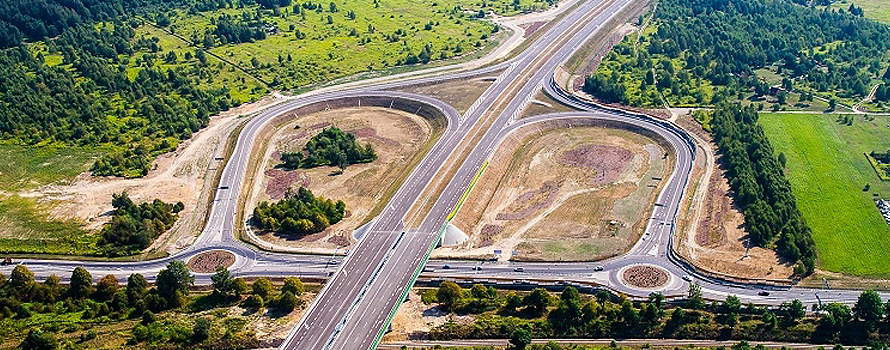
▲Polish motorway section to be part of the project Via Carpatia [Generalna Dyrekcja Dróg Krajowych i Autostrad Oddział w Rzeszowie].
article / Paula Ulibarrena
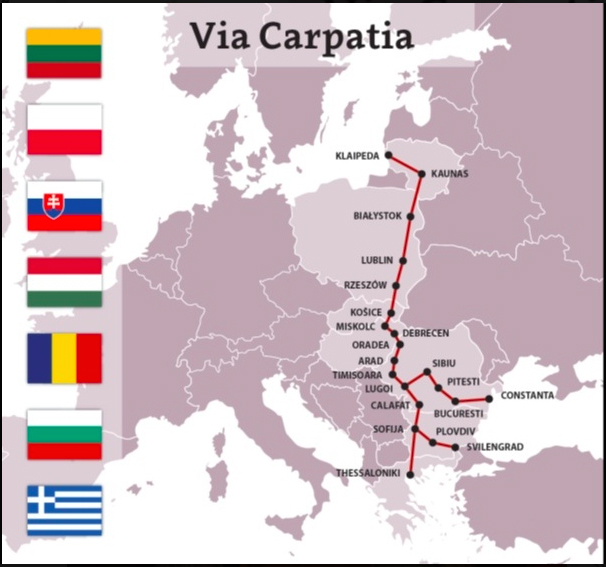
Via Carpatia is a European route; it is actually an ambitious project interstate motorway linking the Baltic Sea and the Black Sea. The route will start in Lithuania, in the city of Kaunas, then continue through Poland, following the Bialystok-Lublin-Rzeszów route; it will then enter Slovakia to cover the Presov-Kosz section, and in Hungary it will run through Miskolc-Debrecen.
On the territory of Romania, the route will be divided into two directions, one towards the port of Constanta on the Oradea-Arad-Timisoara-Lugoj-Deva-Sibiu-Pitesti-Bucarest-Constanta route and the other penetrating into Bulgaria via the future bridge over the Danube at Calafat-Vidin and with the possibility of extending the project to Greece, in the Mediterranean, at the southern border of the European Union.
The project Via Carpatia was C in 2006, when the transport ministers of Poland, Lithuania, Slovakia and Hungary signed a joint declaration to extend the network trans-European transport network by creating a route to connect these four states along a north-south axis. In 2010, project was joined by Romania, Bulgaria and Greece to extend the new route through their respective territories.
Andrzej Adamczyk, Poland's Minister of Public Works, said in May 2017 that the entire 600-kilometre route of this infrastructure in Poland will be completed by 2025. According to him, Via Carpathia "will allow the full potential of the provinces it passes through to be developed, providing a boost for the poorer regions of eastern Poland and the economies of the area".
The purpose of project is to promote the economic development of the region, providing facilities for the development of small and medium-sized business and the creation of technology parks, which should contribute to the creation of employment and enhance research and innovation.
This initiative currently reinforces other policies that also have the goal development of infrastructures in Eastern Europe, such as the 3 Seas Initiative. But it also opens the door to other more ambitious projects, such as the 16+1 and the new Silk Road, both launched by the People's Republic of China.
Connection with China
The 16+1 mechanism is a Chinese initiative aimed at intensifying and expanding cooperation with 11 EU Member States from Central and Eastern Europe (CEE) and 5 Balkan countries (Albania, Bosnia and Herzegovina, Bulgaria, Croatia, the Czech Republic, Estonia, Hungary, Latvia, Lithuania, Macedonia, Montenegro, Poland, Romania, Serbia, Slovakia, Slovenia) in subject investment, transport, finance, science, Education and culture. In the framework of the initiative, China has identified three possible priority areas for economic cooperation: infrastructure, high technologies and green technologies.
The Riga Declaration, a document issued in November 2017 at the China-ECO summit, sets the roadmap for such cooperation. In the Latvian capital, Chinese Premier Li Keqiang and the leaders of Central and Eastern European countries agreed to enhance cooperation internship and increase people-to-people exchanges. In particular, the leaders reaffirmed their desire to achieve effective connectivity between ports on the Adriatic, the Baltic and the Black Sea, through roads and the use of inland waterways.
"The Adriatic-Baltic-Black Sea port cooperation will be a new engine for China-ECO cooperation," said Liu Zoukiu, researcher of the Chinese Academy of Social Sciences, adding that the combination of Chinese equipment, European technology and ECO markets will be a great model for cooperation between China and these 16 nations.
Trade between China and Central and Eastern European countries reached $56.2 billion in 2015, up 28 per cent from 2010. Chinese investment in these 16 nations exceeded $5 billion, while in the opposite direction investment was $1.2 billion.
issue The data also shows that the number of goods train lines between China and Europe has increased to 39 since the connections began in 2011. 16 Chinese cities regularly operate these convoys to a dozen European cities. Beijing's interest in the CEE countries lies precisely in the fact that they are Europe's gateway to the new Silk Road.
|
The future north-south connection, Baltic-Black/Mediterranean [viacarpatia.eu]. |
The European Gateway to the New Silk Road
The 21st Century Silk Road, which the Chinese government has dubbed One Belt One Road (OBOR), is not an institution with clearly defined rules, but rather a strategic vision: it alludes to the ancient Silk Road, the commercial and cultural link between East and West for more than two millennia. The new route aims to be a connectivity network consisting of maritime and land-based economic corridors linking China and the rest of Asia with the Middle East, Europe and Africa. In this way, OBOR puts continents, oceans, regions, countries, cities, international and regional organisations on contact .
The new diplomatic language appears as a seductive tool of Chinese soft power, exported through the routes of trade and diplomacy that reach the gates of Europe. Evoking the historical framework of harmonious coexistence and mutual cultural enrichment, Chinese officialdom defines the "Five Principles of Peaceful Coexistence" as OBOR's core values: (1) mutual respect for sovereignty and territorial integrity; (2) agreement mutual non-aggression; (3) agreement mutual non-intervention in internal affairs; (4) equality and mutual benefit; (5) peaceful coexistence.
China seeks to diversify its trade routes and partners, opening up new consumer markets. At the same time, it is securing supplies of energy and raw materials. Finally, it is expanding its logistical structure and building a China-centred trade network .
Beijing set up a state investment fund, the Silk Road Fund, in 2014 with a capital of $40 billion, earmarked for One Belt, One Road investments. China insists that such financial institutions are not intended to replace existing ones, but rather to complement and collaborate with them in a spirit of inclusiveness and mutual benefit. However, voices from the United States and the European Union have raised some concerns.
US and EU suspicions
US analysts speak of the Chinese European Century (and warn that as investment and trade with Europe grows, so will Beijing's influence over European policies. Indeed, the Asian Infrastructure Investment Bank (AIIB) already has funds of $100 billion, or 50 per cent of the World Bank's capital.
The 16+1 platform was launched to the chagrin of the EU, which was not consulted on the matter beforehand. Brussels observes a status of dependency on the part of some of the continent's poorest countries, caused by a trade asymmetry in favour of China: trains arrive in Warsaw with tons of Chinese goods, but return half-empty. The creation of infrastructure and new production and distribution centres for Chinese goods sometimes progresses beyond the EU's control. Consequently, EU legislative compliance and even European unity itself may be affected.
For the most part, the national interests of European countries seem to be dominated by the pure logic of Economics and lack strategic vision. They have so far made a common and coordinated EU policy towards OBOR impossible. In the absence of unity, Europe is throwing stones at itself and ironically applying to itself the effective "divide and rule" strategy described by the Chinese philosopher Sunzi 2,500 years ago.
New international order
The international order is changing: OBOR, which in paternalistic embrace now encompasses almost all European countries, presents itself as the Chinese alternative to the West's model that has dominated the world until now.
The US is being replaced as the world's leading Economics and losing its political hegemony to the rise of China. This is demonstrated by the reactions of Washington's staunchest allies in Europe, London and Berlin, in joining the OBOR initiative without much hesitation and despite US warnings.
China proposes to create a new international economic and financial order together with Europe. The most notorious milestone of this close partnership is China's injection of up to €10 billion into the EFSI, a decision agreed between Beijing and Brussels in April 2016, making China the largest investor in the so-called Juncker Plan. Together, they can generate economic growth and the creation of employment by building and modernising infrastructure networks that improve intra-European connectivity. This can facilitate the opening up of European products and services for export to new markets and improve their conditions for entrance to China's own market. Europe can benefit from improved connectivity with other hitherto remote regions.
Kenya has the first section of the new railway network financed with financial aid from Beijing.
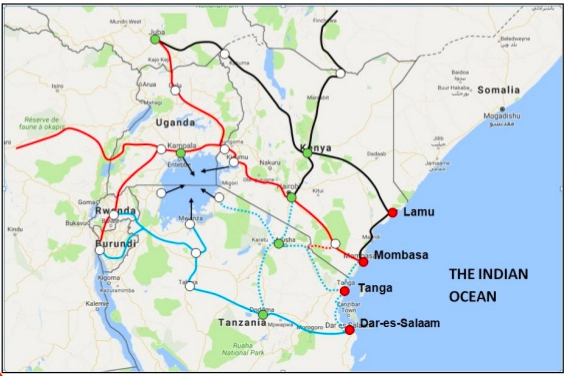
Africa's participation in the New Silk Road promoted by China involves connecting the hinterland of several East African countries with the main ports on their Indian coast. The designed railway network , which introduces standard gauge in the region, has begun to operate between the two main cities of Kenya: Nairobi and the port of Mombasa. But the full realisation of the project is subject to the questionable model of Chinese investment.
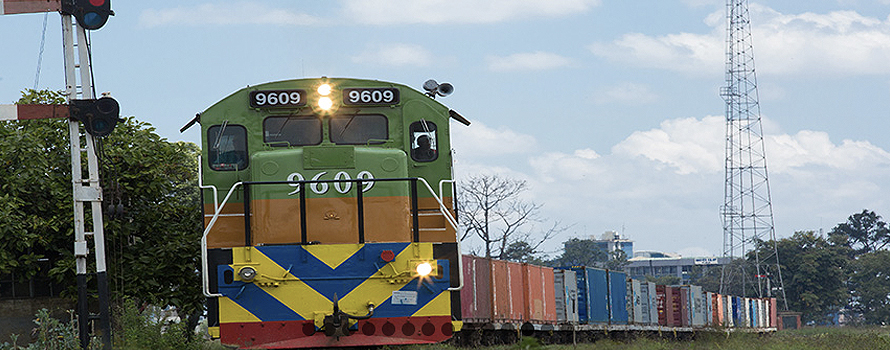
▲Freight transport between Nairobi and Mombasa [Kenya Railways] ▲Freight transport between Nairobi and Mombasa [Kenya Railways].
article / Claudia Correa and Alexia Cosmello
Sino-African relations date back to the 15th century when Zhang, the navigator and trader, arrived on the shores of Mozambique. However, it was with Mao Zedong in 1949 that real relations were established. With promises of respect and taking into account the wounds left by colonisation, China has economically assisted Africa to become its main economic partner since 2009. Through the implementation of economic and technological cooperation projects, it has financed the construction of hydroelectric power plants, dams, airports, aqueducts, hospitals, refineries, gas pipelines, railways and highways in 52 of Africa's 54 countries.
Cooperation between China and Africa has grown considerably. Since 2000, ministerial conferences of the Forum on China-Africa Cooperation (FOCAC) have been held, increasing trade and partnership in areas such as Education, science, technology and health. On the other hand, in terms of lending and investment, China has announced that it will allocate a large part of its capital to projects on the African continent. In 2013, for example, Chinese President Xi Jinping pledged €14.4 billion for infrastructure built by Chinese companies, while in 2014 Premier Li Keqiang announced that China would allocate an additional €8.6 billion to development projects in Africa.
China's rise and intention to broaden and deepen its influence in the world has been very clear in recent years. In September 2013, Xi Jinping presented a new public works expansion project called the New Silk Road. With the goal to gain a foothold in world trade, China aims to improve Asia's connections with other regions by building land routes and articulating a sea route to facilitate trade. Although it is an initiative that will be useful for the international community, it is important to stress the benefits for Africa, since the East African transport route network will be built on its territory, which will give that part of the African continent greater access to world trade, as well as new infrastructure with cutting-edge technology.
Standard Gauge Railway
The network East African freight and passenger goal is intended to connect Kenya's major cities with Uganda's capital Kampala, Burundi's capital Bujumbura, South Sudan's capital Juba and Rwanda's capital Kigali. It is planned to apply standard gauge to most of the route, so the project is known as Standard Gauge Railway (SGR). It is estimated that the network railway will be around 2,935 kilometres in total and will cost around $13.8 billion. position The majority of the financing will be provided by the Chinese government, with financial aid and EiximBank, which will finance 90% of the construction costs, while the Kenyan government will finance the remaining 10% only. The work will be carried out by the Chinese business Road & Bridge Corporation, which is considered to be the most entrepreneurial public business presence in Africa.
The first phase of project, called the Madaraka Express, is now complete and was inaugurated in May 2017. The initiative involved the construction of a railway line to link Nairobi, the capital of Kenya, with Mombasa, the most important port city in Kenya and East Africa. The train can carry 1,260 passengers over a distance of approximately 470 km. With one of the key parts of the network transport network already built, it is possible to continue with the project and move on to the second phase, which will consist of extending the railway lines to the rest of the cities mentioned above.
|
project of the new railway network [Kenya Railways]. |
China's Investment Challenges
What are China's purposes for investing in Africa? It probably does so because it is a large potential market for the sale of its products, as well as a large source source of natural resources. In East Africa, for example, there is oil in Kenya or materials essential for mobile phone batteries in Malawi. In any case, it is clear that this is not a charitable act on the part of the Chinese, as it has been shown that Chinese banks and companies offer financing because it allows them to secure a larger market share in Africa as part of their strategy to go global.
According to Chinese Premier Li Keqiang, "cooperation with Africa is based on respect, equality and mutual benefit". African representatives are enthusiastic about China's investment in Africa's development . The Kenyan president declared that the new train will "revolutionise the region's Economics and reaffirm Kenya's status as an economic hub", and Malawi's ambassador Wang Shiting expressed his thoughts on Africa's development , posting that Africa will only improve when everyone contributes to its development, and that is precisely what China is currently doing.
According to agreement with these official views, from the African point of view, China's intervention on the continent is not seen as negative. However, it does present certain problems, such as the suspicion and accusation of corruption by Chinese investors or the claim that it is aggravatingly widening the economic gap between the more and less well-off, as Chinese investors understandably expect to do business with the continent's elites. There is also the mistreatment of the environment, such as the controversy over the environmental impact of the aforementioned network railway, especially in Kenya, where people have questioned the route through Nairobi Park because of the environmental impact.
It is not only Chinese companies that are investing on the African continent; some Western and European companies have, in some cases, replaced Chinese companies. A prime example is the US multinational General Electric, which in just one year has tripled its workforce in Nigeria, Kenya and Ethiopia. This is possible as a result of the delays or paralysis that some projects have suffered due to the sudden drop in raw material prices and the Chinese slowdown. Thanks to this, some African states with sufficient financial structure have taken the initiative themselves not to let the projects be buried.