
Entries with Categories Global Affairs .
[Eduardo Olier, La guerra económica global. essay sobre guerra y Economics (Valencia: Tirant lo Blanc, 2018), 357 pgs].
review / Emili J. Blasco
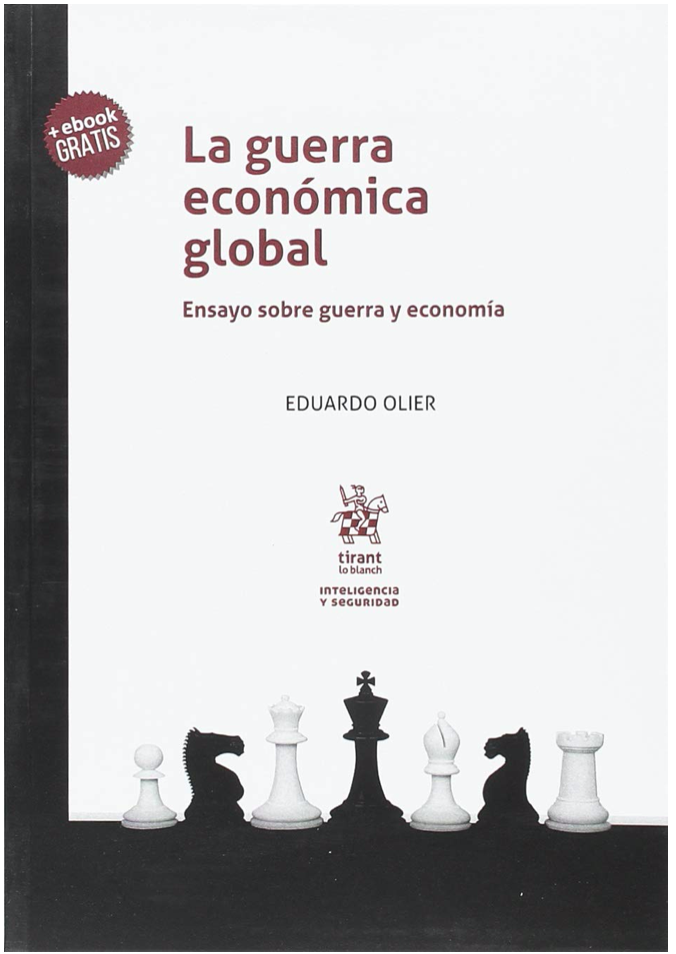
War is to geopolitics what economic war is to geoeconomics. Eduardo Olier, the driving force behind another related field in Spain, economic intelligence, has devoted much of his research and professor to the latter two concepts, which are highly dependent on each other.
The book The Global Economic War ( 2018) is a sort of colophon of what could be considered a trilogy, whose previous volumes were Geoeconomics. Las claves de la Economics global (2011) and Los ejes del poder económico. Geopolitics of the global chessboard (2016). Thus, first there was a presentation of geoeconomics, as a specific field inseparable from geopolitics (the use of the Economics by the powers as a new instrument of force), and then a commitment to the concretisation of the different vectors in struggle, with a prolific use of graphs and statistics, unusual in intellectual production in Spanish for a work of knowledge dissemination. This third book is somewhat more philosophical: it has a certain broom-like quality, finishing off or rounding off ideas that had previously appeared in some cases less contextualised in their conceptual framework , and integrating all the reflections into a more compact edifice. With hardly any graphics, here the narrative flows with more attention to the argumentative process.
The global economic war, moreover, puts the focus on confrontation. "Economic warfare is the reverse of political warfare, just as military wars, always political in origin, end up being economic wars," Olier says. He shares the view that "any economic transaction has at its heart a danger of conflict", that "trade is never neutral and contains within it a principle of violence": at final, that "war is the result of a flawed economic exchange ". The author warns that as a country increases its welfare at the same time it boosts its military capacity to try to gain more power. This need not necessarily lead to war, but economic dependence, according to Olier, increases the chances of war. "The possibility of increasing economic benefits from a potential victory increases the likelihood of starting an armed conflict," he says.
Olier is indebted to the development of this discipline carried out in France, where the School of Economic Warfare was born in 1997 as an academic centre attached to the technical school Libre des Sciences Commerciales Appliquées. These programs of study place special emphasis on economic intelligence, which in France is closely linked to the actions of the state secret services in defence of the international position of large French companies, whose interests are closely linked to national imperatives when it comes to strategic sectors. Olier represents in Spain the high school Choiseul, a French think tank dedicated to these same issues.
Among the interesting contributions of The Global Economic War is the dating and interrelation of the successive versions of the internet, globalisation and NATO: the beginning of the Cold War, 1950 (globalisation 1.0 and NATO 1.0); the dissolution of the USSR, 1991 (globalisation 2.0); creation of the internet, 1992 (web 1.0); entrance of Poland in NATO (NATO 2.0); birth of social networks, 2003 (web 2.0); annexation of Crimea by Russia and consolidation of cyberspace in all activities, 2014 (globalisation 3.0, NATO 3.0 and web 3.0). In this schedule he adds at another point the currency war: currency war 1.0 (1921-1936), 2.0 (1967-1987), 3.0 (2010); this is not an outlandish addendum , but very much to purpose, as Olier argues that, if raw materials are one of the keys to economic warfare, currencies "are no less the subject commodity of the Economics, as they can mark who has and who does not have power".
All this reflection is set in the context of a chain of cycles and counter-cycles, where economic and political cycles are interconnected. reference letter Referring to Kondratiev's long cycles, which are renewed every half century, he recalls that the last cycle would have begun in 1993, so that "the expansionary period should last until 2020, before falling and fill in the 50-year cycle, more or less, towards 2040, when a new expansion would begin" (Olier writes this without foreseeing how the current pandemic would, for the time being, reinforce the prediction).
Just as in geopolitics there are a few imperatives, geoeconomics is also governed by some laws, such as those that move directly to the Economics: when there is economic growth, leave unemployment rises and inflation rises, and vice versa; the conflict for a country and its international environment is when Economics goes down, unemployment rises and so does inflation, giving rise to stagflation status .
Geoeconomics as discipline forces us to look squarely at present and future realities, without allowing ourselves to be fobbed off with wishful thinking about the world we would like, which is why the outlook on the European Union ends up being sombre. Olier believes that Europe will experience its instability without revolutions, but with a loss of global power. "The bureaucratisation of the Structures government in Brussels will only help to increase populism. Brexit (...) will be a new silent revolution that will diminish the power of the whole. This will be increased by the different visions and strategies" of the member states. "A circumstance that will give greater power to Russia in Europe, while the United States will look to the Pacific in its staff conflict with China".
In his opinion, only France and Britain, because of their military power, show signs of wanting to participate in the new world order. The other major European countries are left to one side: Germany sample that economic power is not enough, Italy has enough to try not to disintegrate politically... and Spain is "the weakest link in the chain", as was the case just over eighty years ago, when the new order that was taking shape in Europe first confronted the major powers in the Spanish Civil War before the outbreak of the Second World War. Olier warns that "the nirvana of affluent European societies" will be seriously threatened by three phenomena: the instability of internal politics, mass migrations from Africa and demographic ageing that will cause them to lose dynamism.
[Pablo Pérez López, Charles de Gaulle, el estadista rebelde (Ciudadela: Madrid, 2020), 218 pp.]
review / Jairo Císcar
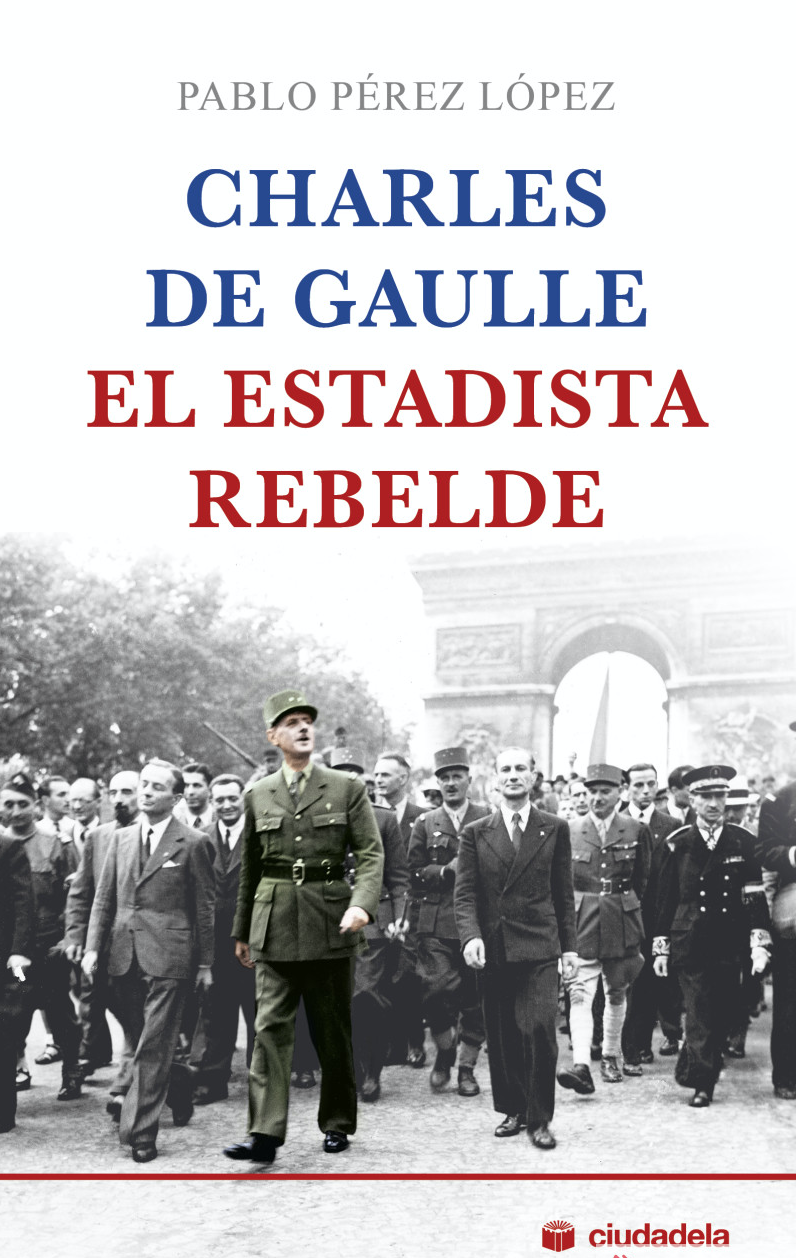 Coinciding with the 50th anniversary of Charles de Gaulle's death and the 75th anniversary of the Allied victory in the Second World War, Professor Pablo Pérez López publishes this new biography of "the most illustrious of the French", as he is sometimes referred to. When one undertakes to write a biography, and even more so when it is about a figure about whom countless books and articles have been written, one runs the risk of becoming diluted in what has gone before and contributing nothing new. However, this volume presents the character from a different perspective: his rebelliousness. Rebelliousness understood as a fight for what one believes to be just, as an active non-conformism that pushes one to overcome mediocrity, as love and service to France in its darkest moments. I believe that this is precisely one of the book's greatest achievements: to present, in barely 200 pages and in a friendly and direct style, a new portrait of the French general, who - beyond the excusable chiaroscuros of any person - is a model to be followed and an example of courage that is fully up to date.
The book presents De Gaulle's life chronologically, from his childhood to his death. An analysis of his early life is fundamental to understanding the great man he would later become. We are presented with a restless and dreamy young man, a devout Christian from a very early age. A young man who, at the age of just 14, discovered a vocation, that of military life, which would mark his whole life and the lives of millions of his compatriots, and who would apply himself to it to the point of becoming a leader A . Also noteworthy in the book is the extensive use of passages from his memoirs or handwritten texts of the protagonist, which reveal the most unknown facet of the character: his psyche, his love, his devotion, his rebelliousness. For it must be stressed that sample is a self-aware (but not overbearing) De Gaulle who is clear that he has a mission statement.
We soon move on to introduce the then captain, who excelled during the Great War for his keen analysis and foresight, his love of France never clouding his judgement when it came to pointing out his own and others' failings. A young man who, despite the humiliation of being taken prisoner (despite his heroic efforts that earned him the Legion of Honour), never ceased to learn and examine the enemy, making the most of every moment of his 32 months in captivity.
We follow his development after the Great War, already as a promising member of Petáin's entourage. But it was not all success. De Gaulle's life is marked by the greatness of men who know how to overcome difficulties. Perhaps the most special, and where his true character can be seen, is in the life of his daughter Anne, who suffered from Down's syndrome, and with whom de Gaulle developed an extraordinary bond and closeness. It was with her that the thoughtful general dressed as an affable and affectionate father.
This training of his character seems to me essential to understand the rest of the book, and therefore the rest of his life. Without wishing to end up making a complete summary of the volume (which, as mentioned above, covers his entire life, with special and necessary emphasis on his "political life"), I felt it necessary to reflect the singular proposal and goal of this book, which is none other than to show that more unknown side of the French general, that rebelliousness and non-conformism that led him to play a very important role in the creation of the current form of the French Republic and whose imprint, 50 years after his death, is still alive in Europe and in French politics.
Personally, I was very attracted by the style and organisation of the writing. It makes proposal enjoyable and easy to read, while at the same time a very serious and profound work , which invites constant reflection. sample the intimacy and loneliness of a man faced with the incomprehension of his contemporaries, with respect to whom he was always ahead of the curve. A man who, at final, always put the greater good, his beloved France, before his own. An expert tankman who knew how to lead his country at such different times: the Free French government in London, the parade on the Champs Elysées, the revolt in Algiers, the birth of the Fifth French Republic, May '68 and his final resignation, as a man of honour, after losing the referendum on the Senate and the regions which he called, in one of his last acts of rebellion, against all his advisors.
Finally, de Gaulle was a rebel to the death, refusing any state funeral and resting, with his beloved daughter, in a small French village. His tombstone - which simply reads: Charles de Gaulle, 1890-1970 - merely shows his final rebellion. The man died, but the myth was born.
[Juan Tovar Ruiz, La doctrina en la política exterior de Estados Unidos: De Truman a Trump ( Madrid: Catarata, 2017) 224 pages].
review / Xabier Ramos Garzón
Every change in the White House leads to an analysis of the outgoing president's policies and speculation about the incoming president's policies. Given the weight of the United States in the world, each administration's vision of international affairs is decisive for the world order. Juan Tovar Ruiz, professor of International Office at the University of Burgos, deals in this book with the essence of each president's foreign policy - mainly from Truman to Trump (Biden's, logically, has yet to be defined) - which in many cases follows a defined roadmap that has come to be called 'doctrine'.
The book's strengths include the fact that it combines several points of view: on the one hand, it covers, from a realist point of view, the structural and internal effects of each policy, and on the other hand, it analyses the ideas and interactions between actors from a constructivist point of view. The author explores decision-making processes and their consequences, considers the ultimate effectiveness of American doctrines in the general context of International Office, and examines the influences, ruptures and continuities between different doctrines over time. Despite the relatively short history of the United States, the country has had an extensive and complex foreign policy, which Tovar, focusing on the last eight decades, synthesises with particular merit, adopting a mainly general viewpoint that highlights the substantive.
The book is divided into seven chapters, organised by historical stages and, within each, by presidents. The first chapter, by way of introduction, covers the period following US independence until the end of World War II. This period is sample as a background core topic in future American ideology, with two particularly decisive positions: the Monroe Doctrine and Wilsonian Idealism. The second chapter deals with the First Cold War, with the Truman, Eisenhower, Kennedy and Johnson doctrines. The chapter contextualises the various postulates and identifies the issues that went to core topic in the creation of doctrines that only affected the foreign policy of the time, but became embedded in the core of American political thought. The third chapter deals with the Distension, the period between 1969 and 1979 in which the Nixon and Carter doctrines came into being. The fourth chapter takes us to the Second Cold War and the end of the US-USSR confrontation, a time when we find the doctrines of Reagan and Bush senior. From this point, the following chapters (fifth, sixth and seventh) deal with the post-Cold War period, with the doctrines of Clinton, Bush junior and the more recent - and therefore still subject to study - doctrines of Obama and Trump.
In the conclusions, the author summarises each of the chapters on the basis of academic or political characterisations and makes some qualifications, such as warning that in his opinion Obama's foreign policy is more of a "non-doctrine", as it combines elements of different ideologies and is partly contradictory. Obama dealt with various conflicts in different ways: he dealt realistically with "wars of necessity" (Afghanistan) and agreement with the liberal internationalist approach to conflicts such as Libya. While Obama's flexibility might be considered a weakness by some, as he did not follow a firm and marked policy, it can also be seen as the necessary adaptation to a continuously changing environment. On many occasions a US president, such as Bush Jr., has pursued a rigid foreign policy, ideologically speaking, that ultimately achieved little practical success written request .
Another example of a variant of the conventional doctrine that sample the author gives is the "anti-doctrine" carried out by Trump. The man who was to be president until 2021 implemented a policy characterised by numerous contradictions and variations on the role that the US had been playing in the world, thereby casting doubt and uncertainty on the expected behaviour of the American superpower. This was due to Trump's political inexperience, both domestically and domestically, which caused concern not only among international actors but also at the core of Washington itself.
From the analysis of the different doctrines presented in the book, we can see how each of them is adapted to a specific social, historical and political context, and at the same time they all respond to a shared political tradition of a country that, as a superpower, manifests certain constants when it comes to maintaining peace and guaranteeing security. But these constants should not be confused with universal aspects, as each country has its own particularities and interests: simply adapting US positions to the foreign policy plans of other countries can lead to chaotic failures if these differences are not recognised.
For example, countries like Spain, which depend on EU membership, would not be able to enter into random wars unilaterally as the US has done. However, Spain could adopt some elements, such as in subject of decision-making, as this subject of doctrines makes it much easier to objectify and standardise the processes of analysis and resolutions.
[Mondher Sfar, In search of the original Koran: the true history of the revealed text (New York: Prometheus Books, 2008) 152pp].
REVIEW / Marina G. Reina
Not much has been done regarding research about the authenticity of the Quranic text. This is something that Mondher Sfar has in mind throughout the book, that makes use of the scriptural techniques of the Koran, the scarce research material available, and the Islamic tradition, to redraw the erased story of the transmission of the holy book of Muslims. The same tradition that imposes "a representation of the revelation and of its textual product-which (...) is totally alien to the spirit and to the content of the Quranic text".
The work is a sequencing of questions that arise from the gaps that the Islamic tradition leaves regarding the earliest testimony about the Koran and the biography of Prophet Muhammad. The result is an imprecise or inconclusive answer because it is almost impossible to trace the line back to the very early centuries of the existence of Islam, and due to an "insurmountable barrier" that "has been established against any historical and relativized perception of the Koran (...) to consecrate definitively the new orthodox ideology as the only possible and true one".
As mentioned, Sfar's main sources are those found in the tradition, by which we mean the records from notorious personalities in the early years of the religion. Their sayings prove "the existence in Muhammad's time of two states of the revealed text: a first state and a reworked state that have been modified and corrected". This fact "imperils the validity and identity of Revelation, even if its divine authenticity remains unquestioned."
The synthesis that the author makes on the "kinds of division" (or alterations of the Revelation), reducing them to three from certain ayas in the Koran, is also of notorious interest. In short, these are "that of the modification of the text; that of satanic revelations; and finally, that of the ambiguous nature of the portion of the Revelation". The first one exemplifies how the writing of the Revelation was changed along time; the second is grounded on a direct reference to this phenomenon in the Koran, when it says that "Satan threw some [false revelations] into his (Muhammad's) recitation" (22:52), something that, by the way, is also mentioned in the Bible in Ezekiel 13:3, 6.
Another key point in the book is that of the components of the Koran (the surahs and the ayas) being either invented or disorganised later in time. The manuscripts of the "revealed text" vary in style and form, and the order of the verses was not definitively fixed until the Umayyad era. It is remarkable how something as basic as the titles of the surahs "does not figure in the first known Koranic manuscript", nor was it reported by contemporaries to the Prophet to be ever mentioned by him. The same mystery arises upon the letters that can be read above at the beginning of the preambles in the surahs. According to the Tradition, they are part of the Revelation, whilst the author argues that they are linked to "the process of the formation of surahs", as a way of numeration or as signatures from the scribes. As already mentioned, it is believed that the Koran version that we know today was made in two phases; in the second phase or correction phase surahs would have been added or divided. The writer remarks how a few surahs lack the common preambles and these characteristic letters, which leads to think that these elements were added in the proofreading part of the manuscript, so these organisational signals were omitted.
It may seem that at some points the author makes too many turns on the same topic (in fact, he even raises questions that remain unresolved throughout the book). Nonetheless, it is difficult to question those issues that have been downplayed from the Tradition and that, certainly, are weighty considerations that provide a completely different vision of what is known as the "spirit of the law". This is precisely what he refers to by repeatedly naming the figure of the scribes of the Prophet, that "shaped" the divine word, "and it is this operation that later generations have tried to erase, in order to give a simplified and more-reassuring image of the Quranic message, that of a text composed by God in person," instead of being "the product of a historical elaboration."
What the author makes clear throughout the book is that the most significant and, therefore, most suspicious alterations of the Koran are those introduced by the first caliphs. Especially during the times of the third caliph, Uthman, the Koran was put on the diary again, after years of being limited to a set of "sheets" that were not consulted. Uthman made copies of a certain "compilation" and "ordered the destruction of all the other existing copies". Indeed, there is evidence of the existence of "other private collections" that belonged to dignitaries around the Prophet, of whose existence, Sfar notes that "around the fourth century of the Hijra, no trace was left."
The author shows that the current conception of the Koran is rather simplistic and based on "several dogmas about, and mythical reconstructions of, the history." Such is the case with the "myth of the literal 'authenticity'," which comes more "from apologetics than from the realm of historical truth." This is tricky, especially when considering that the Koran is the result of a process of wahy (inspiration), not of a literal transcription, setting the differentiation between the Kitab ( "the heavenly tablet") and the Koran ("a liturgical lesson or a recitation"). Moreover, Sfar addresses the canonization of the Koran, which was made by Uthman, and which was criticized at its time for reducing the "several revelations without links between them, and that they were not designed to make up a book" into a single composition. This illustrates that "the principal star that dominated the period of prophetic revelation was to prove that the prophetic mission claimed by Muhammad was indeed authentic, and not to prove the literal authenticity of the divine message," what is what the current Muslim schools of taught are inclined to support.
In general, although the main argument of the author suggests that the "Vulgate" version of the Koran might not be the original one, his other arguments lead the reader to deduce that this first manuscript does not vary a lot from the one we know today. Although it might seem so at first glance, the book is not a critique to the historicity of Islam or to the veracity of the Koran itself. It rather refers to the conservation and transmission thereof, which is one of the major claims in the Koran; of it being an honourable recitation in a well-guarded book (56:77-78). Perhaps, for those unfamiliar with the Muslim religion, this may seem insignificant. However, it is indeed a game-changer for the whole grounding of the faith. Muslims, the author says, remain ignorant of a lot of aspects of their religion because they do not go beyond the limits set by the scholars and religious authorities. It is the prevention from understanding the history that prevents from "better understanding the Koran" and, thus, the religion.
Javier Blas & Jack Farchy, The World For Sale. Money, Power and the Traders. Who Barter the Earth's Resources (London: Random House Business, 2021) 410 pp.
review / Ignacio Urbasos
In what is probably the first book dedicated exclusively to the world of commodities trading, Javier Blas and Jack Farchy attempt to delve into a highly complex industry characterised by the secrecy and opacity of its operations. With more than two decades of journalistic experience covering the world of natural resources, first for the Financial Times and later for Bloomberg, the authors use valuable testimonies from professionals in the sector to construct an honest account.
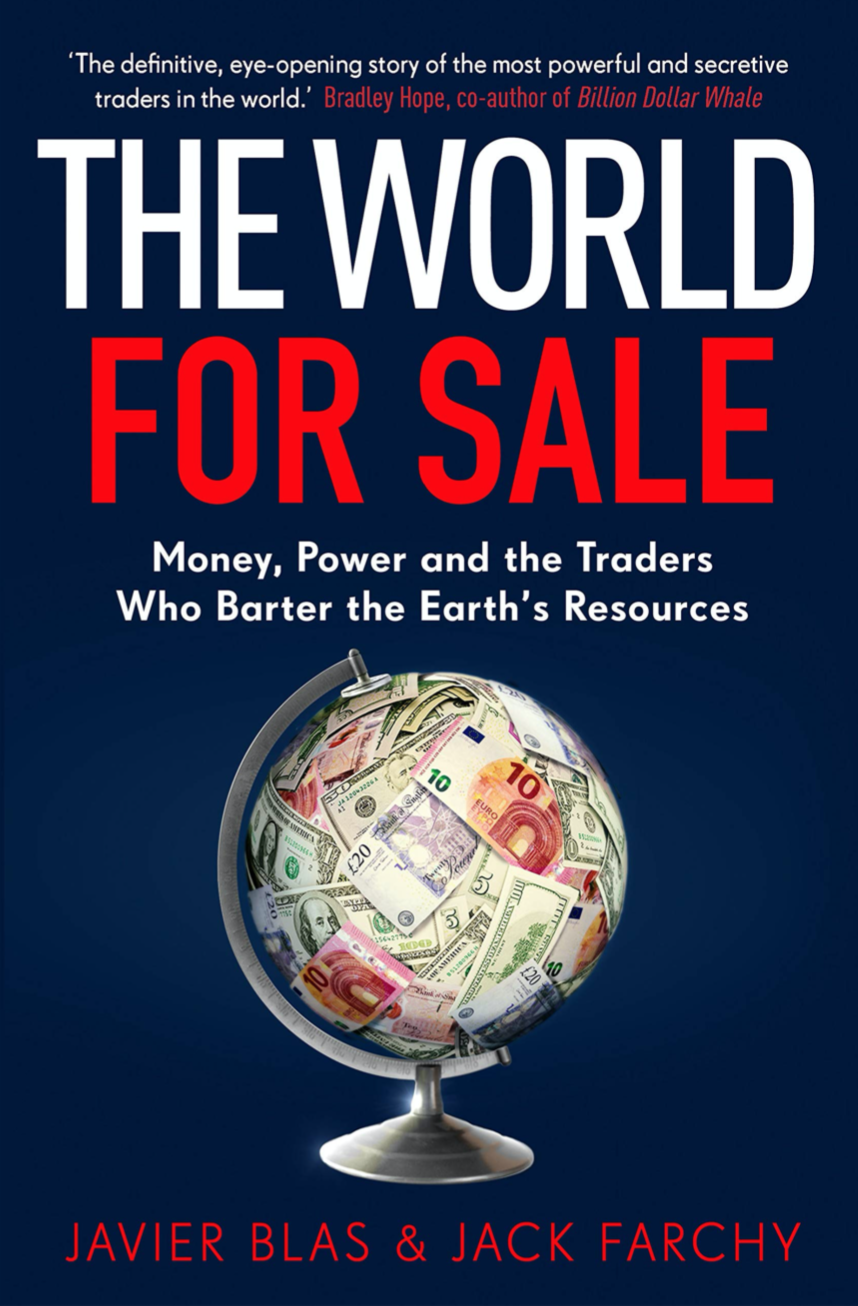
The book covers the history of the commodity trading world, beginning with the emergence of small intermediaries responding to the growing need after World War II to supply raw materials to Western economies in their reconstruction processes. The oil nationalisation of the 1960s offered an unprecedented opportunity for these intermediaries to enter a sector that had hitherto been restricted to the traditional oil majors. The new petro-states, now in control of their own oil production, needed someone to buy, store, transport and ultimately sell their oil abroad. This opportunity, coupled with the oil crises of 1973 and 1978, allowed these intermediaries to reap unprecedented spoils: a booming sector with enormous price volatility, which allowed for profits in the millions. With the fall of the Soviet Union and the socio-economic collapse of a large part of the socialist world, companies dedicated to the purchase and sale of raw materials found a new market, with enormous natural resources and without any subject experience in the capitalist market Economics . With the entrance of the 21st century and the so-called " CommoditySupercycle", trading companies enjoyed a period of exorbitant profits in a context of rapid global growth led by China. It is in these last two decades that Vitol, Trafigura, Glencore or Cargill increased their revenues exponentially, with a global presence and managing all commodities, both physically and financially, through subject .
Throughout the different chapters, the authors tackle the complexities of the world of trading without complexes. On many occasions, these companies have enabled countries in crisis to avoid economic collapse by offering financing and the possibility of finding a market for their resources, as in the paradoxical case of Cuba, which threw itself into the arms of Vitol to supply oil in exchange for sugar during the "Special Period". However, the dominant position of these companies vis-à-vis states in an enormously vulnerable status has ended up generating relationships in which the benefits are unequally shared. A paradigmatic case that is exhaustively covered in the book is that of Jamaica in the 1970s, which was heavily indebted and impoverished, when Marc Rich and Company became one of the country's main creditors in exchange for de facto control of the country's bauxite and aluminium mining production. These situations continue today, with Glencore as Chad's largest creditor and a key player in the country's fiscal austerity policies.
Nor do the authors hide the unscrupulousness of these companies in maximising their profits. Thus, they supplied apartheid South Africa with oil or clandestinely sold Iranian crude oil in the midst of the Hostage Crisis. Similarly, these big companies have never had problems dealing with autocrats or being active in major corruption schemes. Nor have environmental scandals been a rarity for these companies, which have been forced to pay millions in compensation for negligent management of toxic products, as in the case of Glencore and the sulphur spill in Akouedo, which resulted in 95,000 victims and the payment of 180 million to the government of Côte d'Ivoire. It is not surprising that many of the executives of these companies have ended up in prison or persecuted by the law, as in the case of Mark Rich, founder of Glencore, who had to live in Spain until he obtained a controversial pardon from Bill Clinton on the last day of his presidency.
There is no doubt that The World For Sale by Javier Blas and Jack Farchy provides a better understanding of a sector as opaque as the commodities trade. An industry dominated by companies with complex fiscal Structures transnational presence and whose activities often remain outside of public scrutiny. As an industry of growing economic and political importance, it is essential to read this book to gain a critical and realistic perspective on an essential part of our globalised Economics .
review / Emili J. Blasco
The discipline of "political risk" can be conceived in a restrictive way, as usual, referring to the prospective analysis of disruptions that, by states and governments, can affect political and social stability and the regulatory framework and, therefore, the interests of investors, companies and economic sectors. This conception, which globalisation also leads to call "geopolitical risk", is only a part - in fact, the minor part - of Nigel Gould-Davies' approach, who by putting the adjective "global" in the degree scroll of his book is referring to a conceptually more general political risk, merged with fields such as corporate reputation, public affairs and business diplomacy.
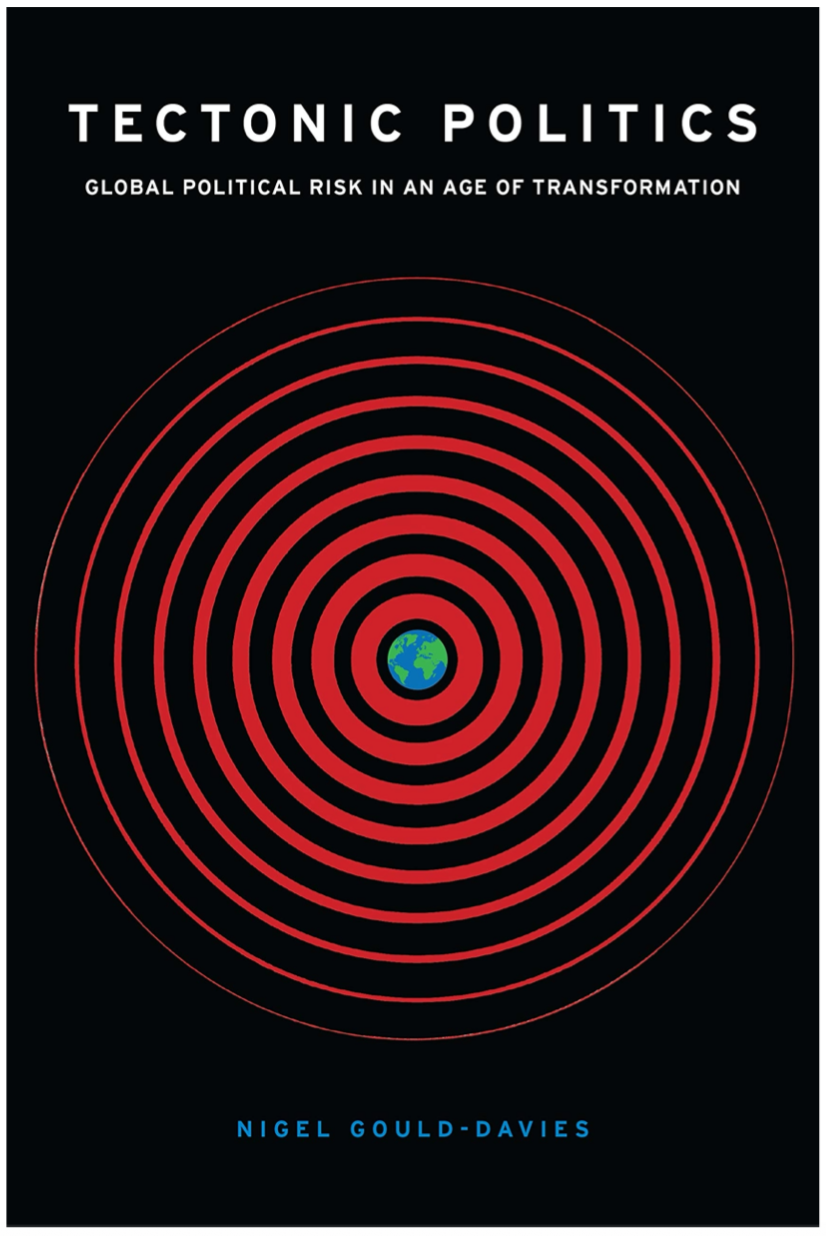
The author claims that the relationship with the environment is essential for a business and calls for a company's management to always have someone manager of engagement (which we could translate as involvement, commitment, participation or partnership): an engager who has the same level of authority as the engineer who knows how to manufacture the product and the salesperson who knows how to monetise it; someone specialised in "persuading" external actors - governments and civil society groups - of the company's goodness, creating "alignments" that are beneficial for business. Engagement at both the national and international level, if the activity or interests go beyond one's own borders, giving rise to "corporate diplomacy", as the current "increase in political risks means that a company needs a foreign policy".
Gould-Davies sees these more political issues not as an "impertinent intrusion" into markets, but as something endogenous to them. So the business, in addition to attending to production and marketing issues, must also pay equal attention to a third dimension: engagement with political and social actors to avoid or overcome risks that it faces in that external sphere. This is "a third activity and a third role to carry it out: a new political piece in the mechanism of value creation".
The author emphasises management on the present and the very short term future deadline, and downplays the importance of short and medium term prospective analysis deadline which has been the preserve of political risk analysts. He complains that the latter have paid "too much attention to prediction, with its frequent disappointments, and too little to engagement"; " engagement, on the other hand, requires relatively little prediction beyond the short deadline". "There is a lot of unbalanced political risk activity, producing a lot of analysis and prediction, but much less guidance on what to do".
Moreover, unlike the usual political risk analysis, which is more focused on the actions of states or governments, the concept the author uses extends very specifically to the pressures that can arise from civil society. "The new political risks emerge from non-state social forces: consumers, investors, public opinion, civil society, local communities and the media. They do not seek to challenge ownership or rights to use productive assets. They do not seek to destroy, take or block. Their focus is narrower: they usually seek to regulate the terms on which production and trade take place (...) Their motive is usually an ethical commitment to justice and equity. Their goal is to mitigate the wider adverse impacts of corporate activity on others; they are selfless rather than self-serving".
Gould-Davies notes that while previously the norm was government threats in development or emerging countries with less stable societies and unconsolidated rule of law, today pressures on business are increasing in developed nations. "The likelihood of major conflict and de-globalisation is increasing, but more importantly, its impact is shifting towards the developed world," he writes. Moreover, the fact that there is less and less social peace in Western countries is an increasingly disturbing element: "Sustained civil violence in a highly developed country is no longer a black swan, but a grey swan: improbable but conceivable; possible to define, but impossible to predict".
By focusing on management in the present and characterising the activity as engagement, which is in itself very communication-centred, Gould-Davis stretches the classical concept of political risk, which has been more oriented towards analysis and foresight, too far. In doing so, he treads on activities that are becoming widely known development for their own sake, such as corporate communication and reputation or influencing regulatory issues through lobbying or public affairs management functions.
[Marko Papic, Geopolitical Alpha. An Investment Framework for Predicting the Future (Hoboken, New Jersey: Wiley, 2021), 286 pages].
review / Emili J. Blasco
"In the post-Trump and post-Brexit era, geopolitics is all that counts," says Marko Papic in Geopolitical Alpha, a book on political risk whose purpose aims to provide a method or framework from work for those involved in foresight analysis. consultant in investment funds, Papic condenses here his experience in a profession that has gained attention in recent years due to growing national and international political instability. development Whereas risk factors used to be concentrated in emerging countries, they are now also present in the advanced world.
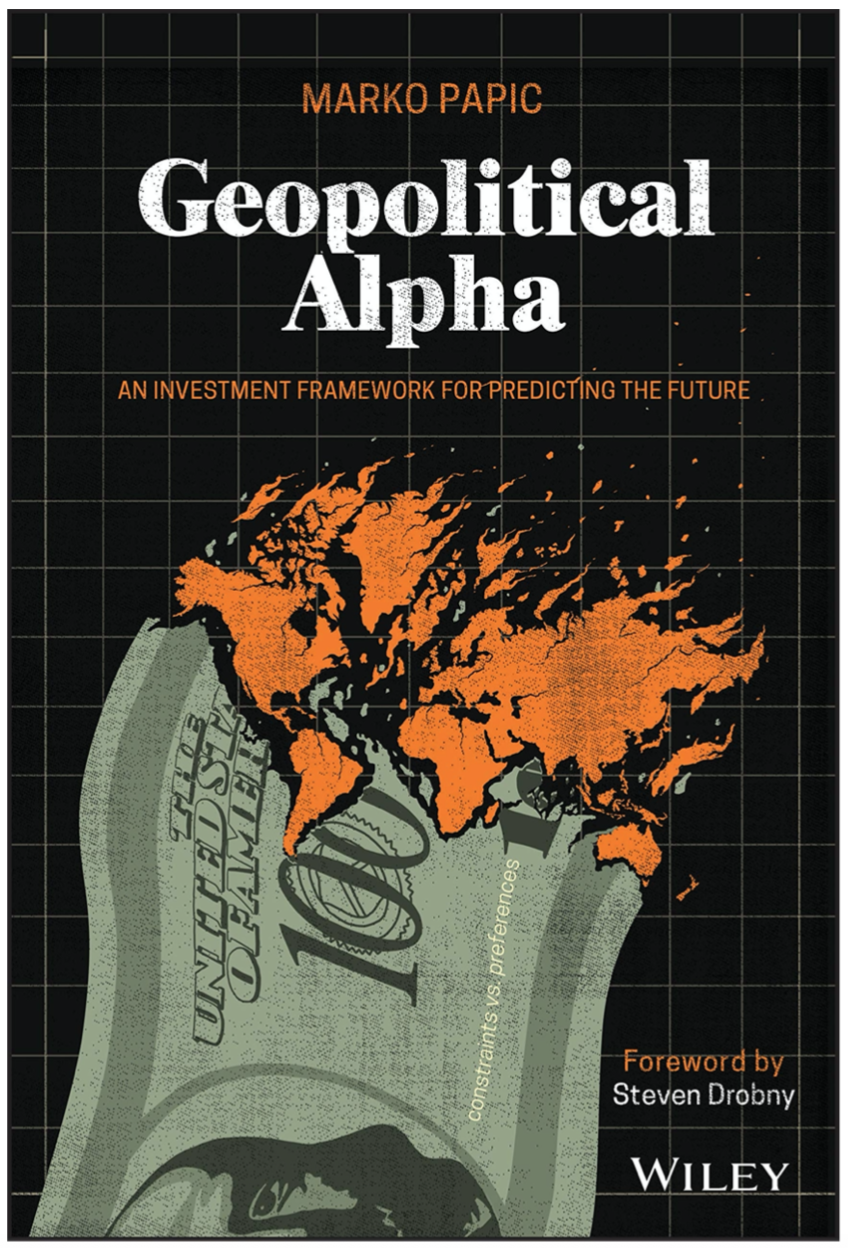 With the book's degree scroll , Papic designates a process of analysis in which geopolitics proper, in its most geographically related sense, is only one part of the considerations to be taken into account, as the author argues that political and then economic (and financial) determinants matter first. For the whole of the analysis and the estimates it gives rise to, Papic uses the qualifier "alpha geopolitics" (or "alpha geopolitics"), as referring to a plus or reinforced geopolitics: one that takes into account political or macroeconomic constraints in addition to traditional geopolitical imperatives.
At bottom it is a nominalist question, in a collateral battle in which the author unnecessarily entangles himself. It is arguably a settling of scores with his former employer, the George Friedman-led Stratfor, whom Papic praises in his pages, but who he seems to covertly criticise for basing much of his foresight on the geography of nations. To suggest that, however, is to make a caricature of Friedman's solid analysis. In any case, Papic has certainly reinforced his training with programs of study financials and makes useful and interesting use of them.
The central idea of the book, leaving aside this anecdotal rivalry, is that in order to determine what governments will do, one should look not at their stated intentions, but at what constrains them and compels them to act in certain ways. "Investors (and anyone interested in political forecasting) should focus on material constraints, not politicians' preferences," says Papic, adding a phrase that he repeats, in italics, in several chapters: "Preferences are optional and subject to constraints, while constraints are neither optional nor subject to preferences.
These material constraints, according to the order of importance established by Papic, are political conditioning factors (the majority available, the opinion of the average voter, the level of popularity of the government or the president, the time in power or the national and international context, among other factors), macroeconomic and financial constraints (budgetary room for manoeuvre, levels of deficit, inflation and debt, value of bonds and currency....) and geopolitical ones (the imperatives that, derived initially from geography - the particular place that countries occupy on the world stage - mark the foreign policy of nations). To that list, add constitutional and legal issues, but only to be taken into account if the aforementioned factors do not pose any constraint, for it is well known that politicians have little trouble circumnavigating the law.
The author, who presents all this as a method or framework of work, considers that the fact that there may be irrational politicians who entrance do not submit to objective material constraints does not derail the approach, since this status is eventually overcome because "there is no irrationality that can alter reality". However, he admits as a possible objection that, just as the opinion of the average voter conditions the actions of the politician, there may be a "hysterical society" that conditions the politician and is not itself affected in the short term deadline by objective constraints that make it bend to reality. "The time it takes for a whole society to return to sanity is an unknown and impossible prognosis," he acknowledges.
Papic proposes a reasonable process of analysis, broadly followed by other analysts, so there is no need for an initial, somewhat smug boast about his personal prospective skills, which are indispensable for investors. Nevertheless, the book has the merit of a systematised and rigorous exhibition .
The text is punctuated with specific cases, the analysis of which is not only well documented but also conveniently illustrated with tables of B interest. Among them is one that presents the evolution of pro-euro opinion in Germany and the growing Europhile position of the average German voter, without which Merkel would not have reached the previously unthinkable point of accepting the mutualisation of EU debt. Or those that note how England, France and Russia's trade with Germany increased before the First World War, or that of the United States with Japan before the Second World War, exemplifying that rivalry between nations does not normally affect their commercial transactions.
Other interesting aspects of the piece include his warning that "the class average will force China out of geopolitical excitement", because international instability and risk endangers Chinese economic progress, and "keeping its class average happy takes precedence over dominance over the world". "My constraint-based framework suggests that Beijing is much more constrained than US policymakers seem to think (...) If the US pushes too hard on trade and Economics, it will threaten the prime directive for China: escape the middle-income trap. And that is when Beijing would respond with aggression," says Papic.
Regarding the EU, the author sees no risks for European integration in the next decade. "The geopolitical imperative is clear: integrate or perish into irrelevance. Europe is not integrating because of some misplaced utopian fantasy. Its sovereign states are integrating out of weakness and fear. Unions out of weakness are often more sustainable in the long run deadline. After all, the thirteen original US colonies integrated out of fear that the UK might eventually invade again.
Another suggestive contribution is to label as the "Buenos Aires Consensus" the new economic policy that the world seems to be moving towards, away from the Washington Consensus that has governed international economic standards since the 1980s. Papic suggests that we are exchanging the era of "laissez faire" for one of a certain economic dirigisme.
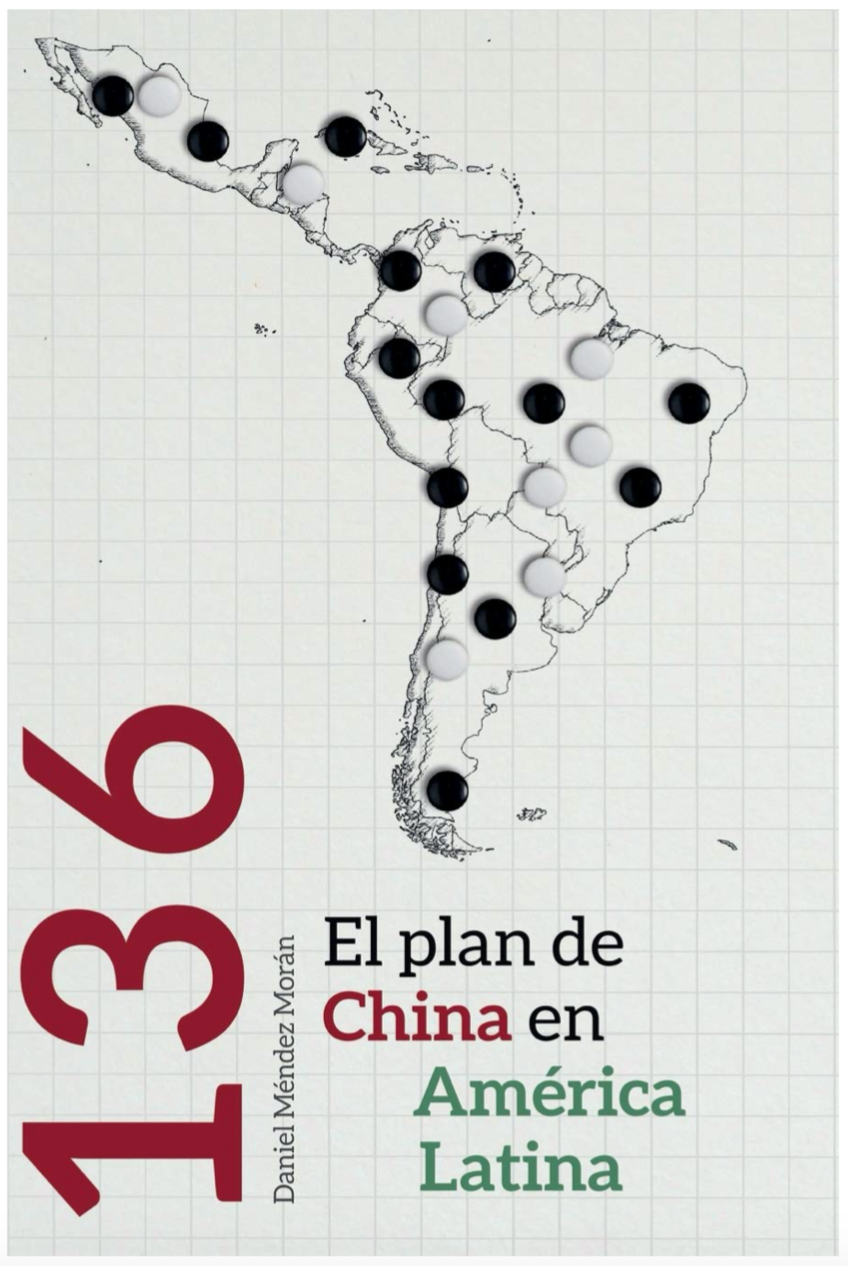
[Daniel Méndez Morán, 136. China's plan in Latin America (2018), 410 pages].
review / Jimena Puga
By means of a first-person on-the-ground research and the testimony staff of Chinese and Latin Americans, who give the story the character of a documented report, Daniel Méndez summarises in detail the mark that the growing Asian superpower is leaving in the region. This gives the reader an insight into the relations between the two cultures from an economic and, above all, political point of view. The figure of degree scroll -136- is the issue that, according to the author, Beijing assigns to its plan for Latin America, in its planning of different sectoral and geographical expansion programmes around the world.
The book begins by briefly reflecting on China's rapid growth since the death of Mao Zedong and thanks to Deng Xiaoping's growth and opening-up policies between 1980 and 2000. This resurgence has not only been reflected in China's Economics but also in society. The new generations of Chinese professionals are better educated training and more fluent in foreign languages than their elders, and therefore better prepared for International Office. However, Liu Rutao, Economic and Commercial Counsellor at the Chinese Embassy in Chile explains to the author that "the history of China's going abroad is only fifteen years old, so neither the government nor the companies have a very mature thinking on how to act abroad, so we all need to study".
However, the country's short experience in the international arena is not an obstacle since, as the book shows, China has a very effective shortcut to accelerate this learning process: money. In fact, the goal of many of the most important Chinese investments in Latin America is not only access to natural resources, but also to human capital and, above all, to knowledge. Thanks to their huge financial resources, Chinese companies are acquiring companies with experience and contacts in the Americas, hiring the best professionals in each country and buying brands and technologies. "This phase is very difficult. Chinese companies are going to pay to learn. But everything is learned by paying," diplomat Chen Duqing, China's ambassador to Brazil between 2006 and 2009, explained to Méndez.
After this overview, the book moves on to China's relationship with different Latin American partners. In the case of Mexico, there is a struggle against the famous made in China. The empire at the centre went to Mexico 40 years ago to study the maquiladora programme; when they returned, Méndez explains, they said: "Mexico is doing that for the United States, we are going to do it for the world". And so, a few years later, China designed and improved the strategy. There is little doubt that made in China has won the day over Mexican maquiladoras, and it is all these decades of skill and frustration that explain the complex political relations between the two countries. This is what the people interviewed by the author testify to. To Jorge Guajardo, this model reminds him of the colonial order imposed by Spain and continued by the United Kingdom: "I sometimes said to the Chinese: 'Gentlemen, you cannot see America: Gentlemen, you cannot see Latin America as anything other than a place where you go for natural resources and in return you send manufactured goods. We were already a colony. And we didn't like it, it didn't work. And we chose to stop being one. You don't want to repeat that model".
The result of these new tensions is that neither country has achieved what it was looking for. Mexico has barely increased its exports to China and the Asian giant has barely increased its investments in the Latin American country. In 2017 there were only 30 Chinese companies installed in Mexico, a very small number compared to the 200 in Peru. Other diplomats on the continent recognise that in any international meeting where both countries are present, the Latin American country is always the most reluctant to accept Beijing's proposals. For China, Mexican 'resistance' is perhaps its biggest diplomatic stumbling block in the region: the best example that its rise has not benefited all countries in the South.
Méndez says that, unlike Mexico, Peru's mining strategy has found an ideal partner on the other side of the Pacific. In need of minerals to feed its industry and build new cities, China's huge demand has pulled strongly on the Peruvian Economics . Between 2004 and 2017, trade between the two countries increased tenfold and the Asian giant became Peru's first commercial partner . China is no longer only important for its demand for copper, lead and zinc, but also for its investment flows and its capacity to implement mining projects. These financial conditions, which are very difficult to obtain from private banks, are often the comparative advantage that allows Chinese state-owned companies to beat their Western competitors.
What does this mean for Latin America, and should Latin American countries be concerned about this political and economic strategy that invests massively in their natural resources through state-owned companies? As the book points out, many diplomats think it is necessary to be vigilant. Unlike private companies, whose primary goal aim is to make profits and submit dividends to their shareholders, Chinese companies are ultimately written request controlled by politicians who may have another diary. In this sense, the expansion of so many state-owned companies in natural resources can also become a weapon of pressure and influence.
If a Latin American leader, for example, decides to meet with the Dalai Lama or opposes a diplomatic initiative led by Beijing, the Asian giant could use its state-owned companies in retaliation, warns Méndez. In the same way that if the Peruvian government wanted to cancel some project chimo for labour or environmental infractions, Beijing could threaten to deny approval of phytosanitary protocols or delay other investments. Moreover, China is increasingly aware that its image, its capacity for persuasion and its cultural attractiveness (soft power) are vital to expand its political and economic project .
On the other hand, further south in the region, Uruguay has become the perfect laboratory for China. Uruguayan factories are prepared for short production runs of a few thousand cars, the country has a specialised workforce and the good infrastructure means that in a very short time it is possible to set up plants in Brazil or Argentina. It should be borne in mind that Chinese companies are still little known in Latin America and do not have many financial resources, and in Uruguay they can test the market.
As for Brazil, Méndez speaks especially of the diplomacy of satellites. Satellites are not only useful for bringing television to homes and for using GPS on mobile phones, but also for their military capabilities and the political prestige they imply. Brazil has collaborated with other countries such as Argentina and the United States, but political and economic tensions almost always limit space cooperation. Paradoxically, in the case of China, distance seems to be a blessing as there are no geopolitical problems between the two: sometimes it is more difficult to work with your neighbours than with people who are far away. For Beijing, space missions serve to enhance all dimensions of its power: it increases its military capabilities and contributes to its space industry and competitiveness in an economic sector with a bright future. And finally, it also serves as a public relations campaign in the world. However, the technological and economic differences are becoming so apparent that even China is outgrowing the South American giant.
From a geostrategic point of view, Méndez does not want to miss the construction of a Chinese space station on a 200-hectare plot of land in the Argentinean province of Neuquén, which has an initial investment of 50 million dollars and is part of China's moon exploration programme. Moreover, Argentina is the only country in which the presence of the Industrial and Commercial Bank of China is so popular in society. B . This Chinese bank has managed to offer the same services as any other banking institution in Argentina.
Finally, Chile is one of the countries with which Beijing has the best relations, but why does China not invest in Chile? The answer is simple. Investment processes in Chile are clear, transparent and equal for all countries. There are no exceptions and investors have to follow complex legal regulations to the letter. The business culture is different, and the Chinese don't like the idea of needing lawyers and 20,000 permits for everything. They like to pay bribes, and in Chile corruption provokes a lot of indignation.
Throughout this country-by-country analysis, the author has made one thing clear: China has a plan. Or at least, it has been able to bet for decades on the training of officials with the goal of designing a strategy in Latin America. This capacity for planning and these long-term objectives deadline have helped the Asian giant to advance its position in recent years and leave a deep mark on many countries in the American continent. And what does the plan consist of? It is clear that China's goal issue one is economic. It has managed to successfully "sneak" into the three major trade blocs that include Latin American countries: NAFTA, the Pacific Alliance and Mercosur.
But Economics per se is not the only thing that drives China. To achieve its economic goals, Beijing also needs to build political relations and allies that can defend its diplomatic positions. Its defence of non-interference in internal affairs and a multipolar world demands in return the silence of Latin American countries on human rights violations in their country and respect, for example, for the one-China policy. The Asian giant wants to expand all its strengths and is not willing to give up any of them.
In conclusion, whether or not China has a strategy for Latin America, Latin America does not have a strategy for China. And China is not an NGO; if recent history shows anything, it is that each country seeks to defend its own selfish national interests at the International Office level. China has its diary and is pursuing it. Perhaps the time has come for Latin America to have its own.
[Alyssa Ayres, Our Time Has Come. How India Is Making Its Place in the World (Oxford University Press: Oxford, 2020) 360 pgs].
review / Alejandro Puigrefagut
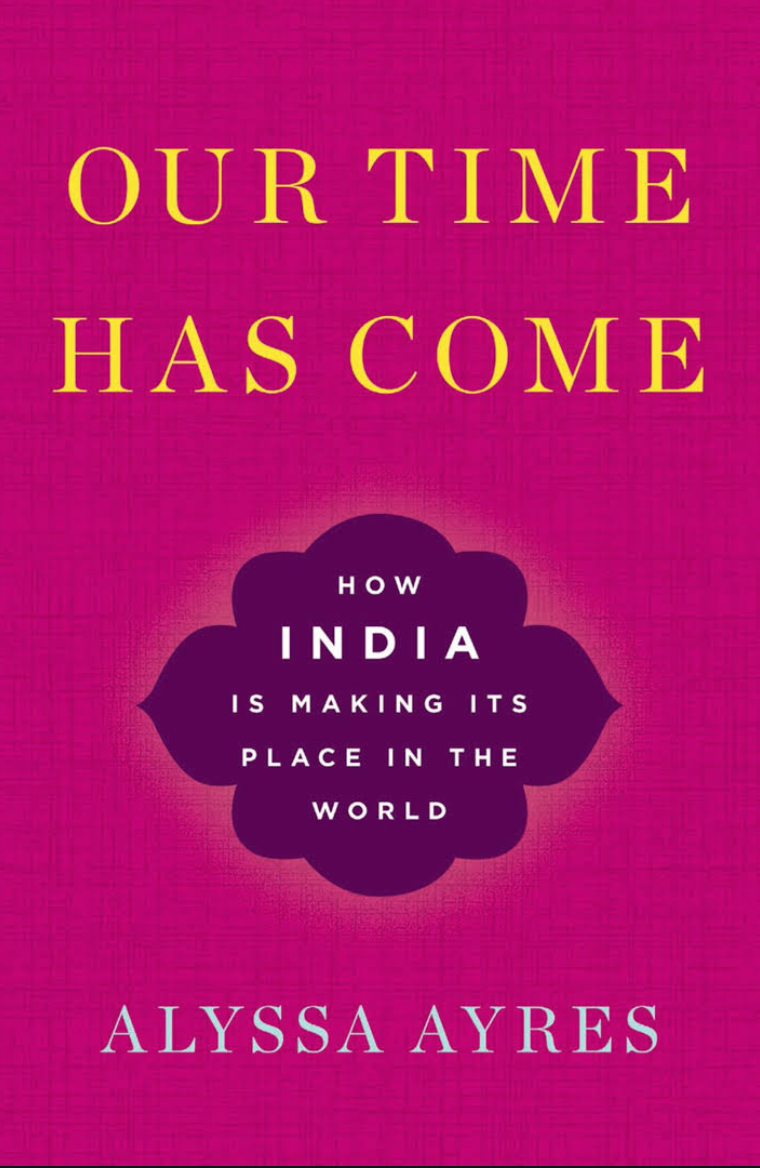
A progressively rising India wants to occupy a prominent place among the global powers. In recent decades, discussions about India's global rise and place in the world have been on the rise, sometimes in the context of possible alliances to counter China's excessive dominance.
Alyssa Ayres, an expert on India, Pakistan and South Asia at the US Council on Foreign Relations, reflects well in her book Our Time Has Come. How India Is Making Its Place in the World, the role this democracy plays internationally, the obstacles it continues to face, and the implications of its rise for the United States and other countries in the Indo-Pacific region, such as Pakistan and China. It is fair to say that India's economic expansion has placed it among the world's leading emerging powers, but it now wants to move forward and gain a place among the global powers.
To fully understand India's global role, the author analyses its internal political, economic and social realities. India is the world's largest democracy, encompassing a wide range of national and regional parties that advocate radically different policies. This creates complications in reaching agreements that benefit large parts of the population. In addition, other factors complicating the relationship between the population are social division and religion. To begin with, India has a serious problem of social division caused by the distinction between social classes, or castes, some of which continue to play a major role in decision-making. Religion also plays an important role due to the large number of religions that coexist in India; however, the Hindu and Muslim majorities are the ones that mark the political diary .
Ayres highlights two characteristics that shape India's position in the world today: India's self-perception as a country at development and its abstention from global entanglements. According to the author, despite India's emergence as one of the world's largest economies, it continues to have a domestic perception of itself as a country doomed to always be among the nations at development. This results in domestic economic policies that hold back and hinder international ambitions and are thus in continuous conflict. On the other hand, India has historically stayed out of major global issues and international blocs with its policy of non-alignment.
Our Times Has Come, while defending India's high standing in the international system, also underlines the major challenges India faces for not having abandoned its old policies. Firstly, the Economics is still very much protectionist and there is no clear consensus on the new contributions that a more open market Economics could bring. Second, India continues to struggle with the bequest of its non-alignment foreign policy and remains ambivalent about how it should exercise its power in multilateral institutions. And third, India remains overly protective of its autonomy, seeking to shape its international interactions on Indian terms. Hence, India tends to move cautiously and deliberately in the international sphere.
On the other hand, the book emphasises India-US relations. The interaction between the two countries differs from their relations with other states in that New Delhi, while seeking a closer strategic and economic relationship with the US, does not want to be bound by the obligations inherent in this alliance, but rather to acquire authority without having to bow to Washington.
Ayres emphasises the need to reform global governance to create a specific space for New Delhi. His recommendations include support for India's membership of the UN Security committee and other institutions that establish global economic and security diary . It is clear that India, as a rising power, should be better understood and appreciated on its own terms. In other words, New Delhi should acquire a more pivotal role in the international arena and take some leadership to avoid being squeezed by its direct regional and global competitors.
The pages of Our Times Has Come provide several years of knowledge and first-hand study of India's foreign policy, revealing its complexities and the major characteristics that shape it. Through this book, scholar Alyssa Ayres offers us an indispensable analysis to understand what India is, but more importantly, what it wants to become.