
MoMAM
(Mechanics of Materials and Advanced Manufacturing)
Our researchers tell you
what they are working on

The research of the group MoMAM focuses on the design, mechanical analysis and advanced manufacturing of Structures with various applications. The group MMAM has extensive experience in participating in industrial research projects, working together with companies and technology centers.
The lines of research are as follows:
 Characterisation and simulation of the mechanical and mechano-biological behaviour of reticular Structures for biomedical applications.
Hybrid manufacturing of metal components combining Additive Manufacturing technologies and post-processing finishing by machining operations.
Topological optimisation of Structures created by Additive Manufacturing.
Optimisation of construction and advanced manufacturing processes through virtual modelling and simulation of high-value processes and data monitoring and analysis.
3D printing applications to precast concrete.
 Members of the group

Aitziber López de Arancibia
Senior Lecturer
(Coordinator)
+34 943 219877 Ext. 842500
View CV "View Aitziber López de Arancibia's CV".
Iñigo Puente Urruzmendi
Full Professor
+34 943 219877 Ext. 842411
See CV "View Iñigo Puente Urruzmendi's CV".
Miguel Arizmendi Jaca
Associate Professor
+34 943 219877 Ext. 842485
View CV "View Miguel Arizmendi Jaca's CV".
Amaia Jiménez Zabaleta
Assistant Professor
+34 943 219877 Ext. 842572
View CV "View Amaia Jiménez Zabaleta's CV".
Ainara Pradera Mallabiabarrena
Assistant Professor
+34 943 219877 Ext. 842127
View CV "View Ainara Pradera Mallabiabarrena's CV".
Naiara Rodriguez-Florez
Professor Contratada Doctora and Ikerbasque Research Fellow
+34 943 219877 Ext. 842474
View CV "View Naiara Rodriguez-Florez's CV".
Sergio Ruiz de Galarreta Moriones
Assistant Professor
+34 943 219877 Ext. 842573
View CV "View Sergio Ruiz de Galarreta Moriones' CV".


LICENSING of commercial software: Altair (Hyperworks, Inspire,...), CamPro, Abaqus, PTC Creo Parametric and Direct, Ansys, SolidWorks, Rhinoceros, AutoCAD and Cype, among others.
The laboratory MATERIALS has:
Wintest PEV-200W flexure testing machine for large elements.
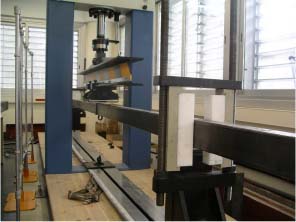
Ibertest MEHP-2000 5W compression testing machine.

Instron Mini 44 (500 N load cell) and Instron 4467 (30 kN load cell) for tension-compression tests.

1 ton overhead crane.
Acquisition system from data with 85 channels for extensometry and 5 channels for high-level signal inputs.
Strain gauge amplifiers for 4 channels and quarter-bridge, half-bridge or full-bridge mounting.
Concrete mixer, sulfur grinding machine and other accessories for the preparation of concrete specimens. Moulds and reinforcements to prepare concrete beams of 3 to 4 meters. HAVER&BOECKER EML 200 Pure aggregate screening machine.
The FABRICATION SHOP and the laboratory DE METROLOGÍA have at their disposal:
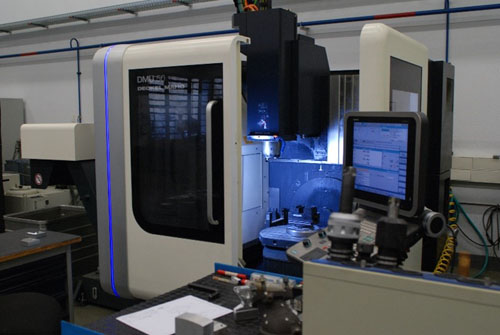
DMG DMU50 5-axis vertical machining center.
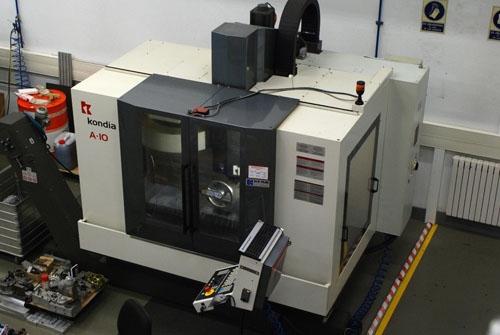
3-axis vertical machining center KONDIA A10
DMG Gildemeister NEF400 CNC lathe

Conventional machines: STANKOIMPORT 16B16P conventional lathe, ZMM CU400M conventional lathe, KENT flat grinder, ERLO drill, RN-12 CMA tapping machine, LETAG electric grinder, OPTIMUM S275G saw.
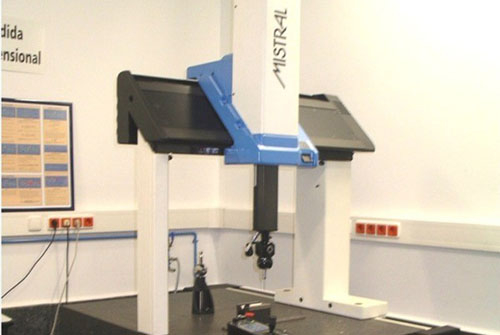
DEA Mistral Coordinate Measuring Machine
MITUTOYO RA-400 Roundness Measuring Machine
MITUTOYO SJ-301 Roughness Meter
Profilometer From Talysurf Plus
Leica Mz 125 stereo microscope
SmartWLI-basic (gbs) White Light Interferometry (WLI) Microscope (gbs)
Force sensors: KISTLER 9257B dynamometric platform for cutting force measurement and KISTLER 9123C rotary sensor for force and cutting torque measurement.
degree scroll :
design of hip prostheses using additively manufactured Structures
Acronym:
OHIDAMP
reference letter:
PID126471OA-I00
Financing:
project , funded by MICIU/AEI/10.13039/501100011033 and the ERDF, EU.
IPs:
Sergio Ruiz de Galarreta / Naiara Rodriguez
summary:
The increase in orthopedic surgeries and the need for implants in increasingly younger patients are leading to more revision surgeries due to implant failure, largely due to the stress shielding effect. This project to design and manufacture a customized hip implant with Structures using additive manufacturing, which mimics bone stiffness, promotes osseointegration, and improves durability, thereby reducing complications and the need for reoperations.
Objectives
Reduce the stress shielding effect by design Structures with mechanical properties similar to those of bone, capable of adapting to the demands of the surrounding tissue.
To promote osseointegration using Structures optimized through a approach , by analyzing their ability to promote bone promote .
Increase the durability of the implant through post-processing techniques that extend the fatigue life of Structures manufactured by selective laser melting.
Improving the quality and precision of implants manufactured using additive manufacturing through hybrid manufacturing strategies and localized optimization of surface finish.
Design and manufacture custom hip implants by incorporating the strategies developed and validating their performance through comparative analyses with commercially available implants.
Key findings
development design criteria design mechanical characterization of additively manufactured Structures , enabling the stiffness of the implant to be matched to that of the bone tissue.
development a model to predict bone regeneration in Structures and optimize their design.
Analysis of the Effect of Heat Treatments on the Microstructure and Fatigue Life of Structures Ti-6Al-4V Structures .
development to optimize additive manufacturing parameters and combine additive and machining processes to improve precision and surface finish.
design hip implant prototypes with optimized Structures .
Publications and/or patents:
Enhancing bone regeneration: A mechanobiology-centered approach to TPMS-based bone replacements.
In silico assessment of the bone regeneration potential of complex porous scaffolds.
Biomechanical study of an additively manufactured patient-specific NiTi device for the treatment of craniosynostosis.
Mechanical Behavior of Structures Under Combined Loads.
Mechanical Efficiency of Additively Manufactured Stochastic Lattice Structures: The Role of Nodal Connectivity.
degree scroll :
Surfaces enhanced by and for added value hybrid manufacturing processes
Acronym:
SURFAV
reference letter:
EFA239/06
Funding:
Total project cost: 1,472,121.14 € (TECNUN: 81,518.12 €)
ERDF amount: 956,878.73 € (TECNUN: 52,986.78 €).
advertising: The project has been 65% co-financed by the European Union through the Interreg VI-A Spain-France-Andorra program (POCTEFA 2021-2027). The goal POCTEFA is to strengthen economic and social integration in the Spain-France-Andorra border region.
IP:
Mikel Arizmendi
Team:
Amaia Jimenez
Naiara Rodríguez
Sergio Ruiz de Galarreta
Asier López
summary:
SURFAV promotes hybrid additive manufacturing to improve surfaces and bridge technological gaps. Universities will transfer knowledge additive and subtractive processes and surface treatments to cross-border SMEs, increasing competitiveness and reducing environmental impact. A knowledge network will be created knowledge adapt these technologies, combining processes and materials with advanced treatments and AI-based predictive models to optimize mechanical and functional properties.
Partners
UPNA, UNAV, TCGOMEZ, University of the Basque Country (Gipuzkoa), Tarbes Occitanie Pyrénées University of Technology (Occitanie), University of Pau and the Pays de l’Adour, and AXYAL (Nouvelle-Aquitaine)
Priority and goal
Create a shared space for knowledge innovation, driving digital transformation and sustainable growth.
A More Competitive and Smart Europe
Objectives
development the enhancement of research innovation capabilities, as well as the implementation of advanced technologies
Harnessing the Benefits of Digitalization for Citizens, Businesses, research Organizations research Public Administrations
Objectives
Strengthening the sustainable growth and competitiveness of SMEs and promoting employment creation employment them, including through productive investments
Promoting Access to Water and Sustainable management
Objectives
Promoting the transition to a Economics and resource-efficient Economics
Promoting the protection and conservation of nature, biodiversity, and ecological infrastructure (hereinafter “green infrastructure”), including in urban areas, and reducing all forms of pollution