
The UN Conference did little to increase international commitment to climate change action, but did at least boost the assertiveness of the EU
In recent years, the temperature of the Earth has risen, causing the desertification of lands and the melting of the Poles. This is a major threat to food production and provokes the rise of sea levels. The Intergovernmental Panel on Climate Change (IPCC) has concluded that there is a more than 95% probability that human activities over the past 50 years are the cause of global warming. Since 1995 the United Nations has organized international meetings in order to coordinate measures to reduce CO2 emissions, which arguably are behind the increases in temperature. The latest meeting was the COP25, which took place in Madrid this past December. The COP25 could be labeled almost a missed opportunity.
ARTICLE / Alexia Cosmello and Ane Gil
The Intergovernmental Panel on Climate Change (IPCC) was established in 1988 by the World Meteorological Organization (WMO) and United Nations Environment Programme. The IPCC's Fifth Assessment Report concluded that: "Climate change is real and human activities are the main cause". In recent years, rising temperatures on earth have contributed to the melting of the Polar Ice Cap and an increase in desertification. These developments have provoked the rise of sea levels and stresses on global food production, respectively.
In 1992, the IPCC formed the United Nations Framework Convention on Climate Change (UNFCCC) with the goal of minimizing anthropogenic damage to the earth's climate. 197 countries have since ratified the UNFCCC, making it nearly universal. Since 1995, the UNFCCC has held an annual Conference of the Parties (COP) to combat climate change. These COPs assess the progress of national governments in managing the climate crisis, and establish the legally binding obligations of developed countries to combat climate change. The most significant international agreements emerging from UNFCCC annual COPs are the Kyoto Protocol (2005) and the Paris Agreement (2016). The most recent COP25(25th Conference of the Parties to the United Nations Framework Convention on Climate Change (UNFCCC) took place in Madrid in December 2019.
The previous conference(COP24) marked a significant improvement in international regulation for implementing the Paris Agreement, but crucially ignored the issue of carbon markets (Article 6). Thus, one of the main objectives of COP25 was the completion of an operating guide for the Paris Accords that included provisions for carbon market regulation. However, COP25 failed to reach a consensus on carbon market regulation, largely due to opposition from Brazil and Australia. The issue will be passed onto next year's COP26.
Another particularly divisive issue in COP25 was the low level of international commitment. In the end, only 84 countries committed to the COP25 resolutions; among them we find Spain, the UK, France and Germany. Key players such as the US, China, India and Russia all declined to commit, perhaps because together they account for 55% of global CO2 emissions. All states will review their commitments for COP26 in 2020, but if COP26 goes anything like COP25 there will be little hope for positive change.
COP25 also failed to reach an agreement on reimbursements for damage and loss resulting from climate change. COP15 set the goal of increasing the annual budget of the Green Climate Fund to 100 billion USD by 2020, but due to the absence of sufficient financial commitment in COP25, it appears that this goal will not be met.
It is worth noting that in spite of these grave failures, COP25 did achieve minor improvements. Several new policies were established and a variety of multilateral agreements were made. In terms of policies, COP25 implemented a global "Gender Action Plan," which will focus on the systematic integration of gender equality into climate policies. Additionally, COP25 issued a declaration calling for increased consideration of marine biodiversity. In terms of multilateral agreements, many significant commitments were made by a vast array of countries, cities, businesses, and international coalitions. Notably, after COP25, the Climate Ambitious Coalition now counts with the impressive support of 27 investors, 763 companies, 393 cities, 14 regions, and 70 countries.
But by far the saving grace of COP25 was the EU. The EU shone brightly during COP25, acting as an example for the rest of the world. And this is nothing new. The EU has been a forerunner in climate change action for over a decade now. In 2008, the EU established its first sustainability goals, which it called the "2020 Goals". These goals included: reducing GHG emission by 20% (compared to 1990), increasing energy efficiency by 20%, and satisfying a full 20% of total energy consumption with renewable energy sources. To date, the EU has managed not merely to achieve these goals, but to surpass them. In fact, by 2017, EU GHG emissions had been reduced not just by 20%, but by 22%.
The EU achieved these lofty goals because it backed them up with effective policies. Note:
i) The launch by the EU Commission in June 2000 of the European Climate Change Programme (ECCP). Its main goal is to identify and develop all the necessary elements of an EU strategy to implement the UN Kyoto Protocol of COP3.
ii) The EU ECCP developed the ETS (EU emissions trading system), which has helped to reduce greenhouse gas emissions from energy-intensive industries and power plants.
iii)The EU adopted revised rules for the ETS in February 2018, which set the limits on CO2 emissions of heavy industry and power stations.
iv)The EU opted for a "circular economy." In May 2018, the EU decided on new rules for waste management and established legally binding targets for recycling. In May 2019, the EU adopted a ban on single-use plastic items.
v) The EU limited CO2 emissions on the roads. In April 2019, stricter emission limits for cars and vans were passed. By 2029, both cars and vans will be required to emit on average 15% less CO2.
vi) The EU approved new regulations in May 2018 for improved protection and management of lands and forests.
If the EU is anywhere near as successful at combating climate change in the decades to come as it has proved itself to be in the past decade, the EU seems primed to achieve both its 2030 Goals, and its 2050 Goals (the European Green Deal). The 2030 Goals include cutting GHG emissions by at least 40% by 2030 (compared to 1990). Such new measures will make the EU's economy and energy systems more competitive, more secure, and more sustainable. The 2050 Goals are even more ambitious: they include the complete elimination all CO2 emissions and the achievement of a climate-neutral EU by 2050. The EU's 2030 and 2050 Goals, if achieved, will be a remarkable step in the right direction towards achieving the Paris Agreement objective to keep global temperature increase stabilized at 1.5ºC and well below 2ºC.
The European Green Deal and 2030 and 2050 Goals will demand far more effort than the 2020 Goals, especially in the political and economic spheres. Poland has yet to commit to the Deal, which has led the European Council to postpone the matter until June 2020. But progress in the EU towards the 2050 Goals is already underway. The Just Transition Mechanism was proposed in December 2019 to provide support for European regions projected to be most affected by the transition to climate neutrality. (This measure will also hopefully serve to assuage the concerns of Poland and other members.) The EU Commission is to prepare a long-term strategy proposal as early as possible in 2020 with the intention of its adoption by the Council and its submission to the UNFCCC shortly thereafter. Furthermore, the EU Commission has also been tasked with a proposal, after a thorough impact assessment, for an update of the EU's nationally determined contribution for 2030 under the Paris Agreement. The EU's example is reason to hope for a bright and sustainable future for the developed world.
Unfortunately, not every developed country is as committed to sustainability as the EU. While many efforts have been made at both the global and regional levels to combat climate change, it is abundantly clear that these efforts are horrendously insufficient. In order to properly address climate change, consistent commitment to sustainability from all parties is imperative. Those countries such as the US, China, India and Russia that abstained from committing to the COP25 resolutions need to begin following in the EU's sustainable footsteps and start behaving like true global citizens as well. If they do not, even the EU's exemplary efforts will not be anywhere near enough to slow climate change.
The port of Chancay, at position of the state shipping company Cosco, will be operational in 2022.
The Chinese pronounce it almost like Shanghai, but it is not in China but in Peru. The port of Chancay, 75 kilometres from Lima, is to become the first Chinese logistics hub for the Pacific side of Latin America. It is the only port in the region for the state shipping company Cosco, which once established its European gateway in Piraeus entrance and is now preparing its access of goods to South America via Chancay. The infrastructure represents an investment of 3 billion dollars.
![Computer design of the facilities of the new port of Chancay, 75 kilometres north of Lima [Volcan].](/documents/10174/16849987/chancay-blog.jpg "Computer design of the facilities of the new port of Chancay, 75 kilometres north of Lima [Volcan].")
Computer design of the facilities of the new port of Chancay, 75 kilometres north of Lima [Volcan].
article / Gabriela Pajuelo
The port of Chancay aims to become one of China's main connections with the countries on the west coast of South America, serving as a bridge for the growing trade in goods from this region to Asia-Pacific. Through the company Terminales Portuarios Chancay, China's Cosco Shipping Ports is contemplating an initial investment of 1.2 billion dollars for the first phase of project - construction of new dykes to gain ground to the sea, achieving a greater depth (16 metres) and surface area for operations (one million containers). The total investment will be USD 3 billion; the entrance is expected to be operational by 2022.
Since 2014, China has been Peru's leading trade partner partner , replacing the United States. In 2017, China was the destination of 26% of Peru's exports (11.7 billion dollars) and the origin of 23% of its imports (8.75 billion). Chinese interest is focused on minerals, the largest Peruvian export sector, and therefore the port of Chancay is emerging as the main exit point for these raw materials to China. Return freight will bring Chinese manufactures, not only to Peru but also to neighbouring countries.
Beijing's interest in Peru's raw materials has already led to a free trade agreement between the two countries in 2009, which was improved last year, signature . It is a relationship that has not been complicated by the granting of large loans that the recipient country then finds difficult to refund: Peru has only received loans from Chinese public lenders to the value of 50 million dollars in 2009, which places it at the bottom of the list of recipients of Chinese loans in Latin America.
Cosco took over 60% of Terminales Portuarios Chancay for $225 million in the first half of 2019, sharing a partnership with Peruvian miner Volcan, which owns the remaining 40%. This is the first port that the large Chinese state-owned shipping company will control in its entirety in the Western Hemisphere, as its presence in the port of Seattle, in the USA, is limited to the operation of one terminal. Cosco has 34 terminals worldwide, 11 of which are outside China (in Spain it has a presence in the ports of Valencia and Bilbao). Other Chinese companies also have a terminal in the region, such as in the mouths of the Panama Canal (China is the second most important Username of this inter-oceanic waterway, after the USA), or are involved in port expansion works, such as in Itaqui (Brazil). Beijing has also expressed interest in managing entire ports - the case of La Unión in El Salvador -but Chancay is the first realisation in this sense.
The new port of Chancay, almost 1,000 hectares in size, will include an entrance complex, an underground viaduct tunnel and an operational port area. This will have a container terminal with two berths, and a bulk, general cargo and roll-on/roll-off terminal with two additional berths. According to the company, the port will reach an annual cargo handling capacity of one million TEU (Twenty-foot Equivalent Unit). It should be added that the port complex will have the capacity to unload Triple E vessels, considered the second largest container ships in the world.
The multi-port is located 75 km north of Lima and will be connected to the centre of the country via a road to Oyón and Ambo, in the Peruvian Andes. This road infrastructure, with a public investment of 450 million dollars, represents a decentralisation effort on the part of the Peruvian government.
The port of Chancay could pose a serious challenge skill to the Callao Port Terminal, managed by DP World Callao (business subsidiary of Dubai Ports World), APM Terminals and Transportadora Callao. This is the de facto port of Lima and is the country's main port in terms of traffic and storage capacity, with a port movement in 2018 of 2.3 million TEUs and 56 million tonnes, representing 51% of the national total.
![Cosco Shipping Ports terminals worldwide [Cosco Group].](/documents/10174/16849987/chancay-blog-2.png "Cosco Shipping Ports terminals worldwide [Cosco Group].")
Cosco Shipping Ports terminals worldwide [Cosco Group].
The Minister of Transport and Communications, María Jara Risco, has announced a plan to double the storage capacity of the port of Callao, but there are questions as to whether this will be enough to compete with the new port of Chancay. The President, Martin Vizcarra, sample is convinced that the two facilities can work in a complementary way, and that the new infrastructure will help to decongest the lorry traffic at the capital's area .
Chinese investment, however, has given rise in some quarters to talk of "chequebook diplomacy", a concept that refers to the use of investments or loans to establish favourable relations with countries occupying strategic positions in regions of geopolitical interest. While infrastructure such as Chancay is highly interesting for the recipient country, it may be obliged to refund in other ways, perhaps by allowing the exploitation of mineral resources. Apart from that, there are internal Chinese regulations, which oblige their companies with port terminals in the rest of the world to host the navy if necessary.
China's growing influence in the Western Hemisphere worries the US. Its own vice-president, Mike Pence, warned Latin American countries that these investments represent a potential threat, because at the very least they establish an excessive dependence on trade and credit ties with China, generating a high trade deficit and high debt. They may also, according to Pence, negatively affect issues such as environmental protection and respect for protected areas.
The Pentagon has spoken in more dramatic terms. In February 2019, Admiral Craig Faller, head of the Southern Command, warned that in the future "China could use its control of deep-water ports in the Western Hemisphere to increase its global operational position".
Brexit, with the departure from the EU of a free-market champion, has boosted the coordination of the free-trade countries of northern Europe.
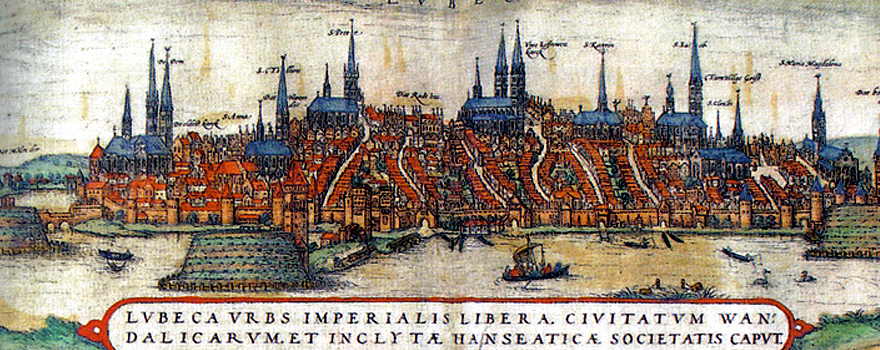
16th century engraving showing a view of Lübeck, when it was part of the Hanseatic League.
ANALYSIS / Jokin de Carlos Sola
Made up of the little people of Europe's northern coast, the Hanseatic League controls the sea and the money that moves across it. This definition applies to two organisations, one medieval and one recently created, ready to make its voice heard on the European stage.
In 2017, eight northern European countries (the Netherlands, Ireland, Denmark, Sweden, Finland, Estonia, Latvia and Lithuania) began the process of creating the New Hanseatic League initiative. Its main objective goal is to maintain and increase economic orthodoxy, now that the United Kingdom - one of its main supporters - is leaving the European Union, and to prevent France from taking advantage of this moment to implement its expansionary Economics policies.
The first League
The First Hanseatic League or simply the Hansa was a commercial and defensive alliance of trading cities and guilds of the major maritime cities of the Baltic and North Atlantic. Founded in Lübeck in 1158, the first alliance consisted of the free German maritime cities of Lübeck, Hamburg, Lüneburg, Wismar, Rostock and Stralsund.
Many other cities later joined the Hansa, such as Cologne, Groningen, Berlin and Stockholm. In addition, the Hansa set up trading posts in ports in almost all of northern Europe, and even established their own quarters - called kontors -in other places such as London, Antwerp, Novgorod and Bruges.
This alliance acquired great commercial as well as military importance. Since its foundation, the Hansa had maintained an almost symbiotic relationship with the Baltic monastic state of the Teutonic Knights. Later it would establish its own fleet. With the growth of the nation states and the decline of the guilds, the Hansa declined until it consisted only of Lübeck, Hamburg and Bremen, and was finally dissolved with German unification.
Creation of the New Hansa
With the enlargement of the European Union, new opportunities arose to balance the power of the dominant Franco-German bloc (also known as the Aachen bloc) on the European committee . Thus, the Visegrad group , the Three Seas Initiative or the Craiova group have been created in Central and Eastern Europe. In recent years, the New Hanseatic League has emerged in the north of the continent.
The latter initiative was born in the wake of Brexit. As the third country in terms of economic weight in the EU, the United Kingdom has had a great influence on the Union's economic policy, defending ideas such as economic stability, deficit reduction, debt reduction, economic deregulation and a stable monetary policy that avoids inflation, as well as a free trade policy.
These ideas clashed with the French economic policy of greater economic dirigisme and interventionism, with its emphasis on social projects and protectionism. Meanwhile, Germany's cautious attitude acted as a balance and middle ground between the two positions. London's positions have also been supported by the Netherlands and Denmark, as well as other countries with a tradition of maritime trade, who, faced with the prospect of the UK's departure from the EU, decided to establish greater coordination among themselves.
Another cause for the training of the New Hansa is the coming to power of Emmanuel Macron and his rise as a strongman in the EU. Macron has abandoned part of the economic speech with which he was elected in 2017 to move closer to traditional French positions, also followed by countries such as Italy and Spain.
A final trigger for the Dutch- and Irish-inspired initiative was the replacement in January 2018 of Jeroen Dijsselbloem as Eurogroup president by Mario Centeno, Portugal's socialist minister. For many northern European politicians, Dijsselbloem's intransigence in the face of the Greek debt crisis in 2015 was correct and a way forward for EU and Eurozone economic and monetary policy.
This group was initially known by names such as "The Vikings" or "Bad Weather Coalition". In February 2018 the finance ministers of the Netherlands, Denmark, Ireland, Sweden, Finland, Estonia, Latvia and Lithuania signed the founding document of the New Hanseatic League.
Political and economic values
The main objectives of the New Hanseatic League are based on free trade ideas, as well as maintaining a balanced budget . Its main objectives are the development of the European Stability Mechanism, established in Luxembourg. The idea would be that this development would eventually turn the ESM into a plenary session of the Executive Council European Monetary Fund, which would redistribute wealth between member states with surpluses and those with trade deficits. The Hansa is also in favour of giving the ESM more power to interfere in national budgets in order to avoid exceeding deficit limits.
However, although the founding document sticks to the European Stability Mechanism, the Hansa does not intend to stop there. Some representatives of these countries have spoken out against a budget for the eurozone, a eurozone finance minister and a common deposit insurance scheme, as proposed by Macron. They also criticised the European Commission for its decision not to initiate a disciplinary procedure against Italy over its deficit and debt.
The Hansa's positions have gained general popularity in their respective countries. On the one hand, the right-wing parties in those places have long advocated free trade approaches, while the left-wing parties do not want the welfare state of their respective populations to be put at risk in order to help the southern European countries.
The ideological origins of the New Hansa could be traced back to British Thatcherism in the 1980s. This political ideology included on the one hand a liberal approach to Economics, advocating ideas such as deregulation, privatisation and free trade. Thatcherism did not advocate the break-up of the EU, but included a sceptical view, advocating a union limited to Economics, without advancing political union. This thinking, in opposition to traditional French dirigisme, has had a clear influence within British politics and within the Conservative Party. However, its influence on other European politicians, such as various leaders in the Netherlands and Denmark, is somewhat less well known.
The defence of a liberal and capitalist Europe, contrary to a strong central power, is shared by many countries, all of them located in the northern fringe of the Union. This pits them against the Mediterranean countries, which have required EU aid in recent years.
However, there are other elements that characterise these countries beyond their wealth and geographical position, such as their size and their dependence on trade, derived from their maritime character. This makes them favourable to increased trade treaties and forces them to seek resources they do not have on their own territory.
Leadership of the group
The New Hanseatic League is an initiative and not an organisation as such, so it has no official leader; decisions are taken in unofficial councils of heads of government and finance ministers. However, several personalities have been prominent, notably Mark Rutte, the Dutch prime minister, and Wopke Hoekstra, his finance minister.
Wopke Hoekstra is considered the architect of the New Hansa. Aged 41, he is a Christian Democrat, a practising Protestant, a member of the Remonstrant Brotherhood and a former student of the Institut Européen d'Administration des Affaires (INSEAD), Europe's most prestigious business school. He has shown the most intransigent side of the Dutch government on economic issues in recent years. It has reached the point that Dijsselbloem himself has criticised the New League's training because, according to him, it damages the idea of solidarity within the Union.
Mark Rutte, on the other hand, has used the creation of the New Hansa to increase the Netherlands' weight in European politics. Rutte is regarded as one of the most active Dutch premiers in foreign policy since the Second World War and has tried to assert the Netherlands in the EU vis-à-vis France and Germany. At the same time Rutte has tried to occupy the British voice in Europe's committee as one of the most Atlanticist leaders.
Other leaders who have shown their involvement in this project have been the Danish finance minister until 2019, Kristian Jensen, and the Irish deputy prime minister, Simon Coveney. On the other hand, the role of Denmark and Sweden was core topic for the Baltic countries to move away from the Visegrad group and join the New Hansa.
Economic, financial and technological weight
The Hansa has managed to bring together an economic weight that other initiatives of the same kind have not been able to muster. Currently, the combined GDP of the Hansa countries is more than 2.2 trillion euros, close to the 2.5 trillion euros of the French GDP, the second largest economic force in Europe.
The group also has clear financial clout. Cities such as Amsterdam, Stockholm and Dublin have been climbing the ranks of Europe's leading financial capitals in recent years, although they have yet to overtake Paris and Frankfurt. Moreover, these are countries where technological innovation exists, especially Estonia and the Netherlands.
The fact that group does not exceed 10% of the European population somewhat mitigates its influence, as the votes of the countries and blocs in the European committee are partly based on issue of inhabitants, but it is nonetheless a relevant political actor in the EU. In contrast, the southern European countries (Spain, Italy, Portugal and Greece) account for 30 per cent of the European population, but are considered less decisive.
The Hansa positions represent a break with the EU principle that, for reasons of inter-territorial social cohesion, those countries that have more and are more developed contribute more. The ideas of the more radical sections of the Hansa can even be labelled as a certain neo-colonialism, insofar as they seek to use the supranational mechanisms of the EU to ensure that debtor countries in the South repay loans, which will keep them at certain levels of debt.
The Netherlands, Sweden, Denmark, Finland and Ireland are among the top contributors to the common European budget , behind the top four (Italy, UK, France and Germany). On a per capita basis, the Netherlands, Sweden and Denmark are at the top of the list. While Estonia, Latvia and Lithuania are beneficiaries, they are less so than Poland, Greece or Romania.
Given its greater contribution to the EU, or less dependence on aid, the Hansa is demanding a greater say in the EU's direction. For the time being, it has succeeded in imposing various criteria on budget in 2020, as opposed to those of the recipient countries.
Exercise of influence
One of the main objectives of the New Hanseatic League was to ensure that the two most controlling figures over the European Economics (the presidency of the Central Bank, and the leadership of the International Monetary Fund) were to its liking. In both cases it has failed, largely because of Emmanuel Macron's intervention.
The Netherlands had a particular interest in the appointment of the ECB, as outgoing president Mario Draghi had lobbied the Dutch government to activate stimulus policies. The New Hansa's candidate was Bundesbank president Jens Weidmann, known for his criticism of Mario Draghi's stimulus policies and for advocating a high-interest policy. Macron agreed with Germany that the European Commission would go to a German (Ursula von der Leyen) in exchange for the ECB being chaired by Christine Laguard, who would continue Draghi's policies.
For the IMF, Rutte proposed Dijsselbloem, despite his criticism of the Hansa. The final vote was between him and Bulgarian economist Kristalian Georgieva. Although Germany ended up voting for the Dutchman, Georgieva became the new head of the IMF.
However, the Hansa has also had some victories, such as holding the Commission firm on the Italian budget , which was going to exceed deficit limits; exerting influence on the European budget , which has suffered a drastic reduction; or slowing down, if not completely blocking, Macron's project for a common budget for the Eurozone.
![visit from Dutch Finance Minister Wopke Hoekstra (right) to his Irish counterpart Paschal Donohoe (left) at the end of 2018 [Gov. of Ireland].](/documents/10174/16849987/nueva-hansa-blog-2.png "visit from Dutch Finance Minister Wopke Hoekstra (right) to his Irish counterpart Paschal Donohoe (left) at the end of 2018 [Gov. of Ireland].")
visit from Dutch Finance Minister Wopke Hoekstra (right) to his Irish counterpart Paschal Donohoe (left) at the end of 2018 [Gov. of Ireland].
Expansion strategy and partnerships
One of the problems previously mentioned for the Hansa has been its lack of weight in the European committee . For this reason, its leaders have sought the political alignment of countries with which there may be ideological overlaps.
One of the first countries to establish contact with the Hansa countries was Austria. This makes sense since Austria has a similar economic structure to the other Hansa countries due to its small size and population. In addition, the government of Sebastian Kurz seemed to have a strong programme towards Europe very much in line with the Hansa. Famous is the proposal of several Austrian politicians for the creation of two European currencies, one for the north and one for the south. This subject of connections would be very important for later influencing Germany. In the new von der Leyen Commission, the Finance Committee was won for Austria by the economist Johannes Hahn.
The Austrian courtship also seems to have a strategic goal as a step to also start influencing Germany, which acts as a balancer of the balance. Several German politicians from the CDU and CSU are favourable to the Hansa's thinking and have been very influential throughout Merkel's government. But when Wolfgang Schäuble was removed from the Finance Ministry and replaced by the Social Democrat Olof Scholz these positions lost importance.
Similarly, the Hansa (and above all the Netherlands) has been establishing contacts with the Flemish government in Belgium. Although Flanders is just another state in the Belgian federation, the lack of a government in Brussels gives it great importance, along with the government of Wallonia. In addition, the Flemish control the port of Antwerp and have always been closer to the ideas of the Hansa.
On the other hand, the Hansa also seems to have initiated contacts with Slovakia and the Czech Republic. This was seen when in March 2019 both countries signed a declaration together with the Hansa countries against the Italian budget . It would be unusual to see these countries moving very close to the Hansa because they remain natural recipients of European funds. However, given that they are countries with healthy accounts, they could be seen as allies of the Hansa in some future actions.
In a way we could see Hanseatic diplomacy as a partial evolution of Otto von Bismarck's diplomacy (to push France out of power by training regional alliances). The aim is to form a sufficiently strong bloc that can present itself solidly on the European committee and convince Germany to tilt the balance towards budgetary orthodoxy and the interests of the northern countries. Alongside France are most of the southern countries. One could very generally say that the Hansa's objectives are: "Mobilise the North, seduce Germany, silence the Mediterranean".
Strange alliances in front of the Hansa
The Hanseatic configuration of alliances around Europe and their influence on the new European budget seems to have created curious alliances, the largest of which is undoubtedly the one that may arise between Poland and France.
This may sound strange, because when it comes to foreign policy, social policy and on certain points of European integration, Poland and France have been poles apart. But when it comes to economic policy and the European budget , France and Poland are on the same page, and this may result in a common front against the Hansa.
The reasons for the Franco-Polish rapprochement are varied. Both nations follow the tradition of the social welfare state, France because of its republican fraternity bequest and Poland because of its Catholic heritage, both opposed to the Hanseatic absentee state. Moreover, both countries have reasons to want to avoid restrictive budgets. The Polish government fears that a drastic reduction of investment in Poland would force it to make social cuts, which would lead to instability. France is sample opposed for a more ideological reason: Macron has championed the idea of 'A Europe that protects' and would have trouble sticking to this idea.
Nevertheless, Poland and France have some sticking points, especially with Macron's attempt at a new Ostpolik to calm relations with Russia.
Conclusion
The creation of the New Hanseatic League is ultimately written request a reaction to two movements: the creation of European regional systems and the withdrawal of economic policies favouring Northern Europe.
If the countries of Europe organise themselves into blocs, it may be easier to carry out certain initiatives because there are fewer interlocutors to negotiate with.
On the other hand, the creation of an initiative with the specific goal purpose of defending northern interests may pose a risk for southern countries, accentuating north-south differences in Europe. This would put Germany, which wants to avoid such a compromise, in a difficult position status .
The smart thing to do would be to avoid these confrontations directly by seeking other sources of revenue for the EU that do not compromise the wealth of the Hansa countries, as Morawiecki expressed and Macron has also pointed out. Thus, some taxes have been discussed, such as those on air travel, financial transactions and the digital world. But again, with the importance of the financial sector and new technologies in countries such as Ireland or Estonia, this may encounter civil service examination. It is not a simple task.
In any case, it should be ensured that European politicians have sufficient vision and understanding to make agreements that take into account all the idiosyncrasies of the European Union.
[Xulio Ríos. Xi Jinping's China. From bitter decadence to the dreamed modernization. publishing house Popular. Madrid, 2018. 300 p.]
review / María Martín Andrade
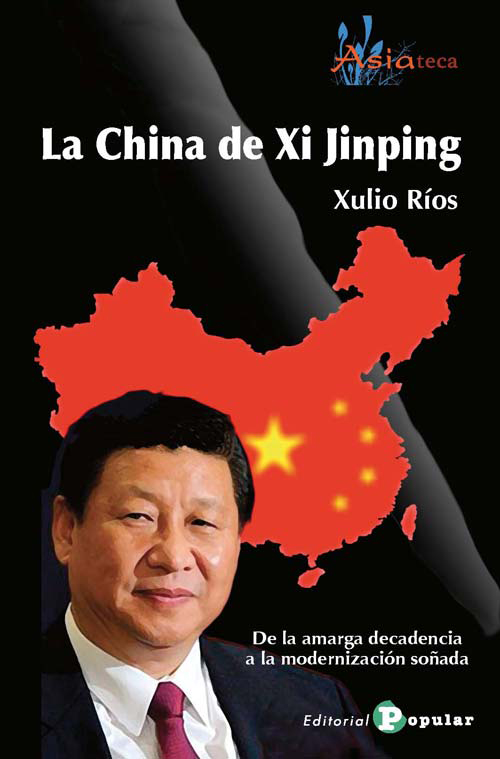 Given the globally known growth of China in recent years and the uncertainty caused internationally by its giant steps in a rather short period of time, it is worth examining what sustains the Chinese modernization process in order to determine its solidity. Xulio Ríos, expert in sinology and director of the Observatory of Chinese Politics (jointly dependent on Igadi and Casa Asia), carries out this analysis in Xi Jinping's Chinawith approach covering political, economic and social issues. Rios addresses China's role in globalization and how Xi Jinping's 2012 takeover of power has further accelerated the country's rapid modernization.
Ríos begins by identifying the three keys to China's success in the modernization process: the employment of a sound economic policy, the implementation of its own strategy and a strong identity capable of adapting the major currents of international thought to the country's unique characteristics. This adaptation has been at the heart of China's modernization process, whose challenges in the coming years are to move from a Economics of imitation to a Economics of innovation, to invest in fair policies aimed at correcting the inequalities the country faces, and to carve out a niche for itself in the international system without having to abandon its identity.
The Chinese dream is the main element that characterizes this new path that Xi Jinping intends to follow since he became University Secretary of the CCP; a dream that makes reference letter to the illusion and aspirations of a people that has seen its path towards modernization hindered. Unlike Maoism, where traditional culture was seen as an expression of the old society, Xi stresses the importance of highlighting some of the values of popular culture that can help consolidate the nation's consciousness in this century.
The author does not fail to note that the main obstacles to this rapid Chinese evolution are the high social costs of the latest transformations and the environmental bankruptcy that is causing so much serious damage. For this reason, without ever taking his eyes off the Chinese dream, University Secretary of the CCP and president of the country assures us that he wants a beautiful, environmental, rich and powerful China, with global influence, but without ever abandoning his own profile .
As part of the party's governance reform, Xi Jinping persists, like no other previous president, in the importance of the rule of law as an expression of modernization in the form of government. In tune with this, judicial reform has become one of the main thrusts of his mandate to combat the imbalance in the administration of justice throughout the country. On the economic front, the role attributed to the private Economics in terms of modernization is making China the world's leading Economics . The diversification of its investment in foreign reserves and developments in sectors such as automobiles are proving to be an alternative to the Western model aimed at taking the lead in globalization.
Thus, the four modernizations of Xi's governance focus on industry, agriculture, science and technology, and defense. These advances are intended to be complemented by a remarkable drive to strengthen multipolarity, increasing its presence in foreign markets and seeking global recognition of its update through new objectives, such as the revitalization of the Silk Roads, the creation of economic corridors or the Asian Investment and Infrastructure Bank.
Having broken down the different elements that make up the change in China's image, the author concludes by pointing out that, despite the economic development and the increase in political confidence, the country can become more involved and take on more responsibilities. However, due to its structural circumstances and domestic conflicts, China is not yet sufficiently prepared to replace the US or the West in global leadership. Nevertheless, there is nothing to stop Xi Jinping's distinguished move, compared to other Chinese leaders, to assert interests more conspicuously and visibly, with the Silk Road being a clear example of the ambition of the Chinese process.
The success of several reforms is overshadowed by the impulsiveness and personal interests of a president with a tarnished image.
![Jair Bolsonaro talks to the press at the beginning of January at the headquarters of the Ministry of Economics [Isac Nóbrega, PR].](/documents/10174/16849987/bolsonaro-2-blog.jpg "Jair Bolsonaro talks to the press at the beginning of January at the headquarters of the Ministry of Economics [Isac Nóbrega, PR].")
Jair Bolsonaro talks to the press at the beginning of January at the headquarters of the Ministry of Economics [Isac Nóbrega, PR].
ANALYSIS / Túlio Dias de Assis
One year ago, on 1 January 2019, a former Brazilian army captain, Jair Bolsonaro, climbed the steps of the Palácio do Planalto for the inauguration of his presidential mandate. He was the most controversial leader to assume Brazil's head of state and government since the presidency of the no less flamboyant populist Jânio Quadros in the 1960s. The more doomsdayers predicted the imminent end of the world's fourth largest democracy; the more deluded, that Brazil would take off and take its rightful place in the international arena. As was to be expected, neither extreme was right: Brazil continues to maintain the level of democracy of the last 30 years, without any military attempt , as some had feared; nor has Brazil become the world power that many Brazilians believe it deserves because of its exceptional territorial, population, cultural and political characteristics. As is often the case, the reality has been less simple than expected.
Economy
Among the most attractive aspects of Bolsonaro's candidacy to the public during the election campaign was the promise of economic recovery under the administration of Chicago Boy minister Paulo Guedes. In order to fulfil this promise purpose, right at the beginning of his mandate, Bolsonaro unified the former ministries of Finance, Planning, development and management, Industry, work and Foreign Trade and Services under the umbrella of the Ministry of Economics, all under the command of the liberal Guedes. Guedes became a sort of "super-minister" manager of the new government's entire economic diary .
From the outset, Guedes made it clear that he would do his utmost to lift the barriers of Brazilian trade protectionism, a doctrine adopted at Degree by every government for more than half a century. In order to deploy his crusade against statism and protectionism, Guedes has this year promoted bilateral trade rapprochement with several strategic allies, which, 'unlike previous governments, will not be chosen on the basis of ideological criteria', according to Bolsonaro. Already in January there was the advertisement of a Novo Brasil at the World Economic Forum in Davos, defined by greater openness, zero tolerance for corruption and the strengthening of Latin America as a regional bloc.
Retail
Despite his support for economic openness, Bolsonaro's team has never been overly favourable to trade with Mercosur - his regional multilateral trade bloc - with Guedes even stating that it was a burden for Brazil, as he considered it an ideological rather than an economic alliance. However, this aversion to Mercosur, and mainly to Argentina, seems to have ended after the signature of the Mercosur-EU tradeagreement , given that the potential volume of trade that would be generated by such a pact would be enormously beneficial for Brazilian agricultural and livestock producers. area Similarly, a agreement was also signed with the countries of the European Free Trade Area (EFTA), comprising Switzerland, Norway, Iceland and Liechtenstein.
Of these two agreements, the most controversial has been the one signed with the European Union, mainly due to the high levels of rejection in some member states such as France, Ireland and Austria, as it is seen as a possible risk to the Common Agricultural Policy. On the other hand, some other countries were critical, citing Bolsonaro's environmental policy, as the agreement was signed during the summer, which coincided with the time of the fires in the Amazon. As a result, several member states have still not ratified the treaty and the Austrian parliament has voted against it.
However, the fact that multilateral trade relations do not seem to have made much progress, due to the obstacles imposed by Europe, has not prevented Brazil from expanding its commercial activity. Contrary to what one might think, due to its ideological closeness to Donald Trump and his foreign policy, the rapprochement in subject economic relations has not been with the US, but with the antagonistic Asian giant. In this process, Bolsonaro's trip to Beijing stands out, where he showed himself to be open to Chinese trade, despite his previous less favourable statements in this regard. agreement During the proposal visit a free trade agreement with China, which has yet to be approved by the Mercosur summit, and several smaller agreements, including one on agricultural trade, came up.
This sudden Chinese interest in increasing agricultural imports from Brazil is due to the increase in demand for meat in China, triggered mainly by the swine fever epidemic that devastated domestic production. This has led to an immediate rise in the price of beef and pork in Brazil, up to 30% in some cuts in little more than a month, which has distorted the domestic market, as meat, mainly beef, is usually very present in the average Brazilian's regular per diem expenses .
Public accounts
With regard to the country's internal accounts, it is worth highlighting the approval of the pension reform(Reforma da Previdência), which initially had a markedly liberal character, with the aim of eliminating privileges and disproportionate pensions for high-level public officials. However, several modifications during its passage through the Chamber of Deputies and the Senate meant that the savings for the public treasury were slightly less than Guedes had envisaged. Still, it is a big step forward considering that the pension system had a deficit of 195 billion reais (about $47 billion) in 2018. This deficit is due to the fact that Brazil had one of the highest benefit systems in the world with the fewest demands, with many people retiring at the age of 55 on 70 per cent of their original salary.
This measure, together with several other adjustments in the public accounts, including the freezing of some ministerial expenditures, reduced the public deficit by 138.218 billion dollars in January (6.67% of GDP) to 97.68 billion dollars in November (5.91% of GDP), the most leave since the economic recession began five years ago. Among other relevant data is the drop in the Central Bank's base interest rate to a historic low of 4.5%, while the unemployment rate fell from 12% to 11.2%.
result As a result, Brazil's GDP has increased by 1.1 per cent, a timid but promising figure considering the huge recession from which Brazil has just emerged. Growth forecasts for 2020 vary between 2.3 and 3 per cent of GDP, depending on the approval of the long-awaited tax reforms and management assistant.
Security
Another reason for the controversial captain of reservation to become president was Brazil's historic crime problem. Just as Bolsonaro came up with a strong name to tackle the economic status , for security he recruited Sergio Moro, a former federal judge known for his indispensable role in Operação Lava Jato, Brazil's biggest anti-corruption operation, which led to the imprisonment of former president Lula himself. With the goal to fight corruption, reduce criminality and dynamite the power of organised crime, Moro was put in charge of a merger of Departments, the new Ministry of Justice and Public Security.
In general, the result has been quite positive, with a B decrease of issue in violent crime. Thus, there has been a 22% reduction in homicides, which is one of the most worrying indicators in Brazil, as it is the country with the highest absolute issue number of homicides in the world per year.
Among the factors that explain this drop in violent crime, the main one is the greater integration between the different institutions of state security forces (federal, state and municipal). The transfer of gang leaders to prisons with a higher level of isolation, thus preventing them from communicating with other members of organised crime, has also played a role. Another element has been the recent"anti-crime pack" C , which consists of a series of laws and reforms to the penal code to give more power to state security forces, as well as stiffer penalties for violent crime, organised crime and corruption.
In contrast to these developments, there has also been an increase in the number of accidental deaths in police operations. Some cases have been echoed in public opinion, such as that of an artist who ended up shot in his car when the police mistook him for a drug trafficker, or those of children killed by stray bullets in shoot-outs between drug gangs and the security forces. This, together with controversial statements by the head of state on the issue, has fuelled criticism from most of civil service examination and several human rights NGOs.
Social policy and infrastructure
In terms of social policies, the past year has been far from the apocalyptic dystopia that was expected (due to Bolsonaro's previous attitude towards homosexuals, Afro-Brazilians and women), although it has not been as remarkable as in the previously mentioned sections. There has been no progress in areas core topic, but neither have there been notable changes in terms of social policy compared to 2018. For example, the emblematic social programme Bolsa Família, created during the Lula government and which greatly helped to reduce extreme poverty, has not been cancelled.
Starting with Education, at the end of 2019 Brazil came out with one of the lowest report PISA scores, a fact that the minister of education, Abraham Weintraub, blamed on the "Education progressive Marxist mood of previous administrations". As result of the failure of the regular public system, and even the lack of security of some centres, the government has openly promoted the construction of new civic-military Education centres by state governments. In such a subject centre, students receive a Education based on military values while the officers themselves provide protection in these public spaces. It should be noted that the existing schools are among the highest ranked in Brazil on subject in terms of educational quality. However, this is not without controversy, as there are many who consider that this is not an adequate solution, as it may end up educating from a militaristic perspective.
On subject health, the most notable event this year was the end of the health cooperation programme with Cuba, Mais Médicos. goal This agreement was launched in 2013, during Dilma Rousseff's term in office, and its aim was to provide a larger and more extensive universal medical service attendance through the contracting of several doctors 'exported' by the Castro government. The programme was criticised because the Cuban doctors only received 25% of the salary provided by the Brazilian government and the remaining 75% was retained by Havana. Bolsonaro broke the agreement, thus causing vacancies in staff health care that could be filled in a short time. Cuban professionals were given the opportunity to remain in Brazil under political asylum if they revalidated their degree program in medicine in the Brazilian system. This incident has not brought about a significant change in the precarious national health system; the only consequence has been the deterioration of relations with Cuba.
Despite not making much progress on the social front, the Bolsonaro administration has made improvements in national logistics infrastructure. Under the command of the military's Tarcisio Gomes de Freitas, the Ministry of Infrastructure has stood out for its ability to complete works not finished by previous governments. This led to a noticeable difference in the issue and quality of operational roads, railways and airports compared to the previous year. Among the sources of financing for new works is the reopening of a pooled fund established in 2017 between Brazilian and Chinese financial institutions, worth US$100 billion.
![visit Bolsonaro with Indian Prime Minister Narendra Modi during an official visit to New Delhi in late January [Alan Santos, PR] [Alan Santos, PR].](/documents/10174/16849987/bolsonaro-blog-2.jpg "visit Bolsonaro with Indian Prime Minister Narendra Modi during an official visit to New Delhi in late January [Alan Santos, PR] [Alan Santos, PR].")
visit Bolsonaro with Indian Prime Minister Narendra Modi during an official visit to New Delhi in late January [Alan Santos, PR] [Alan Santos, PR].
Environment
One of the areas most feared to be harmed by Jair Bolsonaro's administration was environmental policy. This concern was heightened by the controversial fires in the Amazon during July and August. To begin with, the Ministry of the Environment, like all the others, was affected by the austerity policies of Paulo Guedes, in order to balance the public accounts, although according to Minister Ricardo Salles himself, it was the one that suffered the least from the budget cuts. As a result, forest protection was compromised at the beginning of the drought period in the Amazon.
Seeing the 278% increase in deforestation in July, Bolsonaro reacted impulsively and fired the director of the high school Nacional de Pesquisas Espaciales (INPE), accusing him of favouring civil service examination and conspiring against him. The status prompted the departure from the Amazon Protection Fund of Germany and Norway, the two largest contributors, which was met with criticism from Bolsonaro, who also accused the NGOs of being the cause of the fires. Finally, under international pressure, Bolsonaro finally reacted and decided to send in the army to fight the flames. goal which he achieved in just under a month, reaching the highest number on record in October leave .
In the end, the annual total ended up 30% higher than the previous year's figure, but still within the average range of the last two decades. However, the damage to the national image was already done. Bolsonaro, thanks to his rivalry with the media, his vehement eagerness to defend "national sovereignty" and his lack of restraint when speaking, had managed to be seen as the culprit of a distorted catastrophe.
Additionally, at the end of the year, yet another controversy hit the Bolsonaro administration: the mysterious oil spill off Brazil's northeast coast. Thousands of kilometres of beaches were affected and to this day there is still no official culprit for the crime. There were several hypotheses on the matter; the most widely accepted, which was also supported by the government, was that the spill came from an illegal shipment of Venezuelan oil attempting to circumvent the trade blockade imposed on Maduro's regime. According to analyses carried out by the Universidade da Bahia, the structure of the oil was indeed very similar to that of crude oil from Venezuelan fields.
Foreign policy
In foreign policy Bolsonaro can distinguish himself rhetorically from his predecessors, but not in terms of his actions. Although he would like to apply his ideology in this area, he himself has accepted that this is not possible. In the face of the strength and interests of state institutions, such as the diplomatic tradition of Itamaraty (Ministry of Foreign Affairs), Brazilian foreign policy has remained as pragmatic and neutral as in all previous democratic governments, thus avoiding the closing of doors for ideological reasons.
A good example of Brazilian pragmatism is the economic rapprochement with China, despite Bolsonaro's rejection of communist ideology. This does not mean, however, that he has distanced himself from his quasi-natural ally in terms of ideology, Donald Trump. However, the relationship with the US has been of a different nature, as there has been greater proximity in international cooperation and security. The US pushed for Brazil's designation as a strategic NATO partner , reached a agreement for the use of the Alcântara space base, very close to the Equator, and supports Brazil's entrance in the OECD.
In the economic sphere, however, there does not seem to be such closeness, and there have even been some frictions. One of these was Trump's threat to impose tariffs on steel and aluminium from Brazil and Argentina, which he finally withdrew, although the damage to trade relations and the São Paulo and Buenos Aires stock markets had already been done. Some analysts even suggest that the lack of reciprocity from the US on subject , as well as the rejection by some EU members of the agreement with Mercosur, was what pushed Bolsonaro to seek a compensatory relationship with the BRICS, whose 2019 summit took place in Brasilia.
Another peculiar point of Bolsonaro's foreign policy has been his position on the Israeli-Palestinian conflict, which once again sample shows the inconsistency between rhetoric and action. During the election campaign Bolsonaro promised on several occasions to move the Brazilian embassy from Tel-Aviv to Jerusalem, something that has so far not happened and only an economic office has been relocated. Bolsonaro probably feared trade reprisals from Arab countries, to which Brazil exports products, mostly meat, worth almost 12 billion dollars. Prudence on this issue even earned him the signature of several agreements with Persian Gulf countries.
Despite the above, there has been one aspect of foreign policy in which Bolsonaro has managed to impose his ideology against the 'historical pragmatism' of the Itamaraty, and that is the Latin American sphere. Brazil ceased to be the theoretically neutral giant that timidly supported the so-called Socialism of the 21st century during the Lula and Dilma governments, and now coordinates with the governments of the other political side.
Most notable is his enmity with Nicolás Maduro, as well as with former president Evo Morales, whose request to pass through Brazilian territory was openly denied by Bolsonaro. There has also been a distancing from the returning Peronism in Argentina, with the absence of Bolsonaro and any high-ranking Brazilian representative at the inauguration ceremony of Kirchner's Alberto Fernández. In the same context are the approaches to Chile, Uruguay, Paraguay and Colombia, as well as the new Bolivian government provisional , with which Bolsonaro sees more similarities. With them he has promoted the creation of PROSUR as opposed to the former UNASUR controlled by the Bolivarian left. Even so, despite having adopted a more ideological policy in the region, Brazil continues to maintain diplomatic cordiality since, although its leader takes liberal conservatism to extremes in his rhetoric, his policies in the region hardly differ from those of other right-wing governments.
Bolsonaro
In general, as has been shown, Bolsonaro's government has achieved positive results in its first year, mainly highlighting its progress in the areas of security and Economics. However, while the work of various ministers has improved perceptions of the administration, Bolsonaro himself does not appear to be making a particularly positive contribution. Throughout the year, he has generated controversy over unimportant issues, which has accentuated his previous enmity with most of the press.
As a result, the president's public image has gradually deteriorated. At the end of 2019 his popularity stood at 30%, compared to the 57.5% he started the year with. This contrasts with the approval rating of members of his government, especially Sergio Moro, who has managed to remain unmoved above 50%. In addition, his son Flavio, who is a senator, has come under investigation for a possible corruption case, in a process that the president has sought to prevent. Bolsonaro also caused a scandal in the middle of the year when he tried to appoint his son Eduardo as ambassador to Washington and was accused of nepotism. In addition to the tensions in his own party, which led to a split, there is little rapport between Bolsonaro and the presidents of both chambers of the fractured congress Nacional, both of whom are under investigation in conveniently stalled anti-corruption operations.
Impeachment?
All this chaos caused by the president gives the impression of a Bolsonaro who goes against the tide of his own government. The apparent success of the reforms already carried out ends up being tainted by the impulsiveness and personal interests of the man who once defended the impersonality of the state, which ends up causing the deterioration of his political image. In addition, there is the recent release of former president Lula, which entails the risk of the unification of the civil service examination, depending on how moderate speech is adopted. This being the case, it is possible that Bolsonaro's headless but efficient government will not find it easy to stay in power until the end of its term. It should be remembered that the hand of Brazil's congress does not usually tremble when it comes to impeachments; in little more than three decades there have already been two.
In its ten operational years the "Dome" has shown effectiveness, but a comprehensive political regional solution is needed
In 2011 Israel deployed its "Iron Dome" mobile defense system in response to the rocket attacks it suffered the previous years from Lebanon (Hezbollah) and Gaza (Hamas). The Israel Defense Force claims that the system has shown an 85% - 90% success rate. However, it offers mixed results when other considerations are taken into account. Its temporary mitigation of the menaces of the rocket attacks could distract Israelis in seeking out a comprehensive political regional solution; possibly a solution that could make systems like the "Iron Dome" unnecessary.
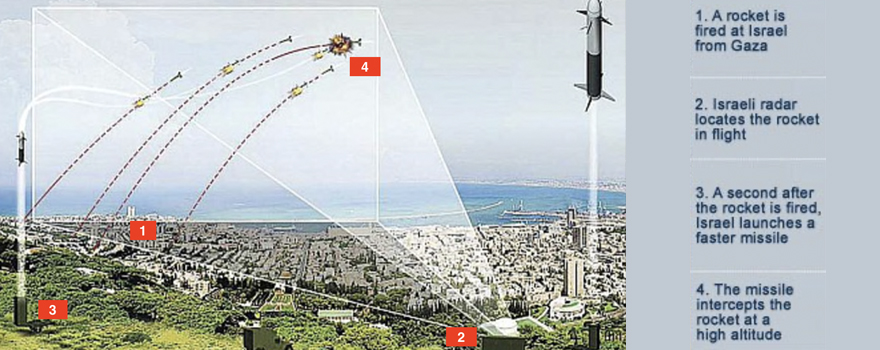
▲ How "Iron Dome" works; explanation on an image produced by Rafael Advanced Defense Systems
ARTICLE / Ann M. Callahan
The "Iron Dome" is a mobile defense system developed by Rafael Advanced Defense Systems and Israel Aerospace Industries developed, produced and fielded in 2011 to respond to the security threat posed by the bombings of rockets and projectiles shot into Israel, many of which landed in heavily populated areas.
Bombings into Israel intensified during the 2006 Second Lebanon War when Hezbollahfired approximately 4,000 rockets from instructions in the south of Lebanon. From Gaza to the South, an estimated 8,000 projectiles were launched between 2000 and 2008, mostly by Hamas. To counter these threats, the Defense Ministry, in February 2007, decided on the development of the "Dome" to function as a mobile air defense system for Israel. After its period of development and testing, the system was declared operational and fielded in March 2011.
The system is the pivotal lower tier of a triad of systems in Israel's air defence system.
The "David's Sling" system covers the middle layer, while the "Arrow" missile system protects Israel from long-range projectiles.
The Iron Dome functions by detecting, analyzing and intercepting varieties of targets such as mortars, rockets, and artillery. It has all-weather capabilities and is able to function night or day and in all conditions, including fog, rain, dust storms and low clouds. It is capable to launch a variety of interceptor missiles.
Israel is protected by 10 "Iron Dome" batteries, functioning to protect the country's infrastructure and citizens. Each battery is able to defend up to 60 square miles. They are strategically placed around Israel's cities in order to intercept projectiles headed towards these populated areas. Implementing artificial intelligence technology, the "Dome" system is able to discriminate whether the incoming threats will land in a populated or in an uninhabited area, ignoring them in the latter case, consequently reducing the cost of operation and keeping unnecessary defensive launches to a minimum. However, if the "Dome" determines that the rocket is projected to land in an inhabited area, the interceptor is fired towards the rocket.
A radar steers the missile until the target is acquired with an infrared sensor. The interceptor must be quickly maneuverable because it must intercept rudimentary rockets that are little more than a pipe with fins welded onto it, which makes them liable to follow unpredictable courses. It can be assumed that the launchers of the rockets know as little as the Israelis as to where the rockets would end up landing.
Effectiveness
The IDF (Israel Defense Force) claims an 85% - 90% success rate for the "Iron Dome" in intercepting incoming projectiles. Operational in March 2011, to date the "Iron Dome" has successfully destroyed approximately 1,500 rockets. The destruction of these incoming rockets has saved Israeli lives offering physical protection and shielding property and other assets. In addition, for the Israelis it serves as a psychological safeguard and comfort for the Israeli people.
Regarding the "Dome" as an asset for Israel's National Security Strategy, while standing as an undeniable asset, it has had mixed results regarding its four major pillars of Deterrence, Early, Active Defense and Decisive Victory as well as some unintended challenges.
For instance, regarding the perspective of its psychological protection for the Israeli people, it is thought to also effect Israeli public in a negative manner. Regardless of the fact that it currently offers effective protection to the existing threats it could, in fact, help cause a long-term security issue for Israel. Its temporary mitigation of the menaces of the rocket attacks could distract Israelis in seeking out a comprehensive political regional solution; possibly a solution that could make systems like the "Iron Dome" unnecessary.
In addition, while the "Dome" suffices for now, it cannot be expected to continue this way forever. Despite the system's effectiveness, it is just a matter of time before the militants develop tactics or acquire the technology to overcome it. The time needed in order to accomplish this can be predicted to be significantly reduced taking into account the strong support from the militant's allies and the considerable funding they receive.
Still a comprehensive diplomatic solution is needed
Today, the world's militaries of both state and non-state actors are engaged in a technological arms race. As is clearly known, Israel's technological dominance is indisputable. Nevertheless, it, by no means, stands as a guarantee as destructive technology becomes more accessible and less expensive. As new technologies become more available they are subject to replication, imitation and increased affordability. As technologies develop and are implemented in operations, counter techniques can shift and new tactics can be developed, which is what the militias are only bound to do. Moreover, with the heavy funding available to the militias from their wealthy allies, acquiring more advanced technologies becomes more likely. This is a significant disadvantage for Israel. In order to preserve their upper hand, constant innovation and adaptation is a necessity.
The confusion between the short-term military advantage the technology of the "Dome" offers and the long-term necessity for a comprehensive and original political, diplomatic solution is seen as a risk for Israel. Indeed, Amir Peretz, a minister in Israel's cabinet, told the Washington Post in 2014 that the "Iron Dome" stands as nothing more than a "stopgap measure" and that "in the end, the only thing that will bring true quite is a diplomatic solution".
Despite these drawbacks, however, in all the positive aspects that the system offers clearly outweighs the negative. The "Iron Dome" stands undeniably as a critical and outstanding military asset to Israel's National Security, even while Israel works to address and mitigate some of the unforeseen challenges related to the system.
The island faces the most serious economic crisis in twenty years: Venezuela's collapse and Trump's pressure highlight Havana's immobilism
The end of the USSR, a major subsidiser of the Castro regime, did not lead Havana to the economic and political opening that took place in most of the former communist bloc. After a time of severe hardship in the 1990s, known as the "special peacetime period", Cuba got another saviour in Venezuela, thus avoiding the necessary reforms. Today, the Venezuelan collapse and the pressure being exerted by Washington once again highlight Havana's unwillingness to change, as it faces another "special period", less intense but equally painful for the Cuban people.
![Street in the historic centre of Havana [Pixabay].](/documents/10174/16849987/cuba-economia-blog.jpg "Street in the historic centre of Havana [Pixabay].")
▲ Street in the historic centre of Havana [Pixabay].
article / Patricia Urdánoz
agreement Cuba's Economics could have closed 2019 with a growth of barely 0.5% of GDP and could repeat this poor performance in 2020, according to estimates by ECLAC, the UN Economic Commission for Latin America and the Caribbean. These are figures that place the island on the brink of recession, given that there could be a negative quarter. Although the Cuban government puts its economic goal for this year at 1%, its 1.5% target for 2019 may have been off by as much as one percentage point (international organisations, in any case, cannot audit Cuba's accounts); moreover, the elements contributing to the economic performance have worsened.
Growing economic difficulties have generated fears among Cubans of a return to the 'special period', as the 1990s were known when the dissolution of the USSR left the island without the massive financial aid assistance provided by Moscow. That time of special hardship was superseded by the financial aid that from 2002 onwards began to arrive from Hugo Chávez's Venezuela. It was the Venezuelan collapse that prompted Raúl Castro to seek salvation through rapprochement with the Obama Administration, but the Trump Administration's new restrictive measures have left Havana with no prospects.
Cubans have begun to suffer shortages of basic products such as medicines and food, and long, endless queues are once again appearing in the Cuban capital. The Economics has been stagnant since 2014: although there was a clear upturn the following year, 2016 saw a contraction, which the government put at 0.9% of GDP, meaning it had fallen into recession for the first time since the "special period" twenty years ago.
Although it is unlikely that Cuba will reach the dramatic figures of much of the 1990s, when the island's Economics contracted by approximately 35%, some estimates, reported by the Wall Street Journal, consider that if Venezuela were to completely cancel its financial aid there could be a contraction of 8% or 10%.
Before the "special period", the island was 82% dependent on the Soviet Union. Dependence on Venezuela is comparatively less and is also decreasing due to the severe crisis in that country. Venezuela's financial aid , basically by sending oil in exchange for the attendance of doctors, sports trainers and other staff, for which Caracas also pays, accounted for 22% of Cuba's GDP in 2013; by 2017 it had fallen to 8.5%.
The economic outlook, in any case, is not good and a worsening in several areas is to be expected for 2020, which will at least prolong the stagnation.
Venezuelan oil now in Russian hands
Although Venezuela's financial aid has been decreasing, Caracas' contributions continue to be important, so any further erosion of this aid would have an effect on Cuba's Economics . The 100,000 barrels of oil per day that Venezuela has been sending to Cuba for many years has recently been reduced to around 60,000 barrels. A further reduction is not to be expected, but the control of PDVSA's production that Russia is acquiring leaves the regime of Nicolás Maduro less room for political control over oil.
Fewer doctors abroad
Venezuela's out-of-control inflation could force a reduction in the payment Venezuela makes for the services provided on Venezuelan soil by staff Cubans. Carmelo Mesa-Lago, an economist specialising in Cuba, points out that Venezuela, which purchases 75% of this professional Cuban service abroad (an important means of access to hard currency), has already reduced its purchases by 23% between 2014 and 2017 and could be forced to make further cuts. Havana, on the other hand, stopped making cash in 2019 with the doctors it had stationed in Brazil and the same will happen in 2020 with those in Bolivia, after political changes in those countries forced their return to the island.
Below goal of 5 million tourists
The expectations opened on subject for tourism with the increase in travel from the US due to the facilities provided by President Obama have been frustrated by the restrictions again imposed by his successor. issue In 2018 there was a drop of 4.7 million tourists to 4.7 million, a figure that fell by 10% in 2019 to 4.3 million. Although the government says it expects an increase in 2020, it has stopped setting goal as a target to reach 5 million tourists. The limitation already imposed by Trump in 2018 on US-based cruise travel is followed by the recently announced limitation on direct flights, which could affect the income from tourism (those who arrive by plane tend to spend more during their stay).
Moderate exports
Export revenues could improve, but neither production nor prices look set to increase significantly. Nickel production has been rather stagnant and sugar production is recovering from its all-time low in 2017-2018.
Remittances will continue to flow
The restrictive measures imposed by the Trump Administration on remittances arriving in Cuba from the US, which are the majority, do not seem likely to affect their amount, as the established limit remains above the amount of most remittances. As a study by The Havana Consulting Group indicates, the current average amount sent is between 180 and 220 dollars per transaction, and as 95 per cent of Cubans who send remittances to their relatives on the island do so once a month, the limit of 1,000 dollars per quarter imposed by Washington, which came into force last October, is not reached. In addition, the study states that 45% of remittances to Cuba arrive through informal channels. In 2018, Cuba received 3,691 million dollars, a figure that practically doubles if non-cash remittances are taken into account.
Insufficient foreign investment
source Remittances should play an important role in boosting the national Economics , and in fact since the economic opening of 2010 they have functioned as an income source similar to foreign investment, as they were behind the start-up of many "cuentapropista" businesses. These self-employed businesses reached 535,000 workers in 2016, according to official statistics, but the stagnation in the growth of tourism is putting this private activity in difficulties. The Havana Consulting Group study concludes that "unlike most Latin American countries, the Cuban government does not take advantage of the potential of remittances as a way to attract investment capital to the country". Foreign direct investment, in any case, has been increasing, but the slowness in making the special zone of the port of Mariel attractive and the added difficulties from the US with the entry into force in 2019 of degree scroll fourth of the Helms-Burton Act, which encourages the presentation of lawsuits for the assets expropriated during the Cuban revolution, dampens the island's investment attractiveness.
DECENTRALISATION, BUT TIMID OPENING
The problem of the inefficiency of Cuba's Economics is largely due to its model centralisation, which creates shortages for consumers and great uncertainty for businesses. Along with other burdens that the country has carried since its beginnings, such as corruption, illegalities, low levels of savings, indebtedness and insufficient export revenues. Cuba's foreign debt between 1958 and 2017 multiplied by 190 times. And there is a difficult situation for the emergence of the private sector.
The island needs new structural economic reforms by the government, and it would also be interesting to follow the economic strategies of countries such as Vietnam and China, which have known how to open up to the international market under a communist government. For its own geopolitical interests, Washington should take care that its pressure measures do not drive the island into the arms of China and Russia.
Raúl Castro's successor as president, Miguel Díaz-Canel, and his appointed prime minister, Manuel Marrero, have announced the beginning of a process of economic decentralisation this year that will give greater autonomy to state-owned companies. It remains to be seen whether progress will actually be made along these lines and whether this will increase the efficiency of Cuba's Economics , as the reforms promised by Castro have been a very timid opening, not particularly transformative.
Increasingly distant from the Alliance, Turkey is creating discomfort among its Western partners, but is unlikely to be invited to leave.
Its strategy in the Syrian conflict, its rapprochement with Russia through the acquisition of the S-400 anti-aircraft system and its desire for projection in the eastern Mediterranean, where it is damaging Greek interests, have brought Ankara into ongoing friction with NATO over the past few years. But the Alliance is not in a position to do without Turkey. Not only is its geographic status valuable as a bridge between East and West, but without Turkey NATO would be less able geopolitically to act against terrorism or control refugee movements and its military defence capabilities as an alliance would be diminished.
![meeting between the presidents of Turkey and Russia in Istanbul in January 2020 [Turkish Presidency].](/documents/10174/16849987/turquia-otan-blog.jpg "meeting between the presidents of Turkey and Russia in Istanbul in January 2020 [Turkish Presidency].")
meeting between the Presidents of Turkey and Russia in Istanbul in January 2020 [Turkish Presidency].
article / Ángel Martos
Relations between the Atlantic Alliance and the Republic of Turkey are at their most tense in recent history. Ankara's foreign policy has been in a state of flux given the instability of its governments since the death of the Father of the Fatherland, Mustafa Kemal Ataturk. The Kemalist republic projected a very different image of Asia Minor than the one we know today: the secularism and westernisation that characterised its bequest has been replaced by a moderate Islamic-tinged authoritarianism (according to Recep Tayyip Erdoğan, president of the Republic and leader of the training AKP).
This profound evolution has been reflected in the field of International Office, as is to be expected. The doctrine of neo-Ottomanism has gained ground among its foreign policy makers. Turkey now seeks to exploit to the full its position as a bridge between Western and Eastern civilisation, while gaining influence among its adjacent states and emerging as the stabiliser of the Middle East.
In this scenario, the main headache for Western statesmen is the substantial improvement in Anatolia's relations with NATO's arch-enemy Russia. This improvement cannot be understood without recalling a series of events that have led Turkey to distance itself from the European continent: the lukewarm reaction of Western governments to the 2016 coup d'état; the reticence shown towards the continuous requests for extradition of Fetulah Gülen's refugee followers in the EU and the US; Greece's refusal to extradite military refugees after the coup; the European Commission's continuous condemnations of Turkey's domestic politics; and, above all, the truncated dream of Turkey's accession to the EU. This is why Turkey has decided to redefine its diplomacy in its own interests alone, swinging between Russia's financial aid and NATO's . The acquisition of the Russian S-400 anti-aircraft system and its recent operations in Northeast Syria are examples of this.
The purchase of the aforementioned long-range anti-aircraft missile system is the subject of much controversy within NATO. Turkey's urgent need for such a system is obvious as it faces potential ballistic missile threats from neighbouring countries. But the choice of the Russian S-400 system, after several years of negotiations during which it was not possible to reach an agreement on agreement for the acquisition of the US Patriot system, has caused a real earthquake and Turkey's continued participation in the F-35 fifth-generation fighter programme has even been called into question. Political considerations seem to have outweighed technical aspects in the decision, as the two systems are incompatible and, being strategic-level weapon systems, both from an operational and geopolitical point of view, their employment by an Atlantic Alliance country is problematic. The Alliance is concerned about the Kremlin's access to Alliance information through its radar technology.
The other development that raises questions about the future of Ankara's relations with NATO was the recent Turkish military operation in northern Syria. The Turkish military launched an offensive against Kurdish militias (YPG, which it considers terrorists) in northern Syria on 9 October. The attention to the Kurdish people is the major point of contention between the US and Turkey, as they are staunch allies of the superpower, but at the same time a political and security threat to the stability of Anatolia.
Ankara had been pressing the US to establish a 'safe zone' into Syrian territory and had repeatedly threatened to launch unilateral military action if Washington continued to stand in its way. In early October, the US gave the go-ahead for the operation by ordering its military deployed in Syria to withdraw from the border area. The Trump administration thus abandoned the Kurds with whom it was fighting the Islamic State to their fate, giving Turkey the leeway for greater control of its border with Syria.
The next aspect that must be mentioned when describing the complex relations between Ankara and NATO is the ongoing geopolitical struggle between Greece and Turkey. Although both have been NATO members since the 1950s, relations between these two Eastern Mediterranean countries have always been characterised by a permanent perceived tension that has some consequences for supranational military cooperation. The three main disputes that have shaped this bilateral confrontation since the late 19th century are worth mentioning here: the sovereignty of the Dodecanese archipelago, that of present-day Cyprus, and the maritime dispute over the Aegean shelf. Such was the magnitude of the dispute that the Greek government went so far as to decree its withdrawal from NATO in 1974, although it later rejoined.
While this Greek-Turkish conflict was at its height in the second half of the twentieth century, there are many ethnic and historical aspects that make the two countries seem irreconcilable, except in historically specific exceptions. This means that the eastern flank of the Mediterranean, given its proximity to the volatile Middle East area , has been a constant source of concern for NATO leaders. While Greece has managed, following its transition to democracy, to emerge as a stable NATO ally, Turkey has not followed suit. This undoubtedly works against it both in domestic politics and in its aspirations for maritime sovereignty.
Historically, it is worth noting Turkey's growing role as an inter-regional mediator between the Middle East and the West. Perhaps in response to a strategy designed by Ahmet Davutoglu, who was foreign minister under the AKP government, Turkey sought to distance itself from the US under Bush Jr. Its refusal to collaborate in the 2003 invasion of Iraq won it some sympathy in the region, which it has been able to use in countries as diverse as Iraq, Israel and Iran. However, over the years the Islamist government has repeatedly spoken out against Zionism and the threat it poses to the stability of the region.
Its estrangement from the EU and its rapprochement with Russia at subject has also marked the Turkish administration's image in the Alliance. Relations with Russia, despite having been marked by political disputes such as those over Kurdish and Chechen self-determination (antagonistically supported by both countries), are kept afloat by the hydrocarbon trade. The picture is thus more favourable to the Russian axis than the American-Israeli one in the region. This logically undermines NATO's confidence in this "hinge" country, which is no longer sample interested in acting as such but as an independent and sovereign power pursuing its own interests, seeking support from the Alliance or the East as it sees fit.
This shift away from NATO's roadmap by the Turkish government, coupled with a rapprochement in some respects with the Kremlin and the authoritarian drift of the country's presidency, has prompted analysts and international leaders to open up discussion about a possible expulsion of the Asian Minor Republic from the Alliance. However, it is unlikely that the allies will decide to ignore Turkey's strategic importance. Its geographic status makes it a bridge country between East and West. Without Turkey, NATO would be less able geopolitically to act, for example, in terms of counter-terrorism or controlling refugee movements. Moreover, Turkey has the second largest military of all NATO states: exclusion would severely affect its military defence capabilities as an alliance. On the other hand, Turkey's representations in NATO, while critical of NATO as the Trump administration has repeatedly been, have not expressed a clear desire to leave unilaterally.
[Jim Sciutto, The Shadow War: Inside Russia's and China's Secret Operations to Defeat America. Hasper-Collins. New York, 2019. 308 p.]
review / Álvaro de Lecea
 With the end of the Cold War, which pitted the former Soviet Union against the victorious United States of America, the international system shifted from bipolar to a hegemony led by the latter. With the United States in the lead, the West focused on the spread of democracy and commercial globalisation, and if anything the geo-strategic preoccupation of the West was focused on the Al-Qaeda attacks on the Twin Towers on 9/11, so the focus of attention shifted and today's Russia was pushed into the background. However, Russia continued to slowly reconstitute itself in the shadow of its old enemy, which no longer showed much interest. Russia was joined by China, which began to grow by leaps and bounds. At this point, the United States began to realise that it had two major powers on its heels and that it was engaged in a war it did not even know existed: the Shadow War.
This is the term used by Jim Sciutto, CNN's chief national security correspondent, to describe what he describes in detail throughout his book and what has largely come to be known as hybrid or grey zone warfare. Sciutto prefers to speak of Shadow War, which could be translated as war in the shadows, because this better denotes its character of invisibility under the radar of open or conventional warfare.
This new war was started by Russia and China, not as allies, but as powers with a common enemy: the United States. It is a hybrid war subject and therefore contains both military and non-military methods. On the other hand, it does not envisage a direct military confrontation between the two blocs. In The Shadow War: Inside Russia's and China's Secret Operations to Defeat America, Sciutto explains seven situations in which the strategies being pursued by China and Russia to defeat the United States in order to become the world's major powers and impose their own international norms can be clearly observed.
First, it is important to note that Russia and China, while pursuing similar strategies, are different types of adversaries: on the one hand, China is a rising power, while Russia is more of a declining power that is trying to return to its former self. Nevertheless, both share a number of similarities. First, both seek to expand their influence in their own regions. Second, both are suffering from a crisis of legitimacy within their borders. Third, both seek to right the wrongs of history and restore what they perceive as their countries' legitimate positions as world leaders. And finally, they possess great national unity, so that the majority of their populations would do whatever is necessary for their nation.
In the shadow war, thanks to the rules established by Russia and China, any major actor can win, regardless of its power or influence over other international actors. Following the theories of International Office, these rules could be considered to follow a very realistic patron saint , since, in a way, anything goes to win. The power of lies and deception is the order of the day, and lines that were thought unthinkable are crossed. Examples of this, as the book explains and elaborates, are the militarisation of the artificial islands built by China in the South China Sea when Xi Jinping himself had promised not to do so, or the hacking of the Democratic Party's computer system in the 2016 US election campaign by Russian hackers, which may have helped Donald Trump emerge victorious.
To all this must be added an essential part of what is happening in this context of non-traditional warfare: the particularly mistaken idea that the United States has about everything that is happening. To begin with, the first mistake the US made, as Sciutto explains, was to neglect Russia as a relevant focus in the international arena. It believed that, having defeated it in the Cold War, the country would no longer re-emerge as a power, and so failed to see the clear clues that it was slowly growing, led by President Vladimir Putin. Similarly, it failed to understand the Chinese government's true intentions in situations such as the South China Sea or the degree program submarines. All of this can be summed up as the US believing that all international actors would play by the rules established by Washington after the Cold War, without imagining that they would create a new scenario. In conclusion, the US did not understand its opponents.
In his latest chapter, Sciutto makes it clear that the US is currently losing the war. Its biggest mistake was not realising status until it was in front of it and it now finds itself playing on a disadvantaged stage. It is true that the US remains the world leader in many respects, but Russia and China are overtaking it in others, following the new rules they themselves have set. However, a change of attitude in US policies could turn the tide. The author proposes a number of solutions that could help the US get back in the lead.
The solutions he proposes focus, in the first place, on the total knowledge of the enemy and its strategy. This has always been his great disadvantage and would be the first step to begin to control status. Similarly, it recommends greater unity within the Allied bloc, as well as an improvement of its own defences. He also recommends a better understanding of the new scenario in which the whole conflict is taking place, and therefore a series of international treaties regulating these new spaces, such as cyberspace, would be of great help financial aid. Further on, he proposes setting clear limits on enemy actions, raising the costs and consequences of such actions. Finally, it encourages the US to exercise clear leadership.
In conclusion, Sciutto's thesis is that the United States finds itself fighting a war whose existence it has only just discovered. It is a subject war that it is not used to and with a set of rules that are alien to what it preaches. While it is still the leader of the current international system, it finds itself losing the game because China and Russia have been able to discover its rival's weaknesses and use them to its advantage. America's biggest mistake was to ignore all the signs of this shadow war and do nothing about it. New scenarios have been introduced and the rules of the game have been changed, so the US, if it wants to turn status around and once again emerge as the victor, the author argues, will have to unite more than ever internally as a nation and strengthen its alliances, and know its enemies and their intentions better than ever before.
In terms of a evaluation of the book, it can be said that it succeeds in concisely and clearly conveying the most relevant points of this new contest. It manages to make clear the strengths and weaknesses of each actor and to take stock of the current status . However, the author does not manage to be too goal judgemental. While admitting the failings of the US, he gives a negative picture of its rivals, taking for granted who are the good guys and who are the bad guys. Objectivity is lacking in some cases, as the good guys are not always so good and the bad guys are not always so bad. That said, Sciutto provides a great analysis of the current international status in which the world's major powers find themselves.
Will success in parts of the Vision 2030's diary -like diversifying the economy- have a parallel opening up to religious moderation?
![King Salman bin Abdulaziz Al Saud in a recent Custodian of the Two Holy Mosques Chairs Cabinet's Session [Saudi Press Agency].](/documents/10174/16849987/king-salman-blog.jpg "King Salman bin Abdulaziz Al Saud in a recent Custodian of the Two Holy Mosques Chairs Cabinet's Session [Saudi Press Agency].")
King Salman bin Abdulaziz Al Saud in a recent Custodian of the Two Holy Mosques Chairs Cabinet's Session [Saudi Press Agency] [Saudi Press Agency].
ANALYSIS / Marina García Reina
Since King Salman first envisioned the need of a reform of Saudi Arabia towards a less dependent economy on petroleum, gradual changes have been done upon the aim of progress, and, in a more precise way, not to be left behind in the world race led by western countries and the booming Asian giants. The crown prince Mohammed bin Salman Al Saud has positioned himself as the leader of the shift towards a religiously moderate Saudi Arabia within the frame of the Vision 2030 initiative. Predictably, however, the reforms held in the country have been subject to numerous criticisms and double readings.
A succinct contextualization
It is convenient to recall the year 1979, when Shiite militants overthrew the secular Shah of Iran and Sunni fundamentalists besieged the Masjid al-Haram (Grand Mosque) in Mecca. That same year, the country's Shiite minority started a revolt in Al-Hasa province, resulting in numerous deaths. The Saudi monarchy responded to those mishaps by moving closer to the Wahhabi (an extremely conservative conception of Islam) religious establishment and restoring many of its hardline stances. As a result, for instance, the government shut down the few cinemas that existed in the kingdom. It was not till 2015 (or 2014, depending on which reforms to base on) when King Salman bin Abdulaziz Al-Saud -along with Mohammed bin Salman (popularly known as MBS), who he promoted to crown prince-, proclaimed reforms in Saudi Arabia towards a more moderate political scenario, opening up a new era of Saudi politics. The two expressed their will to limit the authority of the religious police to arrest citizens. They allowed the first cinemas and music concerts since decades of prohibitions, condemned religious incitement, and gradually granted women several rights.
Vision 2030
First conceived by King Salman, Vision 2030 is meant to be the decisive plan to transform the country by a sweep in economy and society, and Crown Prince Muhammad bin Salman himself has positioned as its spearhead. It is basically the headline upon which all the modernization changes are framed. The plan aims to face the three major challenges that Saudi Arabia has nowadays: unemployment, diversification, and privatisation.
It is worth mentioning that in contrast to the great majority of western countries, Saudi Arabia has a growing youthful population. Approximately, 70% of Saudi population is under 30 and the 29% of Saudis between 16 and 29 are unemployed. Vision 2030 includes greater investments in education to train future Saudi leaders, which seems quite unnecessary when noticing that Saudi citizens pay no taxes and receive free education (making up 25% of the total budget), free health care and subsidies for most utilities.
Economy is something that has been worrying most Saudis, since the country's economy is almost entirely based on petroleum and recently the price of a barrel of oil has ranged between about $46 and $64 in 2019, much lower that what it has ranked for years. Diversifying the economy is crucial for the progress of Saudi Arabia. All in all, Vision 2030 will rely on earnings coming from the Aramco's IPO (initial public offering), which will be placed in a sovereign wealth fund -also sourced by Saudi fiscal assets and the sale of state-owned real estate and other government assets-, expectedly resulting into an investment-driven economy rather than a petroleum-based one as it has been for decades. It has also cast serious doubts the nature of the measures that are being developing to modernize the country, especially because the social aspects have been left apart by, for instance, the construction of Neom, a planned futuristic city in the middle of the desert, which is meant to be the great achievement of the crown prince MBS.
Additionally, the initiative has been configured as the political rebirth of the crown prince in the eyes of the international sphere, since it means diminishing the role of government by selling Aramco's 5% of shares to investors, even so, the enterprise still is under tight control of the royal family. Without going any further, Khaled Al-Falih, the chairman of Aramco, is also the new minister of Energy, Industry, and Natural Resources, which once again brings to light the relation between these two.
The stated target is to increase the private sector's contribution to GDP from 40% today to 65% by 2030. Much of this private sector growth will come through public-private partnerships, as said before, high-positioned Saudis will have been directly or indirectly pressured to invest in the IPO. The Saudi government has been criticised on several occasions for being corrupted and showing a lack of transparency over its acts. In this area, Vision 2030 hopes to ensure the law and the obligation of honestly reporting every business activities. Under proposal of MBS a follow-up department, headed by a ministerial rank official, has been set up to follow the implementation by government ministries of projects that have been approved.
Anti-terrorist positioning and extremist ideologies
Mohammed bin Salman has severely expressed his aim of not only dealing with extremist ideologies, but also of destroying them. As part of this determination, some clerics, which are meant to form part of the extremist ideology that the leader seems to condemn, have been targeted.
Nevertheless, organizations such as Amnesty International, Human Rights Watch and the Committee to Protect Journalists have demonstrated that these presumed extremist clerics have long records of advocating the type of reform and religious moderation MBS asserts to support. For instance, in September 2017, numerous clerics, journalists and scholars known for their reluctance to MBS policy, which they consider as half-measured and not going straight to the point, were arrested by Saudi security forces. On the other hand, certain state clerics continue unpunished despite publicly criticizing the reforms and inciting hatred against the Shia minority. In particular, two members of the Council of Senior Scholars -the highest religious body in the country, whose role is to advise the King on religious matters by issuing fatwas (judicial advice provided by a religious specialist)- have been in the spotlight for years. These are Saleh al-Fawzan and Samm leh al-Lohaidan, both close to bin Salman. These two scholars are owners of broadcasting channels funded and promoted by the Saudi government from which they divulge their ultra-conservative view of Islam and condemn with the death penalty whatever they consider as violations of religious and moral rules contrary to Islam. An example of such are the declarations made saying that Shiites are not Muslims or that Muslims are not allowed to protest or even publicly criticize rulers as this would lead to rebellion that would in turn justify rulers' violent response, like those held in 2017.
Together with these personalities, there are others who also hold high-rank positions in the country's politics and government. Abdulaziz al-Sheikh, for example, is the grand mufti (muslim religious who has the authority to interpret Sharia) of Saudi Arabia. In that capacity, he has issued numerous fatwas and statements preaching the virtues of obedience to existing authorities and submitting to their policies without question. This, once again, raises the question of whether or not Saudi Arabia is actually cleansing extremist ideologies. Some, as Abdullah Almalki -a religious academic-, argue that the sovereignty and free choice of the people must have precedence over any desire to implement Sharia and that justice and free choice must be the pillars of any political community.
Almalki's father, Salman Alodah, like himself, advocates religious tolerance against calls of jihad in Iraq, Syria, and elsewhere, calling for a democratic change, supporting the empowerment of women, fighting against discrimination, and respecting the religious minorities who are marginalized in the Kingdom. Both Almalki and Alodah were also arrested in the 2017 detentions and referred the following year to court for a secret trial -something that has become common when the accused are moderate voices, feminists and intellectuals-, facing death penalty for their extra-progressive views. Besides these cases, probably the best known one was that of the Washington Post columnist Jamal Khashoggi's murder at the Saudi consulate in Istanbul in October 2018.
In contrast to some of these powerful men characterised by their severe religious stances, the Saudi society as a whole holds a somewhat more nuanced view of Islam and does not completely identify with them. On this, it is worth recalling the attack on the Shia mosques carried out by Daesh in May 2015. The event was followed by mass funerals in the Saudi streets, which exposed the unity of the Saudi people above sectarian lines.
Al Qaida was apparently eradicated from the country and, as a result of that, it moved its operations to Yemen, where Saudi Arabia's military force together partnered with the UAE -with limited US support, it must be said- and the Yemeni government forces have been doing efforts to combat it, achieving, for instance, the liberation of Mukalla. Specifically, Saudi Arabia blames the failing states of Iraq, Lebanon, Syria, and Yemen as the reason why Al Qaida has not yet been definitively eradicated.
The Iraqi government broke down after the US invasion in 2003, which led to a sectarian and corrupt government. In Syria, Bashar al Assad led the military uprising and breakdown of authority, providing al Qaida refuge, although he continuously expressed he was combating terrorists, actually al Qaida freely operated in both sides of the border. Saudi Arabia claims that further efforts must be made to remove Assad as an essential part of the battle against terrorism in the region. It also advocates efforts at the international level to stop with the use by terrorists of pro-Palestine propaganda to recruit young members.
Aramco and the oil crisis
Petroleum prices have dropped considerably in recent years, exacerbating the need of a side Saudi economy which does not revolve around oil. This has become a rough task, taking into account that the petroleum sector employs around 70% of the population in Saudi Arabia. Aramco's IPO, which promises to sell shares to investors, has become the centre of the Vision 2030 initiative for Mohammed bin Salman.
The reasons behind the IPO are two: money -Saudi Arabia needs greater money inputs in order to accomplish the reform plans and finance the war in Yemen- and the political rehabilitation of the crown prince (MBS) under the consent of the international sphere, portraying, in a way, that the IPO may not be motivated that much because of an economic interest (which of course it is) but more deeply because of a political benefit of claiming that Saudis are opened to the world by selling part of Aramco to foreigners.
The tremendous expectation raised around the IPO can be interpreted as a way of starting attention of the incidents of 2017 and Khashoggi's murder mentioned before. Aramco's initial public offering, which started this last December in Tadawul (Saudi Arabia's domestic stock market), went resoundingly bad after the US attack in Baghdad resulting in the death of the Iranian military commander Qasem Soleimani as well as the Iraqi-Iranian deputy chief of the armed organisation Popular Mobilization Committee. Shares of the State petroleum company have dropped in a 1.7%. However, in spite of this event, Aramco's IPO went reasonably well and the company managed to be valued at $2 billion, which is not surprising considering that the Saudi government has actively encouraged Saudis to invest, meaning that there are investors (people within the orbit of the royal court and big business) who have no choice in the matter because their livelihoods and stature are dependent on proving they support Mohammed bin Salman's program and retail investors who will invest because of all the hoopla and nationalist sentiment whipped up around the offering.
Women and the guardianship rule
Undoubtedly, changes have been done within the Saudi State to overcome the lack of involvement of women in everyday life. As an example of it, the permission to drive automobiles extended to women has found a significant echo globally. Women make up half of the population in Saudi Arabia. As part of the Saudi transformation of its economy plan, there is a need beyond the sole fact of integrating women in society, namely that of integrating this half of the Saudi population into the labor force.
Women conform nowadays just the 7% of the work force. After the implementation of the Vision 2030 plan, the number is expected to rise up to a 30% by that year. Following a worldwide tendency, more women than men graduate from universities in all disciplines. Furthermore, thanks to efforts attributed to the crown prince and to King Abdullah before him, women can be members of the Consultative Assembly since 2014. Currently, they occupy 20% of its seats. In September 2011, King Abdullah granted women the right to vote, a right they exercised in 2015 for the first time.
Further changes have been done within the country in favour of integrating women, which have gone unnoticed by the public eye. Princess Reema bin Bandar al Saud is an example of that. As president of the Saudi Federation for Community Sport, she has developed different initiatives, together with other ministries, to promote women; for instance, by creating football leagues. Moreover, opening women access to the armed forces has also been a huge step forward considering the impact in the shift of gender perspective. It cannot be omitted that Saudi Arabia has been for decades an extremely conservative country and that what may be seen as basic things for westerners in the 21st century, supposes a top-down reform within their principles, especially considering that they are being introduced in a considerably short time.
Conclusion
Saudi Arabia is facing -and will face in the following years- great challenges to redirect the country's economy into one less dependent on oil, and to reeducate a youth that has been raised up with almost everything being granted by the government. Finally, there is also the challenge of making bin Salman's vision more translatable to the western public, which, as said, see the reforms with some skepticism, notwithstanding official energetic and ambitious proclamations. As a summary, society, diversification of economy and governance and bylaws are crucial for the Saudi progress. What is true is that, regardless the reticence of Westerners, MBS has gained huge support among his compatriots and is thought to be the reformer he repeatedly self-proclaims to be. This may lead us, Westerners, to consider whether an Islamic conception of renovation of Islam in appliance to govern is similar, and if so, to which extent, to our own conception of it.