Training activities
The training activities planned for the doctoral program Applied Medicine and Biomedicine are as follows:
1. Cross-Curricular Group Training Activities
This course is required, and students must take it during their first year of their programs of study at doctorate.
The University of Navarra's School of " doctorate " offers this program annually; it consists of five sessions that address fundamental rights, freedom, equality, universal accessibility, and respect for human dignity.
-
framework General principles of fundamental rights and respect for freedom. Human dignity as the foundation.
-
Chair al freedom and academic freedom: content, scope, and limits.
-
Scientific Freedom and Social Responsibility: Tensions and Balances in Doctoral Research ( research ).
-
Universal Accessibility and Attention to Diversity in the University's " framework ." Mechanisms for Guaranteeing and Protecting the Right to Equality.
-
Safe Environments in the University research : Prevention and Awareness: Institutional Protocols, Organizational Culture, and Ethical Leadership in Groups research.
This activity is required for students in the doctoral program
The Organic Law on the University System (LOSU), Law 17/2022, devotes degree scroll IV to the “ research , and Transfer” ( exchange ) of “ knowledge , and Innovation” ( e innovación) and establishes principles regarding the “valorization and transfer” (valorización y transferencia) of “ knowledge ” ( ), as well as industrial and intellectual property. With this in mind, it is necessary to provide students at doctorate with basictraining on these topics to equip them with the foundational knowledge needed to transfer their knowledge to society and protect any intellectual property that may arise from their research.
To this end, the following course teaching will be offered in theoretical and practical modules:
module 1: Transfer and Protection of Results from research
module 2: Transfer Process
module 3: Scientific Entrepreneurship and Business Models
module 4: Practical Case Studies in Technology Transfer
Two calls for applications will be organized via academic year: one focused on technology transfer (for students at doctorate in the fields of health and engineering) and another on knowledge (for students at doctorate in the fields of social sciences and Humanities, economics, etc.).
The University of Navarra’s School of doctorate offers an annual schedule of general educational activities for students at doctorate , covering topics such as the use of bibliographic information sources and the dissemination of scientific evidence.
The sessions are offered, depending on the topic, by the Library Service and the Scientific knowledge dissemination Unit at the University of Navarra. These sessions are repeated to facilitate attendance for students at doctorate.
With regard to the information management module, the goal is to train equip students with the skills to efficiently and ethically manage scientific information, enabling them to search for, evaluate, and use specialized sources with rigor and integrity. Students will be provided with tools to optimize the essay and publication of their research, including an understanding of the peer review process and open access dissemination. In addition, they will learn about the principles of Open Science and strategies to increase the impact of their work. Finally, they will receive guidance on academic assessment processes, helping them prepare for their future research careers and professor.
With regard to the knowledge dissemination of Science, the course aims to provide students with the essential tools to carry out the publication, scientific communication, and knowledge dissemination of their doctoral research . Two types of records will be addressed: the formal record, intended for communication with colleagues, and the popular science record, which will make the research accessible to a broad audience. Resources will be provided to help participants select the publication system that best suits their needs researcher, as well as digital tools for creating models that facilitate scientific communication. In addition, researchers will be introduced to knowledge dissemination through social media, blogs, and other digital platforms.
The content is divided into two sections:
1- Information Management (Library and bibliometrics Service)
2- Scientific knowledge dissemination (Scientific Communication Unit). (5 hours)
2. Individual Training Activities Specific to the Program
The “ workshop ” ( research ) in Experimental and Health Sciences is an annual event that has been held since the 2007/2008 academic year with students from the “ doctorate ” ( ) at the “ Schools ” ( ) of the “ area de Ciencias” ( de Ciencias) (Science, Nursing, Pharmacy, and Medicine). It is aimed at the “ staff ” ( ) “researcher ” ( ) in “ training ” ( ) (PIF) and aims to “ goal ” ( ) the “ exchange ” ( ) of knowledge between “ doctorate ” ( ) students and researchers and to improve communication skills in science. It is jointly organized by the Schools of Sciences, Medicine, and Pharmacy. The event lasts a full day and is organized in the format of a scientific congress , in which students from various doctorate programs present and explain to their peers a poster showcasing the results they are obtaining from their research. Additionally, some of these posters are presented in plenary oral presentations. Awards are given for the best posters and the best oral presentation, and the workshop typically concludes with a lecture or a roundtable of an educational nature (the decision regarding the post-doctorate, patents, research and development+i, how to publish in scientific journals, etc.).
Students with full-time are required to presentation at least one paper during the course of their studies.
Students may participate from their first year through the defense of their thesis ( thesis ). Given its scientific format, it is recommended that students present scientific papers beginning in their second year, although one presentation per year ( attendance ) is recommended.
laboratory meetings, which are typically held weekly, serve as a forum ( meeting ) for members of a research group ( group ) at the University of San Luis Potosí ( research ), led by the principal investigator ( researcher/A), to share the results or problems that may arise during their work, as well as to plan new directions, experiments, or strategies based on the findings.
These meetings are mandatory for the members of the team researcher full-time , including the student at doctorate.
Students will participate in these meetings throughout their entire educational journey. For students enrolled in doctorate to part-time, these meetings will be held at intervals appropriate for monitoring and planning their progress without interfering with any part-time work they may be doing.
The frequency of these meetings will be determined by the lead researcher. In some cases (and at longer intervals), they may be replaced by meetings of several groups included in a research.
The director or directors of the project of thesis must certify in their annual report the student’s active participation in the meetings, which will be included in the record of educational activities (RAFD).
This activity consists of biweekly sessions led by various researchers from the Center for Applied Medical Research ( research center Médica Aplicada) (CIMA), affiliated with the University of Navarra. Some of the sessions are also led by renowned researchers invited by the center and aim to present the projects and results of various initiatives at research.
Students will participate in these activities throughout their entire educational journey.
The director or directors of the project at thesis must confirm the student’s participation in this activity in their annual report , which will be included in the registry of educational activities (RAFD).
Whenever possible, efforts will be made to ensure that students complete international stays of at least three months in order to qualify for doctorate . For medical doctoral students, this stay may take place at the end of doctoral program, once they have completed their specialization program .
The stay must be endorsed by the director approved by the Academic Committee model).
TheSchool of doctoratehas a specific web section on its website about student applications for variousfunding opportunities, including those at mobility and exchange .
To the extent possible, efforts will be made to ensure that students attend scientific meetings or national and international conferences where they can present their findings in the form of oral or written presentations and establish contacts with other research groups research.
Students may participate in this activity throughout their entire academic program, although it is generally recommended that they do so starting in their second year.
The Director or the directors of the project at thesis must certify the student’s participation in this activity in their annual report , which will be included in the registry of educational activities (RAFD).
In this activity, we discuss an article from work on research that is relevant and of interest to group or department. This article ( work ) is provided in advance for analysis and is subsequently discussed in a guided session led by a researcher from group.
Students may participate in this activity throughout their entire educational journey.
The Director or the directors of the project at thesis must confirm in their annual report the student’s participation in said activity, which will be included in the registry of educational activities (RAFD).
doctoral program stipulates that doctoral candidates must have at least one publication accepted in a journal indexed in the ISI Web of Knowledge as the first or second author in order to submit their doctoral thesis ( thesis ).See rules and regulations.
This activity consists of general clinical sessions, the Permanent Ethics seminar , or clinical or bibliographic sessions at training , department , or specialization program.
Students will engage in these activities throughout their entire educational journey.
The director or directors of the project at thesis must confirm in their annual report the student’s participation in said activity, which will be included in the registry of educational activities (RAFD).
doctorate students may give a presentation of their results, followed by a discussion in the form of a seminar to an audience larger than that of their own group of research. This audience may be the area, department , or the center where they conduct their research.
Students may participate in this activity throughout their entire academic program, although it is generally recommended that they begin in the second year of the program.
The director or directors of the project at thesis must confirm in their annual report the student’s participation in said activity, which will be included in the registry of educational activities (RAFD).
It consists of effective partnership in the preparation and development of one of the knowledge dissemination activities carried out at School of Science, such as Science Week, the conference Open House events, and other similar activities. The goal of this activity is for students to practice their ability to communicate scientific information to non-college students. Additionally, it fulfills the goal of raising awareness and promoting STEM disciplines among younger people.
Students may complete it at any time on doctorate, regardless of their enrollment status at programs of study. However, the issue for enrollment slots is limited to the activities scheduled at academic year.
assessment s for this activity will be conducted via submission based on a brief report. Additionally, the activity’s manager will use a rubric to evaluate whether the corresponding learning outcomes have been met.
INFORMATION AND CONTACT
Pablo Irimia Sieira
Program Coordinator
pdmab@unav.es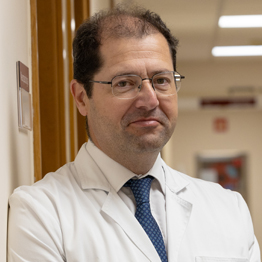
C/ Irunlarrea, 1
31008 Pamplona, Spain
(+34) 948 425 648
José Luis Vizmanos Pérez
Vice Program Coordinator
pdmab@unav.es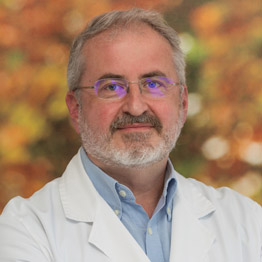
C/ Irunlarrea, 1
31008 Pamplona, Spain
(+34) 948 425 648