Greenland is an exceptional territory, not only because of its imposing landscape, but also because of the strategic role it plays on the global stage. Covering more than 2 million km² (four times the size of Spain), this island is currently facing an unprecedented transformation due to climate change.
Currently, 81% of the island is buried under a layer of ice that reaches 3,000 meters thick in its interior. However, global warming is causing accelerated melting, which generates an uplift of the crust due to isostatic adjustment. The enormous weight of the ice sinks the Earth's crust toward the mantle. As the ice melts, the crust is freed from this load and begins to rise slowly. programs of study indicate that, in Greenland, this rise in land could exceed the rise in sea level. This means that, while the sea will rise in the rest of the world, the relative sea level on the Greenland coast could even recede.
The retreat of the ice is exposing land that has been hidden for millennia. This represents a unique opportunity for science. Part of Greenland's crust is part of the Precambrian shield, which contains some of the oldest rocks on the planet. Studying these outcrops is essential to understanding how life appeared on Earth and how our continental crust evolved.
Beyond scientific interest, the economic interest is evident, as Greenland's exceptional geology makes it one of the world's largest reserves of strategic resources such as:
• Rare Earth Elements (REE): group 17 chemical elements (lanthanides, scandium, and yttrium) that are critical to current development , as they are an essential part of the manufacture of cell phones, electric cars, and wind turbines. Despite their name, they are neither "earths" nor "rare," and Greenland has abundant mineral deposits in its oldest areas.
• Precious metals and energy: in addition to gold and diamonds, which are also present in Greenland's rocks, the melting of the Arctic Ocean facilitates access to new continental shelves for drilling important oil and gas deposits.
• Maritime routes: the gradual disappearance of sea ice is opening up new trade routes that were previously impossible. These routes could redefine global logistics by cutting the distance between Asia and Europe by 30% to 40% (10 to 12 days of sailing) compared to the traditional route through the Suez Canal, transforming the Arctic into a strategic point for global trade.
It is paradoxical that technology that seeks to curb climate change, with a clear commitment to renewable energies, once again depends on the extraction of finite minerals that are found in certain parts of the planet. The renewed interest in Greenland's resources raises an uncomfortable question: Should we continue to exploit nature or learn to reuse what we have already extracted?
Projects such as SosIAMet and CirIAMet (with the participation of researchers from Tecnun and the Bioma Institute) propose a paradigm shift: urban mining within Economics . The goal to recover raw materials from disused products to break the dependence on traditional mining and avoid the geopolitical and environmental impact that this entails.
-----------------------
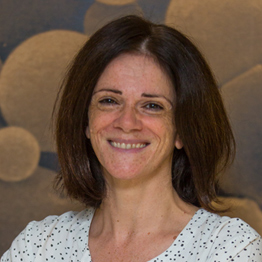 Esther Lasheras Adot
Researcher at Biodiversity and Environment Institute and professor at School of Sciences of the University of Navarra.
26.01.2026