Every October 15, International Rural Women’s Day is celebrated—an workshop established by the United Nations to recognize women’s contributions to rural development and draw attention to the inequalities that still shape their lives. The existence of this day is no coincidence. In many countries, the work of rural women remains largely overlooked.
In Spain, this issue takes on a unique dimension. A very significant portion of Spain’s territory is rural, yet only a small proportion of the population lives there. Furthermore, many towns are facing an aging population and a decline in their young population, along with difficulties in accessing many services. These challenges affect the rural population as a whole, but they have a specific impact on women.
Women Sustain the Lives of Indigenous Peoples
For generations, indigenous women have played a fundamental role in the Economics and in daily life, yet their work has not always received the recognition it deserves. They have worked in the fields, cared for children and the elderly, managed household chores, and contributed to small family economies. Their knowledge and skills were essential to their families and communities.
Today, however, the dem profile s of rural communities are changing. Many young women born in villages have moved to cities in search of a wider range of opportunities. In some places, those who remain are mainly older men involved in agriculture, livestock farming, or the management of family farms. At the same time, immigration has become an increasingly significant factor in many rural municipalities.
And it is precisely here that a reality emerges that is often overlooked in the “ discussion ” on rural Spain: that of migrant women.
Who are rural women today?
Who cares for the elderly man who has been left alone? Who works in the hospitality industry at the only remaining cafeteria in a small mountain town? Who finishes the night shift at a canning factory? And who is this unassuming woman in a veil who appears at the door of the high school every morning with a flock of children, yet remains virtually invisible to the rest of the community?
In many Spanish towns today, there are women from other countries, including many of Moroccan origin. Their husbands may be more visible in public spaces because they work in agriculture or construction. The women, on the other hand, spend more time at home, have limited knowledge of Spanish, and have few opportunities to build relationships with the local population.
This invisibility does not necessarily mean voluntary isolation. It is often the result of a combination of factors: lack of training, language barriers, family responsibilities, a lack of social networks, and economic conditions that leave little room for choice. For some women, moreover, the experience of migration involves moving from an environment with very limited opportunities to another where new barriers arise.
In a study published on our web group , research , based on interviews with Maghrebi women living in the Ribera de Navarra region, some participants described precisely this paradox. One of them summed up her experience with a particularly revealing statement: “I don’t know anyone here, but at least I’m safe.” The statement conveys both relief and loneliness. Another woman, after twenty years of living in the same town, put it even more bluntly: “I don’t know a single person in this town. No one has ever spoken to me.”
Toward Deeper Social Inclusion
These experiences should make us reflect on what we mean by social inclusion. Living in a town for years does not necessarily mean being part of its community. A woman may take her children to the “ high school,” shop at the town’s stores, and live there for decades, yet still lack meaningful personal relationships outside her family circle.
This issue is particularly important in our aging rural communities. Many municipalities face challenges in maintaining services, businesses, and economic activities. The arrival of immigrant families can help keep schools, stores, and other services open, as well as provide workers for essential sectors.
But the presence of these families should not be viewed solely from an economic perspective. Migrant women are not just a potential labor force or the partners of agricultural workers. They are neighbors, mothers, caregivers, consumers, workers, and potential entrepreneurs. Their children are also part of the future of these communities.
That is why we need to reframe the question. It is not just a matter of asking what migrant women can contribute to rural communities, but also what conditions rural communities need to enable them to develop their abilities.
The solution involves, among other things, linguistic and professional training , access to continuing Education , participation in community activities, and the creation of spaces where women can connect with one another and with the rest of the population. It is not a matter of imposing a single model of inclusion, but rather of creating opportunities for meeting.
Change and Continuity Among Rural Women
Spanish villages have changed many times throughout their history. They will change again now. But there are continuities between the rural women of the future and our grandmothers: the invisible “ work ,” the dedication to caregiving, and the central role in the “ Education ” of new generations. Perhaps one of the greatest challenges facing rural Spain is ensuring that these new women do not remain alone and invisible, and that they realize their potential.
They need opportunities to learn, work, build relationships, and participate. And communities, in turn, need to recognize them as part of their present—not merely as a byproduct of immigration. These should be spaces for coexistence where women from different places can come together to build new forms of rural life.
............................................
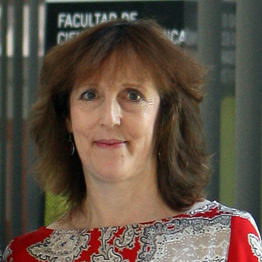 Ruth Breeze
Researcher at the BIOMA Institute at the ICS
29.10.2026
