
ICP-IM
International Cooperative Program on Integrated Monitoring of Air Pollution Effects on Ecosystems

ICP-IM is a long-term environmental monitoring program developed under the “ framework ” of the “ agreement ” on Long-Range Transboundary Air Pollution of the United Nations Economic Commission for Europe (UNECE). It takes an integrated approach to studying how air pollution and other stressors, including climate change, affect the functioning and biodiversity of terrestrial and aquatic ecosystems. To this end, it collects meteorological, atmospheric, Chemistry, hydrological, and biological data within the same watersheds over extended periods.
In Spain, the BIOMA Institute has been monitoring Station ES02, located in the Señorío de Bértiz Natural Park, since 2009; it is the only Spanish station included in this network.
main goal
To assess and understand long-term changes in the condition and functioning of ecosystems, determine their relationship to atmospheric deposition of pollutants and other environmental factors, and generate scientific evidence to support pollution prevention, biodiversity conservation, and environmental decision-making.
goal secondary
Improve monitoring networks by automating validation steps ( core topic ) and integrating a centralized database to store both historical ( data ) and current data. This will ensure that the data are easily accessible, reusable, and compliant with the FAIR principles.
Principal Investigators
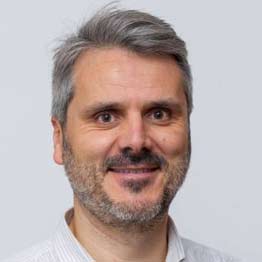
Team researcher




Duration:
December 9, 2022 - September 21, 2026

Financing and financing entity:
102.620 €
United Nations Economic Commission for Europe (UNECE)

Location:
Various plots across Europe. In Spain, a single plot in the Señorío de Bértiz (Navarra).
core topic
WHY IS THIS project NECESSARY?
Forests and natural ecosystems face numerous threats, such as air pollution and climate change. However, their effects are not always immediately visible: some changes occur slowly and may take years to become apparent.
Forests and natural ecosystems face numerous threats, such as air pollution and climate change. However, their effects are not always immediately visible: some changes occur slowly and may take years to become apparent.
Thanks to this long-term monitoring, we can detect changes that would otherwise go unnoticed, identify potential threats, and obtain reliable scientific information to better protect our natural heritage.
WHAT SOLUTIONS IS THE ICP-IM " project " CONSIDERING?
To protect our ecosystems, we first need to understand how they work and what factors are disrupting their balance.
The ICP-IM program studies the health of ecosystems from a global perspective, analyzing how air, water, soil, and living organisms interact. In the Señorío de Bértiz Natural Park, researchers from the BIOMA Institute continuously monitor air and water quality, soil composition, vegetation status, and biodiversity.
All of this information helps us understand how pollutants enter ecosystems, how they move through them, and what effects they have on their functioning.
In addition, the program incorporates new digital tools that facilitate the analysis and management of data, helping to identify trends and better understand environmental changes.
how does this project affect society?
Healthy ecosystems are essential to our well-being: they provide us with clean water, help regulate the climate, preserve biodiversity, and offer numerous benefits for our quality of life. Understanding how pollution and climate change affect them is crucial to ensuring their conservation. The information gathered by the ICP-IM program makes it possible to assess whether measures to reduce pollution are working and to financial aid governments to make decisions based on scientific data .
Furthermore, as part of an international “ network ,” the results obtained in Navarre can be compared with those from other European ecosystems, helping to improve environmental policies. At final, taking care of our ecosystems also means taking care of our health, our environment, and our future.