
E(f)FECTS
research in couples therapy
Processes of Change, Communication, and Intervention in Spanish-Speaking Couples
E(f)FECTS is an international and interdisciplinary line of research research on intimate relationships and couples therapy, developed by the Institute for Culture and Society (ICS) at the University of Navarra at partnership in collaboration with universities, researchers, and therapists from various countries, including the United States, Canada, Mexico, Argentina, Chile, Costa Rica, and Guatemala.
This research area examines what occurs during couples therapy, which factors promote change, and how interventions for couples can be improved, with a particular focus on the Spanish-speaking population.
Following the development of the clinical essay E(f)FECTS, this line of research has been expanded through various complementary projects that allow for the study of couples therapy under conditions similar to those of internship routine clinical practice. Among other topics, we investigate Emotion-Focused Couples Therapy (EFT), both in-person and online modalities, interaction and communication processes during therapy, emotional vulnerability, psychoeducational interventions to improve relational well-being, therapist training , and the influence of cultural context on couple therapy.
purpose 's latest work is to integrate research and internship , resulting in knowledge —a scientifically rigorous approach that can help improve the care couples receive and develop interventions that are sensitive to their relational, clinical, and cultural characteristics.
research USED TO UNDERSTAND WHAT MAKES COUPLES THERAPY EFFECTIVE AND HOW TO ADAPT IT TO DIFFERENT CLINICAL AND CULTURAL CONTEXTS

Generate evidence on the outcomes of couples therapy, analyzing how couples evolve across different types and formats of intervention, both in-person and online.

Understanding the Processes and Mechanisms of Change in Couples Therapy, examining individual, dyadic, and therapeutic factors related to improvement in the relationship.

Understanding the Processes and Mechanisms of Change in Couples Therapy, as well as the changes they undergo before, during, and after a therapeutic process.

To study the role of emotion, attachment, and vulnerability in the therapeutic process, paying special attention to moments of interaction between partners that can facilitate change.

To evaluate preventive and psychoeducational interventions aimed at couples, analyzing their immediate effects and their sustainability in the medium and long term.

To analyze the influence of cultural factors on couples therapy, contributing to the development of culturally sensitive and appropriate interventions for couples from different Spanish-speaking backgrounds.

Take the " training " and " internship " courses for couples therapists, promoting the transfer of scientific knowledge to clinical internship and strengthening partnership among professionals and researchers.
The E(f)FECTS program currently encompasses various national and international projects at research , some of which are funded by Spanish institutions such as the Spanish Federation of Family Therapy Associations (FEATF) or the Ministry of Science and Universities. In addition, several projects have received international support from highly prestigious scientific societies such as the Society of Psychotherapy Research (SPR) and the International Centre for Excellence in Emotionally Focused Therapy (ICEEFT, Canada).
These projects combine various approaches and designs from research and are being carried out at partnership in collaboration with universities in different countries, such as Brigham Young University (USA), the University of Ottawa (Canada), the University of Québec au Outaouais (Canada), the University of Minho (Portugal), and the University of Los Andes (Chile).
Detailed information about the projects currently underway is available on the E(f)FECTS website:
Methodology
The projects within E(f)FECTS employ quantitative and qualitative methodologies, with a particular focus on longitudinal designs and the study of therapeutic processes in clinical settings. Among other strategies, they use questionnaires with repeated measures, recording and analysis of sessions, and analysis of couple interactions and communication.
These methodologies make it possible to analyze both the outcomes of interventions and the processes and conditions associated with therapeutic change.
We are looking for couples therapists
WHO WISH TO HELP GENERATE EVIDENCE BASED ON CLINICAL internship
One of the pillars of E(f)FECTS is the partnership between research and internship . For this reason, we are looking for couples therapists who work with the Spanish-speaking population and are interested in collaborating on one of our projects at research.
Therapists who work in the following areas are eligible to participate: modality in person, online, or both, from Spain, Latin America, or other countries where they routinely treat couples in Spanish.
requirements , and the methods used at partnership vary by study. Projects may involve, among other possibilities, collecting questionnaires, conductingpartnership with couples treated at the internship clinic, recording sessions with informed consent, or having therapists participate in interviews and evaluations related to their professional experience.
Some projects are specifically developed with therapists certified in Emotion-Focused Couples Therapy (EFT), while others involve professionals from different approaches to couples therapy.
Are you a couples therapist interested in collaborating with our research?
JOIN THE E(f)FECTS NETWORK OF COLLABORATING THERAPISTS ( network ) BY SENDING AN EMAIL TO:
researcher manager
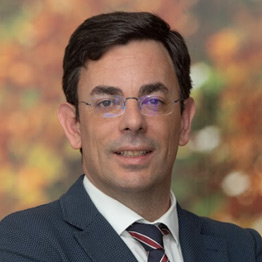 Martiño Rodríguez-González

mrgonzalez@unav.es

Institute for Culture and Society
RESEARCHER manager
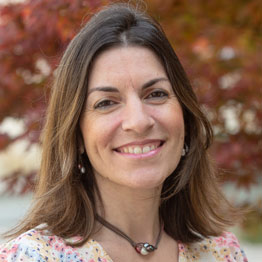

mcalatrava@unav.es

Institute for Culture and Society
staff researcher
→ Jonathan Sandberg — Brigham Young University, USA
→ Shayne Anderson — Brigham Young University, USA
→ Marie-France Lafontaine — University of Ottawa, Canada
→ Paul Greenman — Université du Québec en Outaouais, Canada
→ Alfonso Osorio — Institute for Culture and Society, University of Navarra, Spain
→ Dania Andrade — Freelance researcher, Spain
→ María Pilar Martínez Díaz — Comillas Pontifical University, Spain
→ Patrick Steffen — Brigham Young University, USA
→ Alessandra Sambuceti Lewis — School of Education , and Psychology, University of Navarra, Spain
→ Mariarita Bertuzzi — University of the Andes, Chile
→ Min Xu — Alliant International University, San Diego, USA
→ Suzanne Hollman — Catholic University of America, USA
→ Ágata Kasprzak — Comillas Pontifical University, Spain
→ María Estellés — University of Valencia, Spain
→ Marta Albelda — University of Valencia, Spain
→ Virginia González García — University of Valencia, Spain
staff PREDOCTORAL PROGRAM IN training
→ Mª Ángeles Cueli Naranjo, Institute for Culture and Society
research TECHNICAL staff
→ Carolina Vanni, Institute for Culture and Society
In this section, we present data about the emotionally focused therapy model and testimonies from couples who have undergone therapy with one of the therapists involved in the E(f)FECTS project.

Emotionally focused therapy is 1 of 2 unique models in the couple’s therapy world classified as evidence-based treatment.

It has nine randomized clinical trials and dozens of programs of study of results indicating that this model couples therapy significantly improves relationship adjustment.
"We did other therapies before, but with this one I discovered how to express my emotions in a way that makes me feel closer than ever to my partner and that is wonderful."
Martín, Spain
"We learned more about ourselves and our emotions, and that, despite how we are feeling from one day to the next, we have deeper feelings, mainly love and the desire to be together and connect. I feel a huge change."
Daiana, Argentina

The therapy has a 73% effectiveness rate and 90% satisfaction score.

62% of couples continue to improve or maintain their improvements two years after completing this therapy, according to follow-up studies.
"This therapy has allowed me to recognize my own feelings and emotions, to reconstruct and nurture the relationship between me and my partner.”
Lorena, Mexico
"This therapy has helped my inner light shine in an indescribable way, which allows me to unconditionally support my partner."
Leslie, Guatemala