The University ranks among the institutions with the most influential scientists in nutrition, oncology, immunology, cardiology, and business, according to Stanford's ranking.
53 researchers from the academic center are among the most cited in the world, with Dr. Gemma Frühbeck and professors Miguel Ángel Martínez-González and Christoph Zott among the highest ranked.

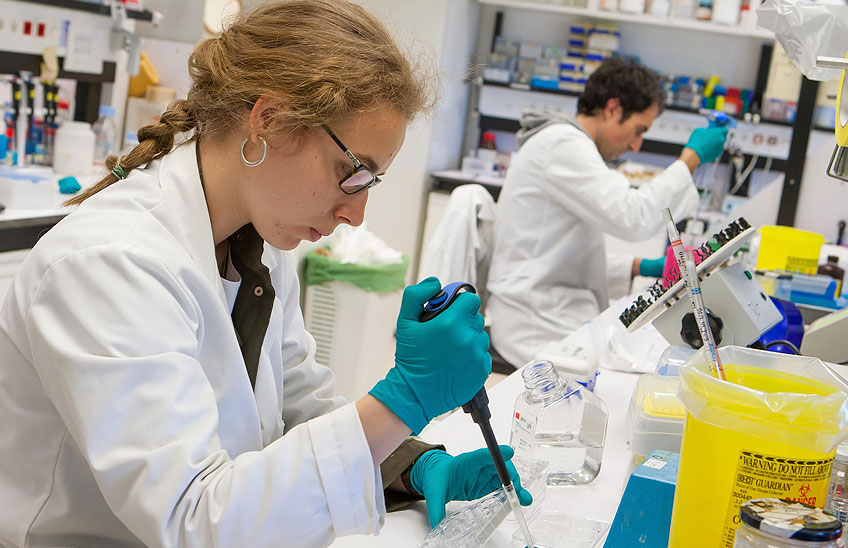
PhotoManuelCastells/53 researchers from the University are among the most influential in the world, according to data on the Top 2% Scientist platform / Manuel Castells.
04 | 12 | 2025
The University has ranked53 of its researchers among the most influential in the world, according to data byTop 2% Scientists, which identifies the most cited researchers globally based on a comprehensive analysis of bibliometric indicators. This platform uses as reference letter study of data instructions data citation indicators prepared by Stanford University professor John P. A. Ioannidis, which is why this list is known as the Stanford ranking. The results of this analysis are published in theElsevier data archive .
The ranking, based on data 2024, includes30 researchers from different Schools academic center; 18 from different areas of the Clínica Universidad de Navarra Cima; and another five from IESE, its business school.
Among the highest ranked are Miguel Ángel Martínez-González, Full Professor Preventive Medicine and Public Health ranked 3,451); Dr. Gema Fruhbeck, co-director of area the Clínica Universidad de Navarra(ranked 4,771); and Christoph Zott, director department at IESE (ranked 8,557).
Alongside them, the ranking includes researchers and specialists from the Cancer Center at Clínica Universidad de Navarra, such as Bruno Sangro, Ignacio Melero, Maite Huarte, Antonio González-Martín, and Jesús San-Miguel, among others. Their contributions in hepatology, cancer immunotherapy, advanced therapies, RNA medicine and gene therapy, gynecological cancer, and precision hematology place the University of Navarra among the international leaders in research .
The list also includes nutrition and dietetics scientists such as Miguel Ruiz-Canela, Estefanía Toledo, and Maira Bes-Rastrollo, who have a recognized track record in nutritional epidemiology, public health, and healthy lifestyles. Their work strengthened the academic center's presence in an area great health relevance.
In the field of cardiology, researchers such as Javier Díez, Arantxa González, and Begoña López stand out, whose programs of study cardiovascular pathophysiology and molecular mechanisms of heart disease consolidate the center's presence in this specialization program.
Several of these researchers also belong to the Navarra research Institute (IdiSNA) and the research center network Consortium network CIBER) in several of its thematic areas, such as Cancer, Physiopathology of Obesity and Nutrition, Liver and Digestive Diseases, and Cardiovascular Diseases.
In the area business, alongside Zott, Alejo Sison, Domènec Melé, and Pascual Berrone stand out as international leaders in entrepreneurship, business ethics, corporate responsibility, and sustainability. Their research contributes to improving decision-making, economic governance, and the competitiveness of public and private organizations.
Rounding out the top positions of the most cited authors at the academic center are researchers such as Xavier Vives, Luis Alberiko Gil-Arana, Ruth Breeze, Miguel Fernández de Sanmamed, José María García-Mina, Bruno Paiva, and Ramón Salaverría, among others.
Among the 236,000 most cited scientists
This ranking, now in its eighth edition, classifies the 236,313 most cited scientists in the world (representing 2% of the total) across 22 scientific fields and 174 subfields or areas of research. Researchers from the University of Navarra appear in nine of these areas, ranging from medicine, Economics, research , biology, physics, and astronomy to engineering, communication, social sciences, Philosophy theology. Together, the 53 researchers at the academic center have authored 9,092 publications and received 52,350 citations.
The list presents two rankings: one that reflects the impact throughout the entire degree program until 2024 and another focused exclusively on data to 2024. This ranking, which is publicly available, is not compiled by Stanford University as an institution, but by a member of its faculty analyzes a large amount of information from scientific publications extracted from the database , making it one of the most comprehensive and inclusive programs of study globally.