Researchers at the University of Navarra examine the ethical challenges of artificial intelligence in scientific research
Researchers at the University of Navarra examine the ethical challenges of artificial intelligence in scientific research

08 | 06 | 2026
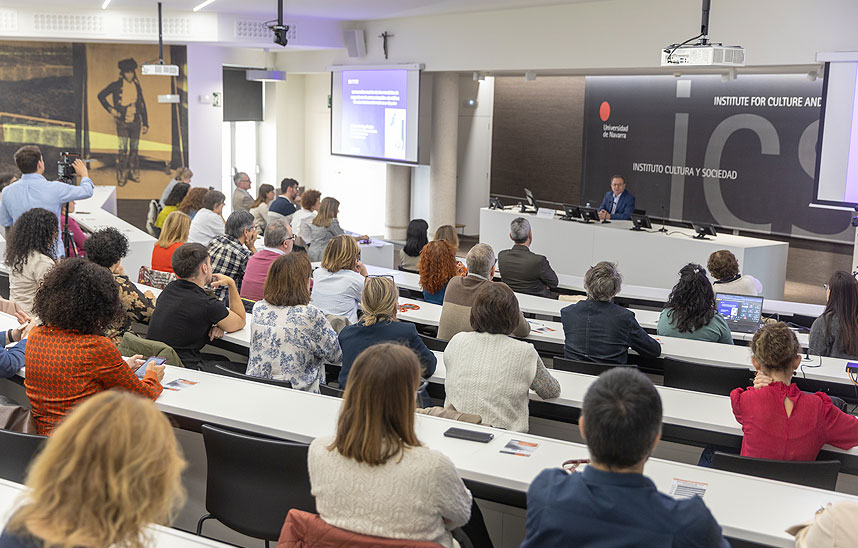
A total of 141 researchers participated in the seminar Publish, Appear, or Think: Ethics and Responsibility in the Age of AI," a session dedicated to analyzing how artificial intelligence, assessment systems, and new publishing models are redefining research activity.
The meeting part of the series of seminars on research ethics organized annually research the University Library Service, which reports to the Office of the Vice President for Research Sustainability. This year, the workshop on some of the main challenges currently facing the academic community to the emergence of the increasingly widespread use of generative artificial intelligence tools in research scientific communication processes. Some of these challenges include the exponential growth of scientific output, information overload, pressure to publish, and the expansion of open science, among others. During the session, participants reviewed the evolution of the academic publication ecosystem academic publication the past decades, as well as the opportunities and risks associated with new publishing models, transformative agreements, and the growing automation of certain academic tasks.
Isabel Iribarren, director of the University Library Service, led the session, during which she emphasized the importance of approaching these debates from an ethical and educational perspective. "Artificial intelligence offers valuable opportunities to support research, but it also compels us to reflect on essential issues related to scientific rigor, transparency, and academic responsibility."
To train researchers capable of critically evaluating information
The participants also examined how assessment systems assessment the dynamics of academic publication discussed the importance of preserving critical thinking in a context marked by an abundance of information and the accelerating pace of knowledge production.
The seminar a significant portion of its agenda to information literacy and the development skills for rigorously locating, selecting, and evaluating scientific information. Attendees discussed some of the emerging risks associated with the use of artificial intelligence systems, such as the generation of non-existent references, errors in interpretation, or the loss of context in the review of scientific literature. research technology, but it also research judgment. Training researchers capable of using these tools critically and manager one of the major challenges facing universities in the coming years,” stated Iribarren.
This activity is part of the training initiatives training by the University of Navarra as part of its 25/30 Strategyto promote scientific promote , the manager use manager emerging technologies, and the continuous improvement of the research skills of its academic community.