A thesis of the University of Navarra analyzes the poetic Philosophy of Antonio Machado.
José María García Castro indicates that "it is necessary to submerge oneself little by little in his thought in order to come to his poetic work with new lights".
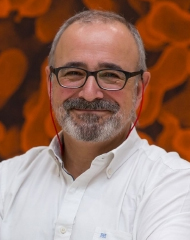
Antonio Machado’s poetic philosophy is the focus of José María García Castro’s thesis , which he defended at the Ecclesiastical School of Philosophy the University of Navarra under the supervision of Jaime Nubiola. “In Machado, the thinker and the poet cannot be separated. One must gradually immerse oneself in his thought in order to approach his poetic work with fresh insights,” he explains.
In this sense, he emphasizes that the Andalusian creator "devoted many hours of his life to the study of Philosophy, of the great thinkers of history, in some of whom he found illuminating explanations for his poetic activity. If Machado's reflections on the art of poetics and his anthropological and theological meditations are carefully read, a philosophical richness will be discovered that allows for a greater understanding and enjoyment of his lyrical work".
Heritage of oral tradition
According to the professor at the Ecclesiastical School of Philosophy, "the emotional and timeless power of his poetry is no accident. Machado knew what he was doing and why he was doing it. What was initially for him merely a internship endeavor—poetic creation—became the subject of philosophical reflection."
"This author -he adds- had a great interest in developing a dialogue staff and overcoming the contingent. His poetic speech is located where emotion runs sincerely from heart to heart and it is impossible not to feel involved".
Finally, Jose María Castro emphasizes that "his appreciation for the folkloric spirit, which he masterfully pours into the little proverbs and songs, makes Antonio Machado a peculiar poet, capable of composing verses that seem more born from the people and their traditions than from the hand of an author. He manages to make his written work cease to belong to him and become part of the heritage of oral tradition.