Discovery of a mechanism linking diabetes and neurodegenerative diseases development
Researchers from Cima, Clínica Universidad de Navarra and the Navarra Hospital Complex confirm that amylin could play a relevant role in patients with Parkinson's or Alzheimer's disease.

In recent years, the association between neurodegenerative diseases and diabetes mellitus subject 2 has been the subject of research at academic community. Thus, multicenter programs of study suggest that diabetes subject 2 and insulin resistance or other prediabetic stages could contribute to the onset of neurodegenerative diseases such as Parkinson's disease or Alzheimer's disease. However, the elements involved in the association of these diseases were not known.
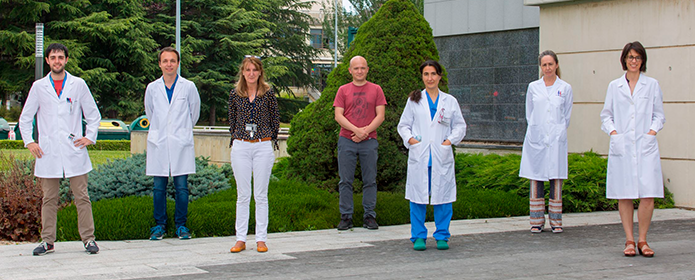
Researchers from the Cimaof the Clínica Universidad de Navarra and the Complejo Hospitalario de Navarra, belonging to the high school de research Sanitaria de Navarra (IdiSNA), have discovered a possible mechanism linking these diseases.
This is the conclusion of two studies programs of study in which the brain and pancreatic tissue of people diagnosed with Alzheimer's disease, Parkinson's disease, and diabetes subject 2 but without any neurodegenerative disease were analyzed. The results have been published in the scientific journals certificate Neuropathologica y Annals of Neurology.
"Our study began by analyzing the pathological alterations present in the pancreas of patients with Parkinson's disease. We saw that the main protein that accumulates in the brain of these people (alpha-synuclein) is also present in the pancreas. In parallel, we confirmed that diabetic patients who did not have this protein in the brain did express it in the pancreas. In other words, the pancreas of both patients is very similar in terms of the content and distribution of certain proteins, but the same is not true for their brain," explains Dr. Iván Martínez-Valbuena, first author of this work and researcher of the Neurosciences Program at Cima.
Similar results in Alzheimer's diseaseWith the data obtained, the researchers set out to confirm these results in the pancreas of patients with other neurodegenerative diseases. Anatomy "In partnership with the Navarra Hospital Complex, we analyzed samples from patients with Alzheimer's disease and found that the proteins that preferentially accumulate in the brain (beta-amyloid and tau) also accumulated in the pancreatic tissue," confirm Dr. Irene Amat and Dr. María Teresa Tuñón, specialists from the Pathology Department of the Navarra Hospital Complex.
On the other hand, pancreatic tissue samples from diabetic subjects, but who did not have any neurodegenerative disease (Parkinson's or Alzheimer's), also showed deposits of these proteins. According to Dr. Mª Rosario Luquin, neurologist and researcher at Cima and Clínica Universidad de Navarra, "our results indicate that amylin (a protein that is deposited in the pancreas of diabetics) plays a role core topic in the appearance of these abnormal deposits. Specifically, it could interact with these proteins and trigger a cascade of events leading to the abnormal deposition of these proteins in both the brain and the pancreas, which may result in the development of these diseases."
Potential therapeutic and early diagnostic targetThe work concludes that amylin could be an attractive target for both treatment and early diagnosis of patients with Parkinson's or Alzheimer's disease in a simple manner. "Therefore, it is important to be able to detect this amylin in biological samples, as well as to continue studying the role of this protein in the onset of Parkinson's or Alzheimer's disease, which will facilitate the development of new treatments to combat these two diseases."
Furthermore, the results obtained confirm that diabetes can be a risk factor for the development of a neurodegenerative disease. "However, it is important to note that this is a modifiable risk factor, since, as we know, a healthy lifestyle decreases the risk of developing diabetes subject 2 and financial aid to better control it," conclude Dr. Rafael Valentí and Dr. María Rosario Luquin, researchers at Cima and Clínica Universidad de Navarra.
Bibliographic references:
-
Amylin as a potential link between type 2 diabetes and alzheimer disease. Ann Neurol. 2019 Oct;86(4):539-551. doi: 10.1002/ana.25570. Epub 2019 Aug 19.
-
Interaction of amyloidogenic proteins in pancreatic β cells from subjects with synucleinopathies. certificate Neuropathol. 2018 Jun;135(6):877-886. doi: 10.1007/s00401-018-1832-0. Epub 2018 Mar 13.