The University closes the project ReMeD project on resilient media and democracy in the digital age
They have analyzed the role of journalists and content creators, their reach, and the challenges this poses for democracies.

26 | 01 | 2026
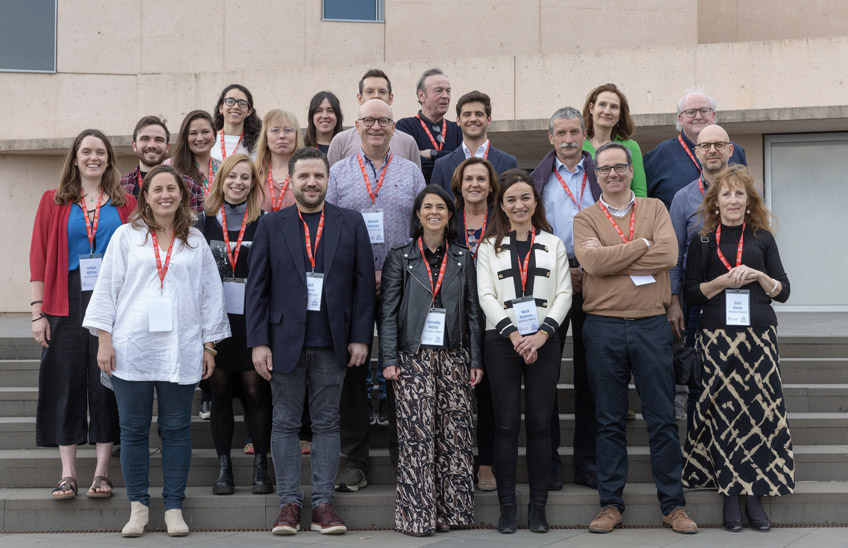
The School Communication at the University of Navarra hosted the final event of project ReMeD (Resilient average Democracy in the Digital Age), an initiative funded by the European Commission under the Horizon Europe program and coordinated by the School itself. The project, developed by a consortium of nine European institutions, focused on analyzing the role of the media and new content creators in shaping public opinion in the digital environment, as well as studying the effects of this ecosystem on democratic quality.
ReMeD starts from a core topic reality: digitization has multiplied the number of news sources, but not all of them contribute to the distribution of verified and manager information. This scenario has made it increasingly difficult for citizens and journalists to access accurate news from reliable sources, with a direct impact on trust in the media and, consequently, on the functioning of democracies.
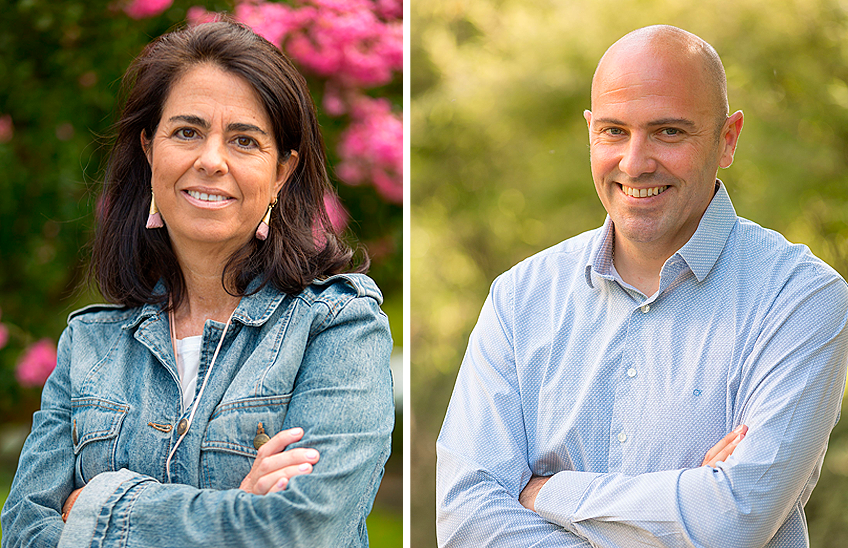
project principal investigator project professor at the School Communication, Mercedes Medina, emphasized that "today, public opinion is no longer shaped solely by traditional media. There are multiple channels and actors, especially content creators, who are playing a core topic role core topic how information reaches citizens. ReMeD's contribution has been to understand that role, its scope, and the challenges it poses for democracy."
The event featured the distinguished participation of Fernando Vallespín, Full Professor of Political Science and former president of the CIS, who offered his thoughts on the transformation of public space. Vallespín warned that one of the main problems facing democracies today is "the way in which public space is being shaped in an environment dominated by private platforms," where algorithms determine the visibility of content and commercial criteria replace deliberative ones.
During his speech, he pointed out phenomena such as the fragmentation and polarization of discussion, the emergence of parallel information realities, and the emotionalization of politics, where "emotions carry more weight than arguments." "We have moved from a media democracy to a digital democracy in which communicative power is not always democratic," he said.
Journalism, platforms, and democracy: a pluralistic roundtable
The meeting a roundtable representatives of citizens, journalists, verification professionals, and digital entrepreneurs: Carlos Hernández-Echevarría (Maldita), Charo Marcos (founder of Kloshletter), Leyre Iglesias (deputy editor of Opinion at El Mundo), and José Iribas ( citizen and Education Advisor Education 2011 to 2015).
The discussion highlighted the essential role of professional journalism as a pillar of the democratic system and warned of the effects of platformization: loss of control over content distribution, weakening of journalistic brands, and proliferation of misinformation. The speakers agreed that algorithms are not neutral: they respond to economic incentives and tend to amplify the most emotional and polarizing content.
Leyre Iglesias pointed out that there is a great deal skill providing customer service across different channels, especially on social media, where everyone is a communicator. In this context, she emphasized that "you have to compete and do it better."
The role of social media can often lead to the dissolution of the journalistic brand and control of distribution, which has affected, among other things, the media's model . Given this status, Charo Marcos insisted that it is important to reinforce the idea that "the media are important for democracy and that the mission statement journalism is to be a tool the service of citizens so that they are able to make better decisions in their daily lives."
Carlos Hernández-Echevarría argued that, when faced with toxic content, removal is not always the best solution, and advocated for strategies of contextualization, verification, and media literacy, combined with proportionate regulation. On the other hand, he warned of the risks of excessive regulation that could end up affecting freedom of expression and the independence of journalists.
The discussion also discussion the responsibility of public media, the need to demand accountability, and criticism of news formats designed for polarizing entertainment, emphasizing that a democratic crisis cannot be understood without considering the evolution of the information system.
Journalistic quality and sustainability
The closing position were position Alfonso Sánchez-Tabernero, Full Professor the School Communication, who defended the need to restore professional standards of good journalism in the face of the deterioration caused by clickbait and the precariousness of the sector. He also emphasized the responsibility of news companies in management teams, remaining consistent with their publishing house identity publishing house building sustainable business models based on public trust.
"The future of journalism and democracy depends on asking the right questions, investing in talent, and accepting that maximum profitability and maximum security cannot coexist," he concluded.
The project thus concludes as a space for European reflection on the structural challenges of the digital information ecosystem and its impact on democratic quality, with the goal helping to strengthen the link between citizens, media companies, professionals, and digital technologies.