Europe can strengthen its democracy by strengthening its information ecosystem
The project ReMeD project identifies structural challenges and proposes solutions to promote a more pluralistic, sustainable, and reliable media system.

17 | 02 | 2026
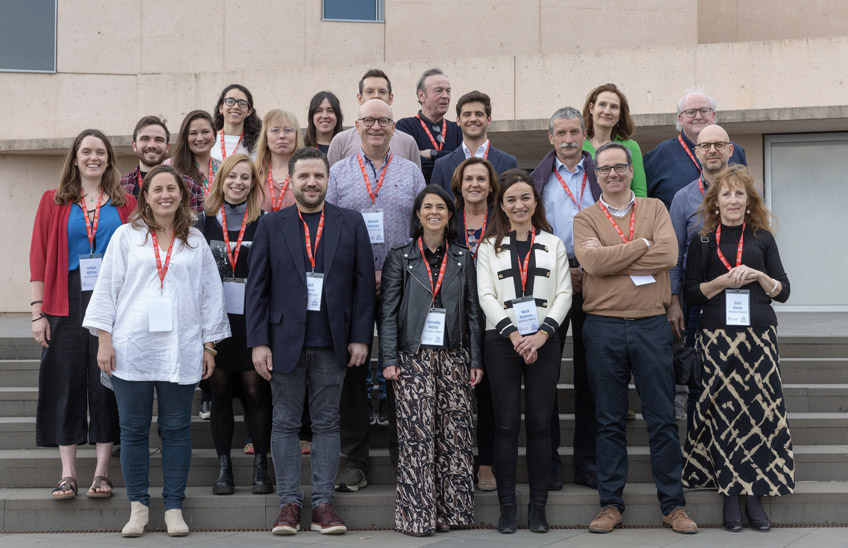
A pluralistic, sustainable, and transparent information ecosystem is essential for democratic resilience in the European Union. This is the main conclusion of project ReMeD – Resilient average Democracy in the Digital Age –, coordinated by the University of Navarra and developed in collaboration with eight other European institutions.
After three years of research in eight countries, the project, funded by the European Commission through the Horizon Europe program, presents a shared diagnosis of the challenges facing the European media system and, above all, a roadmap with concrete proposals to strengthen its contribution to democracy.
The fragmentation of the European information ecosystem, the loss of trust in the media, and the growing dependence on large technology platforms are weakening democratic resilience in the European Union, according to the study. The researchers highlight that the European information system is undergoing profound tensions: the precariousness of work , the concentration of distribution power, the proliferation of disinformation and hate speech, as well as growing mistrust of media and institutional actors.
"ReMeD shows that democratic health depends on a pluralistic, sustainable media ecosystem that is capable of generating trust. European cooperation and research are essential for understanding the challenges and building common solutions," says Mercedes Medina, professor at the School Communication and principal investigator of project.
A common diagnosis of democratic risks
Comparative analysis has enabled progress toward a shared diagnosis of the transformation of the digital public sphere. It shows that digitization has expanded opportunities for citizen participation and diversified the media ecosystem, but has also introduced new challenges: audience fragmentation, economic pressure on journalism, concentration of power in large technology platforms, and tensions surrounding the regulation of the digital environment.
Likewise, diverse perceptions have been detected among journalists, new digital actors, and citizens regarding core topic democracy, freedom of expression, and disinformation. Far from being interpreted as a weakness, this plurality of views reflects the vitality of European discussion and underscores the need to create spaces for dialogue and shared frameworks.
The project that these challenges can be addressed through a combination of professional responsibility, innovation in business models, media literacy, and effective implementation of European policies.
Over the course of three years, the ReMeD consortium has maintained an open dialogue with journalists, content creators, citizens, media executives, and fact-checkers. The project paid particular attention to some of the major issues in European diary : the erosion of trust in institutions, the climate emergency, and migration and integration processes. This content can be consulted in the Public Observatory available the project website.