Kiko Llaneras: "The tools are the same in journalism and science; what changes are the times."

26 | 01 | 2026
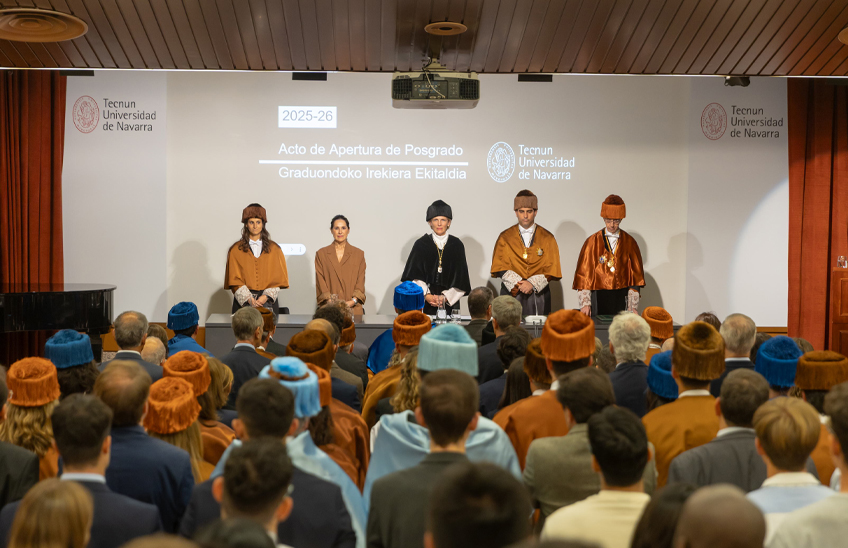
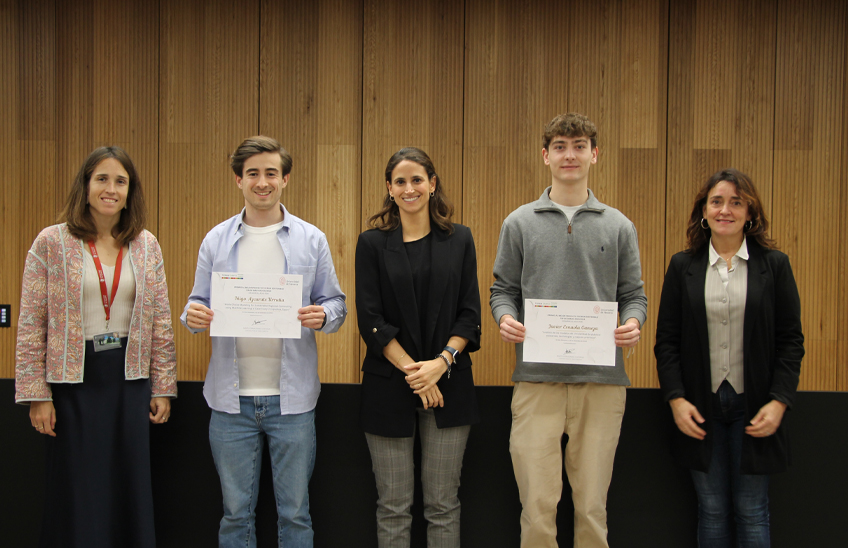
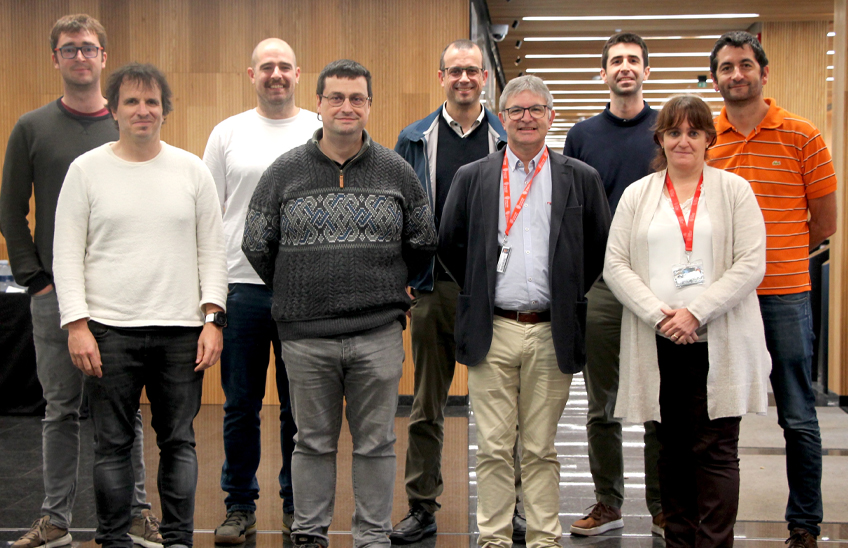
Kiko Llaneras is a data journalist data El País and holds a PhD in Industrial Engineering. His work at the intersection of both disciplines, which share rigor, precision, and work data. At the Tecnun Student Research Conference, held on January 16 in the Parke building, Llaneras gave a lecture at Tecnun researchers Tecnun and Ceit , and then answered several questions about the challenges of communication and science in today's environment.
What has all that previous experience in engineering meant for you in your current work as a journalist?
The goal a scientist is to understand and explain the world, and the mission statement journalism is to find out the truth and report it. Therefore, in terms of objectivity, the use of data the verification of statements, these two disciplines are more similar than we sometimes think.
The big difference, for me, is speed. In academia, deadlines are long; you can spend years working on a thesis Journalism, on the other hand, is done in a hurry. I remember when I started out, I would receive calls with a topic I would calmly think it over until I realized it was for the same day. Faced with this, the only solution is to be more cautious: if you do in hours or days a work takes others months, you have to be extremely cautious, be transparent with your methods, not overpromise results, and not pretend to have certainties.
Furthermore, this similarity between journalism and science has intensified in recent years. The media has become more analytical: the internet rewards those who explain what is happening rather than those who simply report it. Journalism used to be more descriptive, but today that has lost value because you can see what is happening anywhere in real time. That is why the work has shifted toward more difficult questions: What does this mean? How is it connected? What are the implications? Synthesis and analysis have become central, and there is still a long way to go to provide true added value.
In this relationship between academia, science, and journalism, which is sometimes perceived as asymmetrical, what do you think each party should do to achieve the goal of explaining the world?
I believe that journalism has needed and continues to need to be quantified. Mathematics and numbers are a language. It's like English: if you don't master it, what you read is not intelligible. And that happens to many people with mathematics. In addition, there has been a harmful tendency to think that understanding numbers is an innate ability, as if some people are born with that ability and others are not. But that's not the case.
The big handicap of journalism (and other disciplines) is that you can't give up the language of numbers, just as you can't give up English. Otherwise, someone will use that language to put themselves in a position of superiority. And you don't have to give them that. Besides, numerical language is extremely useful: it opens up access to very interesting and valuable things. That's why I argue that, from an educational point of view, people should have access to and mastery of these languages: numbers, programming... touch on these areas, even if everyone then does what they want.
In the technical or scientific world, once you understand this, another conclusion follows: if you are going to put yourself in the hands of a journalist, a department , or someone who works in communications, you must respect their expertise. Communication is a skill can be trained and learned, has its own codes, and is not arbitrary. What's more, it is becoming increasingly important.
We live in an Economics : people have a thousand things to do, and you're competing with everything else for their time. Attention is power. You can try to ignore all this or trust that there are people with innate magnetic talent, but ignoring it means sinking your ideas.
In this glut of information and with so much mistrust, how can the public distinguish reliable sources from noise?
The first thing is to recognize that traditional newspapers still have enormous value. When something important happens that affects people's lives, most turn to newspapers: we saw this during the pandemic, on the day of the blackout, and during the DANA storm. At times like these, when people want to be well informed, they look for reliable sources, and that is where the role of the mainstream media remains core topic.
People are quite good at discriminating and it's not true that they believe everything they see on the internet. The first filter is skepticism: you don't believe everything you read. Furthermore, even though there is a lot of misinformation, that doesn't mean that people immediately adopt those ideas. It's a continuous learning process: little by little, you learn to distinguish which sources are reliable and which are not.
I believe that the value of curation and content selection will continue to grow, because in a world saturated with stimuli, people will need clarity rather than noise. But that transition is not automatic, because noise is also a business: as long as people consume it, it will remain profitable and continue to be produced. That is why we are in a perverse equilibrium: the more we look at noise, the more economic incentives there are to generate it. Even so, I want to believe that, over time, a model will prevail model which clarity and quality of information are rewarded more.
Infographics and other visual representations simplify reality to bring it closer to the audience, but sometimes this simplification can obscure the complexity of topic. Where is the balance between clarity and accuracy?
I think the tension takes time to appear. Many days we cover current events, and the reality is that the people reading you have very little knowledge on many issues. I ask myself, "What has happened in Iran in the last two years?" It's almost a blank canvas. So, you have a lot of space to say very little. And if that's real and it's the most important thing, even if it leaves out a lot of complexity, it's still a very clear and positive contribution.
The problem is that, with this shift in focus, audiences have become brutally fragmented, and it makes sense to write for people who are more familiar with the topics. The committee of "write so your grandfather can understand" no longer works: your grandfather won't read you if he's not interested in topic. On a day-to-day basis, you write for people who know more about topic, so the incentives have shifted toward greater depth. You can't write for people who aren't interested, because those people are doing something else with their time.
The other point to find balance is to accept that everything is an approximation. 900 words on a complex subject will leave things out, a graph will leave things out, a map will leave things out... They are models. As we say in science: no model true, some are useful.
So how can you avoid misinforming readers when you devote 900 words to a topic ? The core topic to embrace caution, respect uncertainty, and avoid being categorical. Often, the most rigorous headline you can write is a question. Because you don't have an answer for many of the issues that appear in the newspaper today. It's more honest to write a headline like that and devote 3,000 words to not answering a question you don't have an answer to, but in which you provide data, interviews with experts, and context.
final, balance means accepting that your answers are incomplete and acknowledging what readers have always known: that you don't know the secret to happiness, whether there will be a third wave of the pandemic, or who will win the election. But people will read you with interest if you have interesting things to say about issues that, in reality, you can't solve (which is almost everything).
Finally, with the perspective that such a long career gives you, and after analyzing how the media has evolved, would you dare to put forward a hypothesis about what the future holds? And, if so, would it be an optimistic hypothesis for journalism?
Yes, I am very optimistic, but not naively so. I believe that communication has a promising future. I don't think we are worse informed. The idea that society is worse informed does not hold up without nostalgia. Today, people have access to a wealth of information. We even do journalism with satellites: we see images of the DANA, of the advance of troops in Ukraine, or we check whether the ambulances arrived on time in Melilla. That used to be science fiction, and now it's everyday life. So, in reality, we can be increasingly better informed.
Of course, this abundance brings new problems. It is the paradox of abundance: when there is an excess of content, harmful effects arise that we did not anticipate. Content curation becomes very valuable, but misinformation also grows. Communication has become excessive: anyone can spread something interesting, but also an attractive lie. Even so, I believe we will find ways for this new ecosystem to make society better informed.
And in knowledge dissemination ? Because in this area, great strides have been made. Are we on the right track?
Yes, I think knowledge dissemination is on the right track. Back in the 80s and 90s, in a small town, the only window to the world was the newsstand. If you wanted to read about science, you had to read everything. Today, you can access any scientific content and learn in any language. It's a tremendous opportunity, and that's why I'm optimistic.
The problem is not only protecting ourselves from misinformation, but also finding focus. And I am more concerned about the latter: having too many options and not knowing how to choose just one is an age-old struggle for our brains. The solution, I believe, will come from combining culture and social norms, as happened with silent cell phones while traveling on buses: a cultural change without the need for laws.
As a staff, the struggle is to do less. Otherwise, you don't go into depth. I ignore 90% of current events. Sometimes this makes me look bad in meeting, but I don't have time to know a little about everything: I need to know a little more about some things in order to write meaningfully.
So yes, it's a difficult struggle, but I'm confident we'll find a balance. This is very new: 30 years have passed since the newsstand, and culture moves more slowly. But we've already made progress. If we were able to silence cell phones, we can silence other things as well. I don't know exactly how (whether it will be through platforms, laws, or social habits), but I believe it's a problem that will be solved.