Bio-LOOP, a Economics solution for transforming healthcare plastic waste into clean energy, wins the University of Navarra Hackathon
More than 150 students and 30 teams participated in an workshop promoted by Innovation Factory and imagin, CaixaBank's neobank.

Photo courtesy/Fromleft to right: Berta Solé, Sofía Vallejo (UNAV), Lucía Arana (Bi-LOOP), Berta Llorens (imagin), Claudia Cubas (Bi-LOOP), Teresa Bestard (Bi-LOOP), and Santi Hermida (CaixaBank)
23 | 02 | 2026
On Saturday, February 21, campus University of Navarra campus hosted a new edition of the Hackathon organized by Innovation Factory, an workshop focused on sustainability that brought together more than 150 registered students. During a Saturday morning, nearly 30 multidisciplinary teams returned to campus transform environmental challenges into viable proposals, working with a approach aimed at generating real impact.
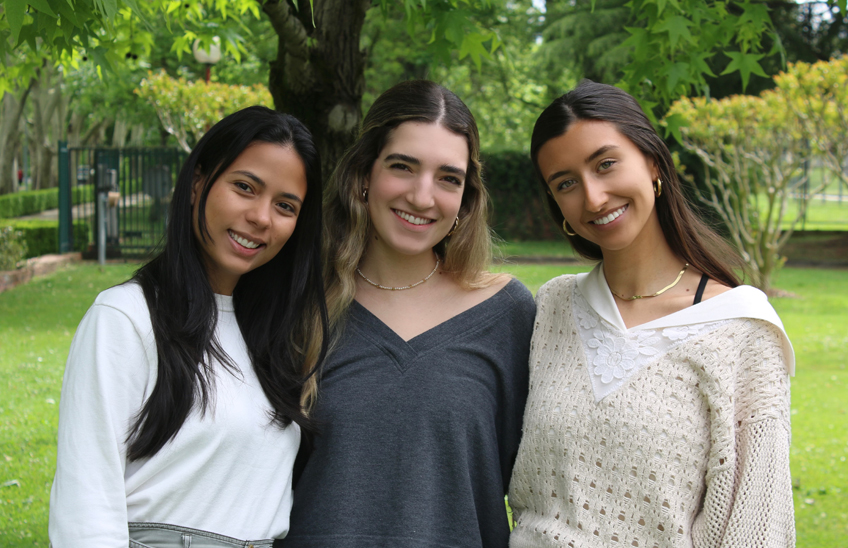
The proposal was Bio-LOOP, developed by the Green Facts team, made up of Claudia Cubas Fernández-Argüeso, Lucía Arana Martínez spanish medical residency program and Teresa Bestard, students at theFaculty of Pharmacy and Nutrition at the University of Navarra. The project a closed-loop Economics system that replaces single-use medical plastics with bioplastics (PHA) and, after use, avoids incineration through a biodigestion process that transforms them into biogas—generating clean energy for the healthcare center itself—and into nutrients that can be reused in the production process.
Along with Bio-LOOP, the jury highlighted the level of other finalist projects such as ATMOS, a line of urban materials and aeronautical surfaces capable of absorbing microplastics present in the air through advanced coatings; Bio Gladiators, which proposes personalized pharmaceutical treatment systems to reduce waste and improve adherence in LATAM; Ecoshell, a sustainable packaging system that improves the preservation and correct use of medicines; The Internationals, a training attendance app attendance first aid attendance emergencies and natural disasters; and Sunsweed, a system of autonomous robots for collecting waste and microplastics on beaches and coastal areas, among many others.
The workshop developed following the Lombard methodology, a Silicon Valley model that structures the work different phases such as inspiration, ideation, reformulation, prototyping, and pitching. This pathway participants to move forward in a few hours from identifying the problem to presentation defined and reasoned solution to an expert jury. The process combines creativity, validation, work , and approach , turning the Hackathon into an intensive learning experience where knowledge is translated into proposals with impact.
"Stepping outside our usual area of research tackle a global challenge has been a demanding and very enriching experience. It has allowed us to apply our knowledge to a viable solution that can have a real impact," said Claudia Cubas Fernández-Argüeso after hearing the verdict.
The Hackathon is part of the imagin Planet Challenge, an initiative promoted by imagin, CaixaBank's neobank, which supports university projects with a positive impact. Thanks to its victory, the Green Facts team will represent the University of Navarra in the national final of the imagin Planet Challenge and, if it wins, will be able to travel to Silicon Valley to continue developing its idea alongside international mentors. With this edition, Innovation Factory reinforces its commitment to sustainable entrepreneurship and consolidates the Hackathon as a space where university talent is turned into real solutions to improve the world.