Education victim testimonies improve knowledge terrorism and increase rejection of violence among adolescents.
research analyzes for the first time at the national level the perceptions of more than 1,000 secondary school students regarding terrorism.

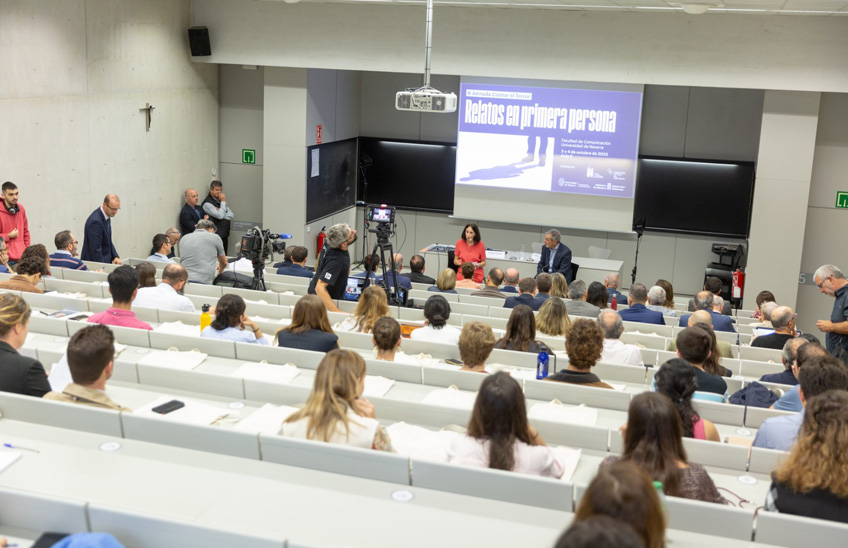
PhotoManuelCastells/María Jiménez Ramos and Lucía Gastón Lorente, researchers involved in the study
23 | 02 | 2026
A pioneering study carried out by researchers at the University of Navarra sample young people learn much more about terrorism when they participate in educational programs and hear firsthand accounts from victims. The research, published in the journal Critical Studies on Terrorism, evaluates the "report Prevention of Terrorism" program, promoted by the Ministry of the Interior, which since 2017 has reached more than 30,000 students throughout Spain.
The report, carried out by María Jiménez Ramos and Lucía Gastón Lorente, from the School Communication at the University of Navarra, together with Rafael Leonisio, from the UNED, represents the first survey on how adolescents perceive political violence. To this end, more than 1,000 10th-grade students from ten autonomous communities shared their opinions through questionnaires throughout the 2023/2024 school year.
The data a contradiction B: although 77% of students consider terrorism to be a current problem and 72% believe it should be studied in the classroom, 60% admit to having little or no knowledge of the topic. "There is great interest among young people, but also a significant lack of knowledge about the history of terrorism in Spain," says Jiménez, the study's principal investigator. Likewise, 65% of students consider it necessary to keep the report the victims alive, compared to only 11.6% who prefer to "turn the page." This figure rises to 74% among those who have heard direct testimonies from victims.
The research that ETA is the best-known terrorist organization among Spanish teenagers; 72% were able to name it spontaneously, while jihadist terrorism is less well known.
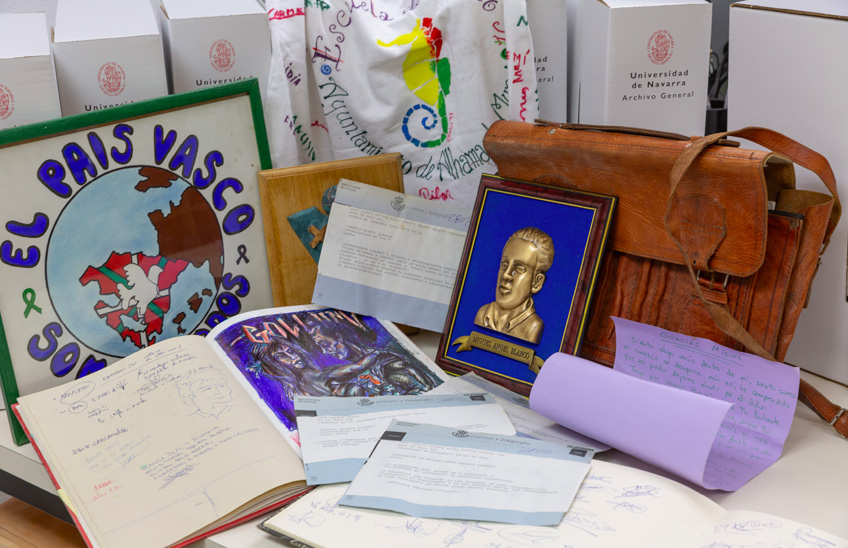
Another revealing fact is the lack of information about victims of terrorism. Only 38% of those surveyed could name a victim, and although Miguel Ángel Blanco is the most widely remembered, only 7.4% of all students were able to provide accurate information about who he was and what happened to him.
The core topic role core topic victim testimonies in high school
The study sample there are two factors that determine knowledge terrorism of different kinds in Spain: having studied it in school and having had access to the testimony of a victim. "Educational centers are establishing themselves as fundamental spaces for the transmission of report ," explains Lucía Gastón. "Students who have participated in these programs not only have more objective knowledge, but also show greater sensitivity towards victims and rejection of violence," she adds.
On the other hand, the media continues to be the main source information on terrorism for adolescents (59.1%), but the family (43.1%) and high school around 40%) have almost the same influence. This points to a change from programs of study , in which school played a much more secondary role.
The study participants are part of what researchers call the "post-memory generation": young people who were born after or near the end of ETA and did not experience terrorist violence firsthand. They are also the first generation that, thanks to new laws and educational programs, has been able to study this topic high school.