A groundbreaking essay will attempt to improve the poor prognosis of pediatric brain tumors using oncolysic viruses
This Phase 2 study, led by the Cancer Center at Clínica Universidad de Navarra open up new therapeutic avenues for these incurable diseases, which require greater support for research

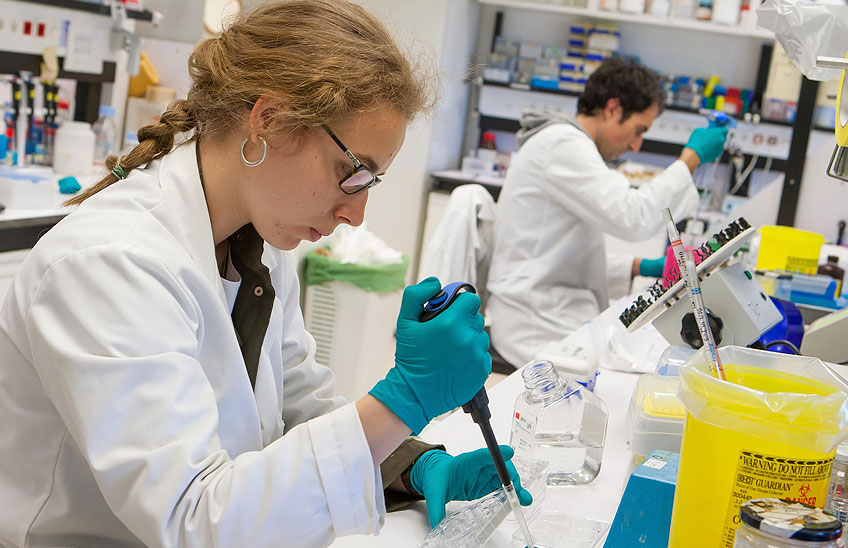
Photo by ManuelCastells/Specialists, nurses, researchers, and other CCUN professionals involved in the essay for children and young adults with brain tumors.
14 | 05 | 2026
An international essay led by specialists and researchers at the Cancer Center Clínica Universidad de Navarra CCUN) will investigate whether the administration of an oncolytic virus directly into the tumor elicits a therapeutic response in children and young adults with brain tumors that have a very poor prognosis and few treatment options.
The research made possible by significant financial aid from the association Against Cancer, as well as support from various other associations and foundations, in addition to contributions from private individuals. This clinical trial is currently in Phase 2—the safety and tolerability of the oncovirus used have been confirmed so far—and will include patients who have not responded to conventional therapies.
According to the Dr. Jaime Gállego, a neurologist, coordinator area Central Nervous Systemarea CCUN, and researcher , “the goal is to confirm the safety results we obtained in the previous phase of essay and to evaluate its efficacy in a group of patients up to 25 years of age with three types of brain cancer: Degree gliomas, embryonal tumors, and ependymomas.”
During the procedure, a neurosurgery team from the clinic, working in coordination with specialists in anesthesiology and hospital pharmacy, will use stereotactic navigation—a technique that allows for highly precise localization of a specific point within the body—to perform a biopsy of the tumor and, during the same procedure, will inject the oncolytic virus through a cannula.
The essay up to 13 patients for each of the three types of brain tumors and will be conducted in two phases. To proceed to the second phase, a promising response must be observed in at least one of the first five patients treated in each group—that is, “the tumor must shrink or remain stable for at least 12 weeks, without causing any unexpected serious side effects,” explains Dr. Gállego.
Oncolytic viruses are viruses that are genetically modified in the laboratory replicate within tumor cells and destroy them without significantly harming healthy cells. Furthermore, they are capable of activating the patient’s immune system, which is why they have emerged as a promisingtool in recent years.
More than 15 years of research neglected diseases
This project in the laboratories of Cima of Navarra, where the Advanced Therapies for Pediatric Solid Tumorsgroup has been researching viral treatments for this subject tumor and other pediatric cancers since 2010. As explained by Dr. Marta Alonso, group principal investigator, work is a line of work began during my postdoctoral fellowship at MD Anderson, under the guidance of Drs. Juan Fueyo and Candelaria Gómez-Manzano. Upon my return to Spain, we set up a laboratory Cima improve the virus and make it suitable for use in pediatric patients.”
The first major milestone in this research came in 2022 with the publication in the *New England Journal of Medicine*—the most prestigious journal in the field of medicine—of the results of this Phase 1 study, which confirmed that treatment with the oncovirus was safe and showed promising results in children with brainstem tumors.
Patients with this subject tumor may experience neurological problems such as headaches caused by increased intracranial pressure, double vision, difficulty swallowing, loss of balance, loss of sensation, or paralysis on one side of the body, as well as other debilitating symptoms. For this reason, Dr. Alonso states that “this experimental treatment could represent a therapeutic alternative that encourages us to continue working toward promising results.” We are committed to ensuring that research to advances in our patients’ health, especially for those diseases that, because they are less common, lack the resources for research ,” adds the Cima researcher.