The University is developing a pioneering methodology to measure pollution emitted by buildings
Robiel Manzueta’s study concludes that building ventilation systems can release pollutants into the urban environment and proposes revising current rules and regulations to mitigate their impact on climate change

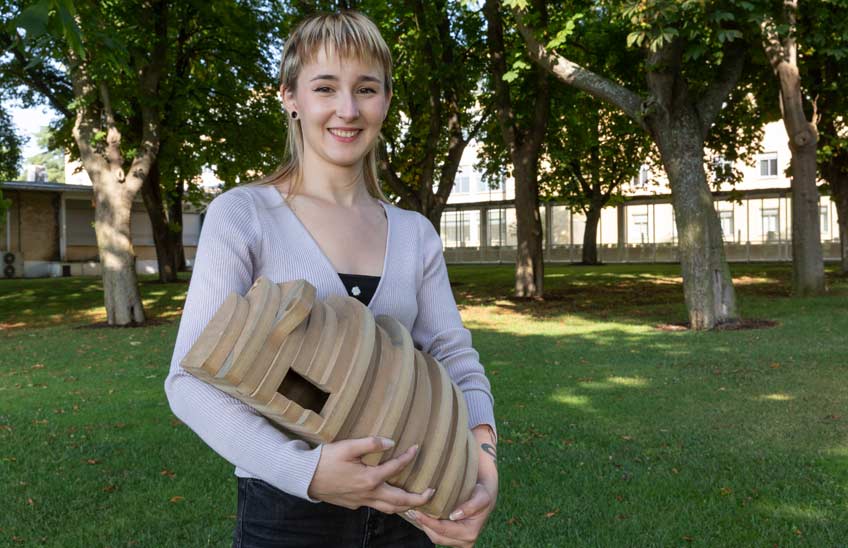
Photo: Manuel Castells/Robiel Manzueta, architect and researcher at the BIOMA Institute at the University of Navarra
06 | 08 | 2026
Can building ventilation systems also pollute the outdoor air? This is the question that has guided the “ research ” byRobiel Manzueta, an architect and researcher at the BIOMA Institute. Her doctoral thesis concludes thatbuildings not only receive pollution from the outside but can also emit pollutants into the urban environment.
The researcher has developed aninnovative methodology that quantifies the pollutants emitted by buildings through their ventilation systems.To do so, she equipped the main air exhaust ducts in homes, classrooms, garages, kitchens, and sewer pipes with high-precision sensors to measure the resulting emissions.
Robiel Manzueta’s analysis confirmed that, in addition to carbon dioxide (CO₂), homes emit carbon monoxide (CO), methane (CH₄), total volatile organic compounds (TVOC), and particulate matter—pollutants that current “ rules and regulations ” (building design standards) barely take into account when designing ventilation systems.
Based on these findings, the author proposes the concept of“building exhalation,” whichviews buildings as organisms that “breathe”: “Buildings inhale air from the outside and release gases and particles generated by the activity taking place inside them into the environment. This new approach allows us to consider buildings as an additional source of urban pollution and opens the door to new strategies for reducing their environmental impact,” she states.
The research concludes thatair quality must be continuously monitored, especially in educational buildings,to adapt ventilation systems to the different uses of the spaces and protect the health of their occupants.
She also proposes revising the current Building Energy Efficiency Regulation ( rules and regulations ) and incorporating solutions capable of reducing building emissions as early as the design phase ( design ). Although the reduction in pollutants may seem modest for each individual building, the author emphasizes thatimplementing these measures on a large scale would have a significant effect on urban air quality and contribute to climate change mitigation, since part of these emissions consists of greenhouse gases such as CO₂ and methane.