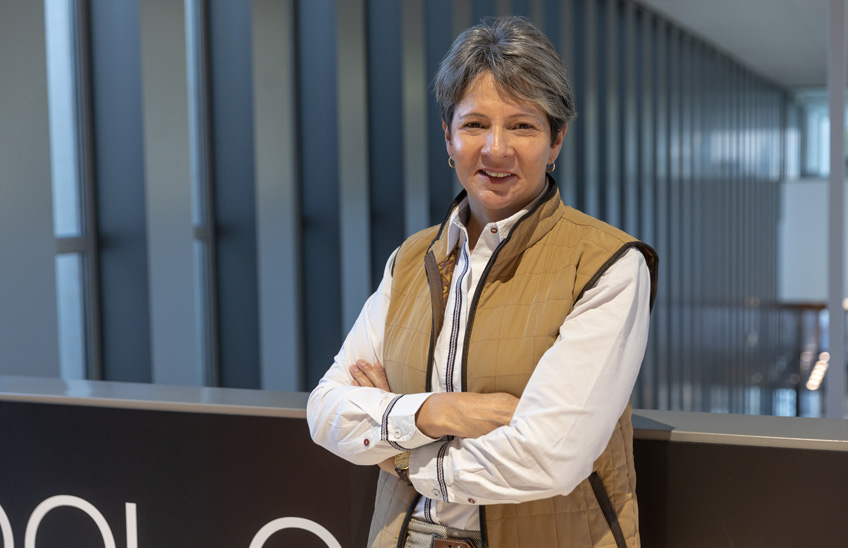
María Martínez: "AI neither cares for others nor is cared for. It is we, as people, who care for others."

PhotoCedit/
18 | 11 | 2026
María Martínez, a professor at theMaster's Degree in design and in Hospitality Services Management and manager at the area of training at CEICID, discusses the future and professionalization of caregiving and outlines key factors for the generational shift in the sector in the digital age. On the occasion of International Caregivers’ Day, Martínez invites us to reflect on “the place we give to caregiving in our priorities.”
1. How does the “ training ” contribute to enhancing the prestige of professions in the sector?
Higher academic qualifications help elevate the status of these professions, starting with the professional’s own perception of themselves and the value of their work. The training stems from the recognition that caring for and attending to people requires knowledge, technical skills, interpersonal skills, and professional judgment. It enables an improvement in the quality of service and a better understanding of people’s needs.
2. What scope does care take on?
In the workplace—where operations are so often driven by a purely transactional mindset—hospitality professionals incorporate the concept of gratuity into their work. Gratuity does not mean that the work should not be compensated, nor does it mean that it is not an economic activity.
Care goes far beyond simply performing tasks or providing a service. It involves offering something that isn’t always included in a contract or measurable—such as an attentive gaze, a listening ear, a gesture of warmth, or genuine interest in the other person. Those who provide care help that person feel recognized, valued, and treated as they deserve.
3. In an increasingly long-lived society, what are the biggest challenges facing professionals in the sector?
One of the main challenges is to always put people first, starting with our own employees. This is an industry where burnout is particularly common due to the physical demands of the job and, above all, the emotional toll it can take in many cases. Taking care of the team isn’t just a challenge, but a major responsibility.
On the other hand, longevity calls for a shift in perspective. Living longer does not necessarily mean living better, nor do all people age in the same way. The “ challenge ” is to move from meeting needs to understanding people. It is not enough to provide good service; we need to understand, as much as possible, each person’s story. And help them maintain their independence and their ability to make decisions.
This brings us to another challenge: personalizing care. Behind every age group lie very different situations, expectations, and needs. The quality of care is also measured by our ability to recognize that uniqueness.
" challenge s is the shift from meeting needs to understanding people."
4. What about the younger generations?
There are challenges, such as integrating AI without losing our humanity. But there is also the “ challenge ” of offering a “ training ” to professionals that addresses these issues, enables creative solutions, and builds trust among older adults and their families—all of which make these professions attractive.
The younger generations aren't just looking for a work to make a living; they're also seeking a career that gives meaning to their lives, aligns with their values, and allows them to grow both staff and professionally.
5. With the rise of home automation and AI, what continues to be the unique value of the human factor?
Home automation and AI offer a world of opportunities and benefits for the hospitality industry because they provide an financial aid for everything that can be systematized, analyzed, and processed. This allows us to focus on what only we can do: observe, listen, understand, provide comfort, and make people feel valued and seen.
AI neither cares for others nor is cared for. We care for people. However, just how powerful—in the best sense of the word—it can be for the sector when its professionals use AI to care for others more, and above all, better.
"The younger generations are looking for a career that gives meaning to their lives, aligns with their values, and allows them to grow both staff and professionally."