"Having well-trained nursing professionals saves lives."
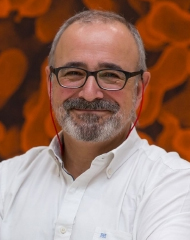
Roger Watson is publisher editor-in-chief of the Journal of Advanced Nursing and Adjunct Professor of the University's School of Nursing.

PHOTO: Manuel Castells
What is the image of Nursing in the media and social networks or how to use these tools to disseminate research results are some of the questions Roger Watson teaches about at the University of Navarra. publisher in chief of the Journal of Advanced Nursinga leading publication in the sector and Visiting Professor in China and Australia, is also from this course professor in the School of Nursing. researcher passionate about Communication and Nursing tells in this interview some of the challenges of the profession.
Communication and Nursing seem to be a difficult tandem. How can we awaken in the latter the desire to tell what we do?
I think you have to try to get professionals, teachers or Schools to stop for a moment and think about what topics of everything they do can be communicated. Identify what makes you different or what you are particularly good at and map out a strategy to tell about it. Then, think about whether you have a list of publications with links on the Internet to be disseminated, have a profile on Twitter, a good website, a blog where you can promote what you are doing, are just some ideas. In addition, working together with communication people is essential to get the messages to the final public.
It is true that sometimes it is difficult to communicate but at the same time the media does not capture the relevance of a research in Nursing. How to change this?
That is largely my job as publisher, to get research in Nursing "out there" and show its importance. Perhaps other disciplines are seen as more spectacular in the research arena, but the reality is that Nursing has a separate research body. In addition to this, it is worth remembering that it is proven that having well-trained nursing professionals saves lives. In fact, the evidence shows that all over the world, in the United States, Europe,... more graduate nurses mean fewer deaths.
Precisely, referring to research in Nursing. In what areas can you make a difference?
I think perhaps the right way to approach this question is to show people examples where nursing has already made a difference. For example, it happens in my own area of work: it is known that people with dementia have problems eating, a fact that causes great distress in the patient, the family,... There is a varied group of professionals interested in this circumstance: physicians, psychiatrists, psycho geriatricians, geriatricians, physiotherapists, occupational therapists, nutritionists, dietitians,.... However, only in Nursing have developed the appropriate assessment tools and conducted clinical trials showing how to help people to eat better when suffering from this disease, so clearly we have made a difference. On the other hand, there is the research linking graduate nursing professionals with their effect on mortality that I mentioned earlier, also a nurse-led study.
Any others?
I think everything related to the clinical experience of patients, quality of life. For example, we have also studied how giving patients information relieves their anxiety. In the UK, a research was conducted on the positive effect of informing. Explaining to the patient what is going to be done to them or why, even telling them that they are going to die financial aid them to prepare, to understand what they are going through, that they may not be treated anymore, and so on.
A different kind of nursing model
The School of Nursing has as its motto, "another way of being, another way of doing". Do you think it is important to offer a different model from training in Nursing?
I think we need to train both future nurses and physicians, without distinction, to treat people in such a way that they think about what they would want. You have to make people stop and think. We often talk about empathy, but this is too abstract a concept; you have to explain how empathy develops. The easiest way is to ask them to imagine how they would want their mother, father or child to be treated. Honestly, during my training this was never instilled in me and many times, I had to stop and think that maybe I had not acted well, that I could have done better because I had not thought of that person as a person.
That's precisely what person-centered care is all about. Is it?
Yes, there is a whole trend of person-centered care, it sounds simple, but it is not. Having the person at the center is something active, it's not a chart or a table like there is in some hospitals. It means training people to have strategies that allow them to realize over and over again that the patient must be at the center. This is not easy for the doctor or the nurse so School itself has a Philosophy on how to teach can be very helpful for trainees to know where they are. Without it, it is hard to get lost.
Finally, how do you envision nursing in twenty or thirty years?
I think there will be more nurses in more countries doing more things, as is currently the case in the United States or the United Kingdom. I don't think it is obligatory for them to be done, although it may be so, the important thing, in any case, is not to lose what makes us unique. As for the research, I hope to see a Nursing that researches more, I dare not say specific topics because things may have changed a lot but I would like to find Nursing works in the media and that they are appreciated like those of other disciplines. However, all this will not happen simply because we are obsessed with research, but nurses will have to work in multidisciplinary teams together with physicians, psychologists, psychiatrists or sociologists. We will not talk so much about research in Nursing but about the research of an ailment carried out by nurses.