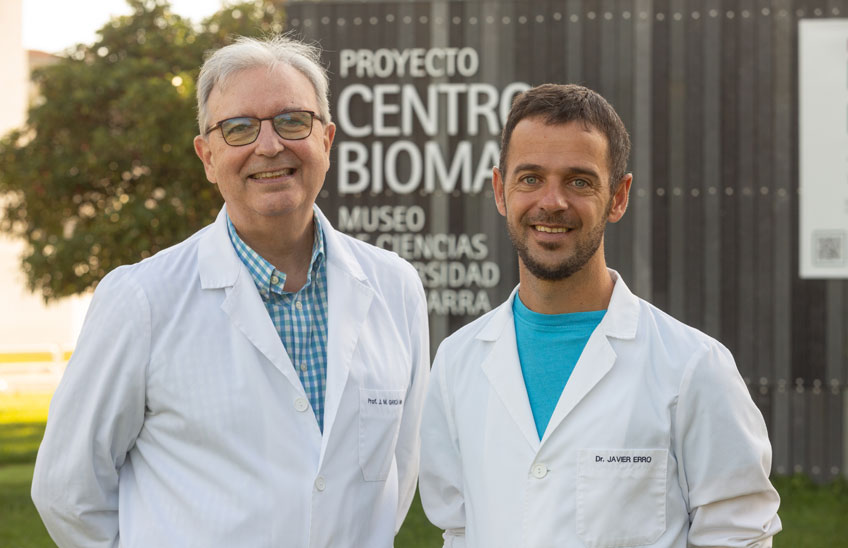
Biology and Environmental Science students from the University participate in the monitoring of bats at the university's campus .
The goal of this initiative is the monitoring of these mammals in the Campus, as well as the state of the shelters, within a monitoring plan of the medium-sized cockatoo in the parks of Pamplona, promoted by the Service of Sustainable development of the City Council of Pamplona.
02 | 10 | 2024
The Campus of the University of Navarra has been home to bat roosts and mating boxes for many years. In urban or periurban gardens it is necessary -for safety reasons- to prune or remove old trees and, as a consequence, arboreal bats -such as the medium-sized cockatoo- see the natural shelters where they spend a good part of their time diminished.
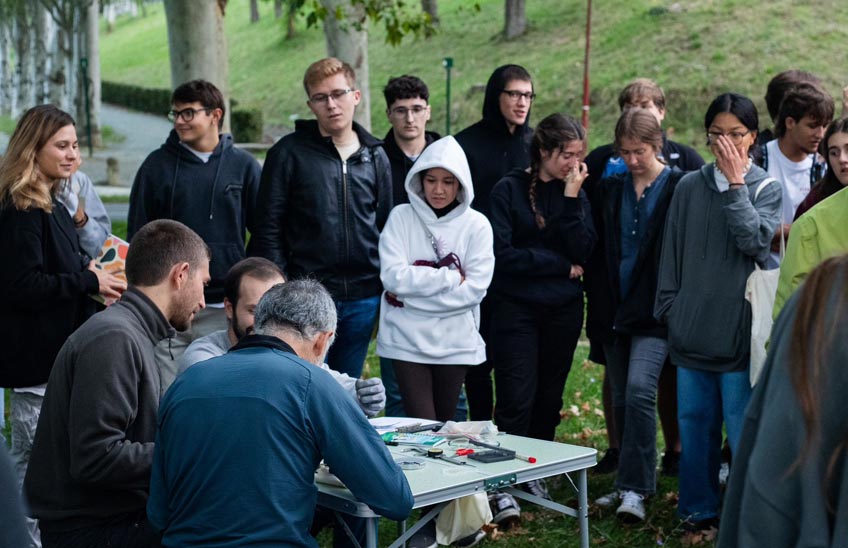
In this framework Juan Tomás Alcalde, biologist and president of the Spanishassociation for the Conservation and Study of Bats (SECEMU), accompanied by a group of students of the Degrees of Biology and Environmental Sciences of the University of Navarra, have conducted a count of specimens and colonies in the university Campus , in order to detect specimens in heat and assess the presence of these populations of bats.
“Every year, the University helps install new bat shelters on Campus and assesses the presence of this species. We recognize the importance of maintaining the Campus biodiversity—both Campus its intrinsic value and because the health of natural environments also benefits humans (One Health),” says Enrique Baquero, professor at the School of Science at the University of Navarra.
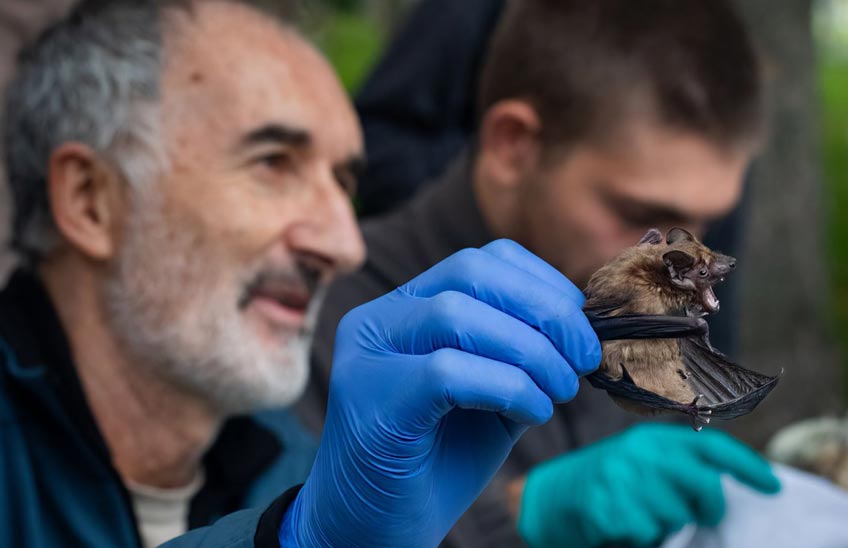
The Campus of the University of Navarra, along with other parks in Pamplona, is home to one of only seven known colonies of an endangered species in Spain, the median cockatoo(Nyctalus noctula). The Pamplona population has suffered a B reduction in recent decades.
Key students in attracting "clicks".
Clicks" are social sounds that bats emit to communicate. These sounds are ultrasonic, that is, they are produced at a higher frequency than adult humans can pick up. However, juveniles have the ability to hear these "clicks".
In the last campaign carried out at the University of Navarra last September 9, the students went to core topic to capture these sounds. "They were of great financial aid and it was possible to detect a possible new grouping area of the species "median cockatoo" that not even the experts would have been able to detect with the financial aid of specialized equipment".
Once these mammals were identified, some females were tagged with chips in order to know their travel routes and to study their migratory behavior over time. The tagging is being carried out as part of a European project, project , led by the Max Planck Institute in Germany, to learn about the migrations of cockatoos throughout Europe.
This initiative has emerged within the framework development the courses“Applied Animal Biodiversity”and“Methods in Animal and Plant Diversity,”offered as part Degrees Biology Degrees Environmental Sciences Degrees , as well as the dual Degree Biology and Environmental Sciences, all of which are taught at the School of Science the academic institution.