Researchers from the University and Rey Juan Carlos University Receive the EIMAD 2026 Best Paper Award
The book * work * by Juan L. Roquette Rodríguez-Villamil and Liuba González Cid proposes a new “ model ” for interpreting digital twins from the perspectives of architecture, music, artificial intelligence, and the ethics of care

08 | 09 | 2026
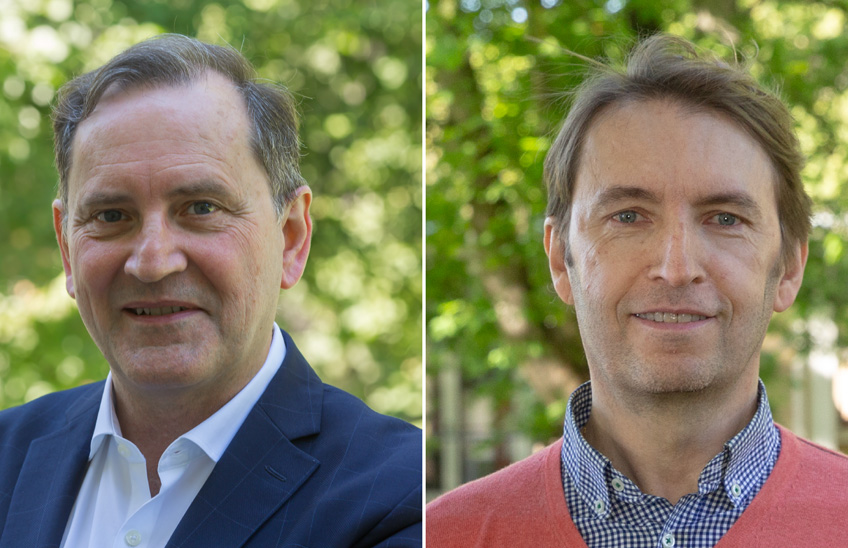
The“ research : The Building as Score and Instrument: From Digital Twins to Musical and Performative Stewardship,” developed by Juan L. Roquette Rodríguez-Villamil, professor and researcher at the Higher Technical School of Architecture at the University of Navarra, and Liuba González Cid, professor and researcher at Rey Juan Carlos University, received the Best Paper Award in the “Digital average , and average Education” category at the 10th International Meeting of Research in Music, Arts, and Design (EIMAD 2026), held in July in Castelo Branco, Portugal.
The award recognizes an interdisciplinary “ research ” that proposes a rethinking of how digital twins applied to architecture are currently conceived and used. Contrary to their usual treatment as tools primarily intended to collect data, monitor systems, and optimize building performance, the “ article ” proposes understanding the building simultaneously as both a musical score and an instrument.
The Building as a Score and an Instrument
Based on this approach, the authors develop the concept of dual architectural notation. On the one hand, the building contains a material notation that can be read through its rhythms, proportions, materials, envelopes, lighting, textures, or environmental performance. On the other hand, sensors, monitoring systems, and digital twins make it possible to record a second, dynamic, and temporal notation, consisting of variables such as temperature, humidity, air quality, occupancy, energy consumption, lighting, maintenance, and waste generation.
Based on these considerations, the architect’s role is redefined as that ofa “manager-interpreter”—a figure capable of simultaneously interpreting architecture and “ data ” to adapt the building’s behavior in response to changes in use, environmental conditions, energy needs, or unforeseen situations. This approach establishes a unique dialogue between architecture, musical interpretation, digital culture, and performative practices.
The ethical dimension is another of the main pillars of * proposal*. The authors challenge both an uncritical trust in automation and a view of technology as a dehumanizing force. Instead, they develop the concept of stewardship, understood as an “ internship ” of care, responsibility, and long-term management in which artificial intelligence remains subordinate to human well-being, sustainability, and the ability to subject technological decisions to review and assessment.
The paper’s “ goal ” is that the “ data ” generated during a building’s operation should not be limited to its day-to-day management, but should instead feed back into the architectural process itself and help inform decisions regarding design, maintenance strategies, and future models.