A doctorate with a lot of Chemistry
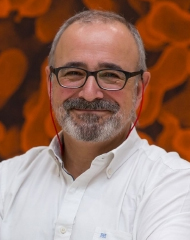
María Dulce Pérez Mezcua, last extraordinary award of doctoral program of Chemistry, is currently working at das-Nano
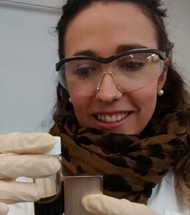
PHOTO: Courtesy
María Dulce Pérez Mezcua (Qui 10 and PhD 16) always knew that the world of science and the researcher degree program had a hard side - of intense work-. Over time, after the Degree and the doctorate, she has discovered a reverse side full of gratification for the results at laboratory and for the challenge of contributing to the advancement of materials science.
- How did you receive the recognition of the extraordinary award of doctorate at Chemistry?
It was a great joy. The perfect culmination to a year of much work, since I was working at workshop completely on das-Nano at the same time that I was writing the thesis . In fact, the greatest award was to finish it, and to do it with a recognition like this award.
- What was the theme of your research at doctorate?
In my doctoral thesis we have studied ferro-piezoelectric materials. Ferro-piezoelectricity is very present in many of the technological devices used today: from the approach sensors of a vehicle, to the training of images in an ultrasound scan, or to the storage of information in a report. In particular, the work focused on the (Bi0.5Na0.5)TiO3-BaTiO3 system, which are lead-free compositions and, in principle, biocompatible.
- How would you rate the training at the School of Science terms of guiding your professional future?
I received excellent training. My thesis conducted at the University of Navarra and at the Institute of Materials Science in Madrid, which is part of committee Research committee (ICMM-CSIC). All the training during this period has been very important in giving me the tools I needed and helping me focus my knowledge in the field of materials science. Specifically, in nanomaterials, where work at das-Nano as a PhD in Chemistry the research and development department .
- In the degree program researcher, what would you say is the kindest side? And the hardest?
Let's start with the hardest. Science itself is hard, in the sense that there are many days of arduous work in which nothing seems to come out. And, in spite of everything, you have to keep going.
When I talked to a new PhD student who was starting thesis I always told him that the worst year is the second one, when you see neither the beginning nor the end. But then comes the good part, when you reap the fruits of the daily work , of perseverance and, with the financial aid of the directors of thesis , results appear on laboratory that allow you to publish, go to congresses and share exciting experiences with people working in the same field as you. These moments are very motivating and make the scientificdegree program so rewarding.
- What are your short-term plans deadline?
For now I will continue with my work at das-Nano, business dedicated to the synthesis of magnetic nanoparticles. Doing so allows me to continue within the field of my doctoral thesis -materials science-, halfway between physics and Chemistry. In this sense, the training that I have received during the thesis -both at the University of Navarra and at ICMM- has been crucial to be able to meet the challenges that we face from the department of research and development of das-Nano.