U.S. expert says advertising media encourages terrorism
BBC and Le Monde correspondents in Spain defend at the University a journalistic work "emancipated from politicians".
"If terrorists did not have the advertising provided by the media, I am convinced that the cruelty and issue of their attacks would be reduced". Brigitte Nacos, professor at Columbia University (USA), made this statement during her speech at discussion paper in the 19th edition of the International congress of the School of Communication of the University of Navarra.
In the opinion of this expert in political communication, there is a "marriage of convenience" between terrorists and the media. "The former are interested in getting the maximum diffusion of their violent acts, and the latter seek dramatic and sensationalist news because they believe that this is what will be most successful among their public," she pointed out. For Brigitte Nacos this status is even more complicated because the terrorists even have their own media "and through the Internet they manage to get their message across to the whole world".
For this reason, he warned about the responsibility of the press to avoid getting involved in this game. "It is obvious that when such serious attacks occur, they break the schemes; people are afraid and want to know what to do, they see the same images over and over again, almost like an addiction. And what should the media do? Of course, to inform, especially in matters of public service, but not to resort to gratuitous violence."
According to him, American journalists are not complying with the guidelines they established for crisis situations before 9/11. In his opinion, this is due to the fact that the media "find themselves in a competitive environment, where what prevails are not journalistic values, but pure and simple business. Added to this are ideological differences and the political exploitation of the facts to achieve their own ends". The consequence, he said, is that the boundary between factual information, opinion and entertainment is blurred. "For example, it is true that journalists do not carry out torture, but they create a dangerous climate of dehumanizing opinion in which they favor others to do so."
In this context, Brigitte Nacos insisted on the urgency of carrying out an ethical review of the journalistic work "with the goal that all prioritize the dissemination of human values instead of working for the benefit of terrorists".
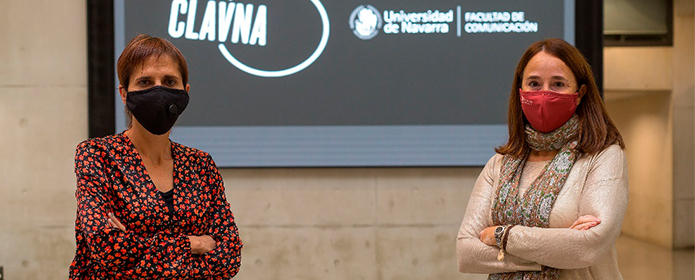
Fairness and honestyMarcelo Risi, BBC correspondent in Spain, also expressed himself in this sense. "We are aware that by covering a terrorist act we are doing them a favor and this creates a serious internal discussion . Just as we are concerned about war conflicts marked by a political diary . But sometimes we are forced to be there because we do not know at what point it stops being a manipulated fiction and becomes a tragic reality".
The BBC correspondent pointed out that for the Spanish media the 11M issue is still a political issue discussion . In his case, he assured that he prefers to bet on impartiality and honesty. "No matter what journalists think, we must be emancipated from politicians because we serve the public, we do not depend on electoral votes".
For her part, Martine Silver, correspondent of Le Monde in our country, affirmed that her work consists of "translating current affairs" for the reader. And she added that "the facts are the facts, so in a news item we have to express it as it is, without qualifying adjectives and with all the versions of those affected. Another matter is an opinion or analysis article , which can be more evaluative".
Martine Silver acknowledged that writing for an international audience requires a double effort "because we have to explain even what seems obvious, as sometimes our readers have no prior information". In any case, she pointed out that after the events of 11M to 14M, Spain became fashionable in the European media for a while. "We were constantly being asked for information and special reports. This allowed us to go out on the street frequently and talk to people, beyond the agency tickers."