Longevity Lab: a laboratory envisioning the future of care and transforming our perspective on the “fourth age”
The conference, held on the campus , brought together professionals, academics, and students to discuss meaningful aging and care

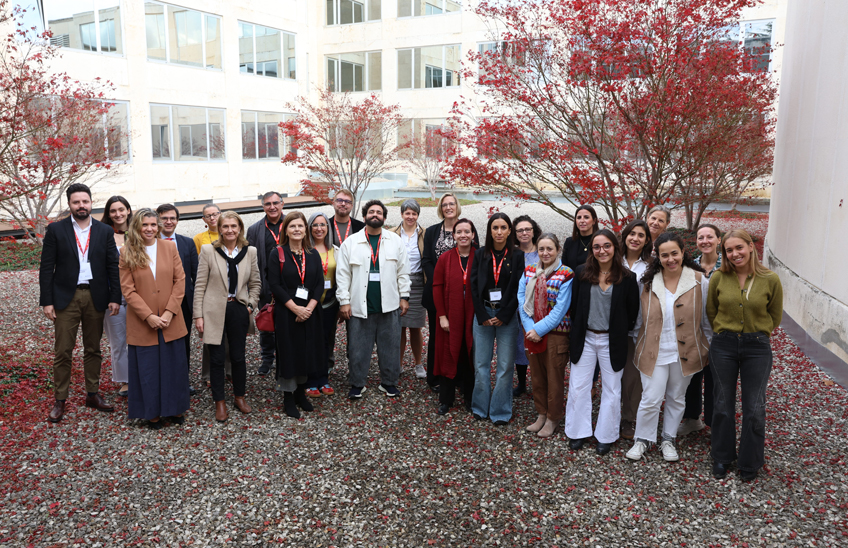
Photo: Patxi Garraus / About 80 people attended the latest edition campus Longevity Lab, held at the University of campus in Madrid.
28 | 04 | 2026
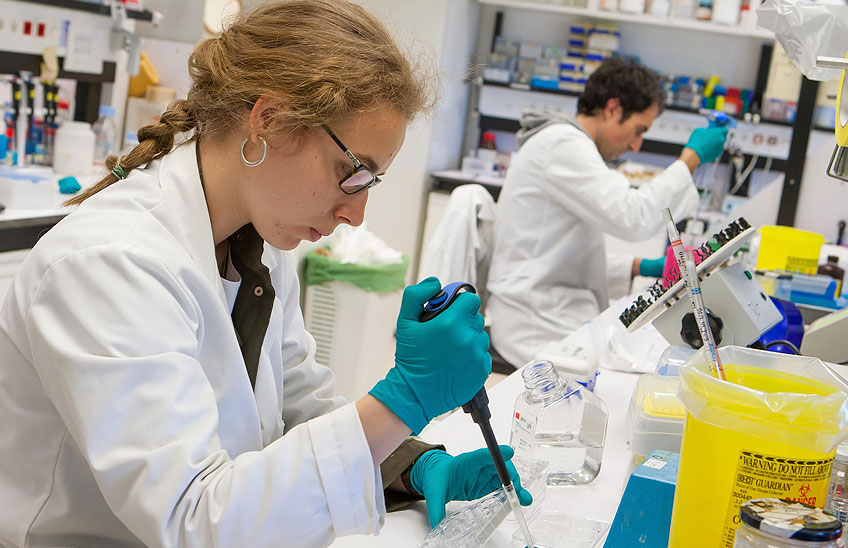
A vibrant forum for creativity, innovation, and discussion meaningful aging and care. That was the second edition of Longevity Lab, an event organized by the University of Navarra that brought together industry professionals, academics, and students at its campus on April 24 and 25 to collectively envision possible futures for care. The School of Architecture, the Chair New LongevitiesChair at Institute for Culture and Society, and the IDEA Foundation, with support from Teach the Future and the Cuidado & Persona think tank, joined forces to promote this international and multidisciplinary event, multidisciplinary brought together nearly 80 people.
Javier Antón, director Longevity Lab and professor in Degree design Degree , emphasizes that " goal of this event is goal the challenges of aging and elder care in an innovative way. To this end, the meeting different formats, such as a symposium, group workshops, presentations, and performances, which allow the work to be approached work different perspectives." In addition, the laboratory together audiences that do not typically work together, such as professionals in the care sector, design students developing projects in real-world settings, and academics from various fields. This convergence of perspectives fostered the knowledge generated at the university to be transmitted to society and enriched by professional experience.
As Antón explains, “through the design and foresight as tools, this event has facilitated a shift in perspective: understanding care not merely as attendance, but as a sphere in which it is necessary refund and a leading role to older adults so that they can actively participate in their lives and their own care, making it truly meaningful.”
Mapping trends and the future
The conference led by top-tier experts who shared the results of their research and encouraged participants to shift their perspective on strategic issues such as training their gaze on the present, the culture of care, and approaching the future. Indeed, the future was the cornerstone of the keynote lecture delivered by Riel Miller, a global authority on Future Literacy and former Head of Foresight at UNESCO.
The economist, who prefers to speak of “futures” in the plural to “prevent people from fixating on a particular future,” notes that “we live in a world where planning and foresight are only part of how we think about the future. Thinking of it as something open-ended, something that will surprise you, allows us to harness creativity and novelty.” For Miller, “the wonderful thing about future literacy is that it works just like reading and writing. You use your imagination in the morning when you wake up and decide what to wear, when you cross the street. You use it constantly. We can learn simply by being aware of what we’re already doing. It’s a skill everyone practices but, unfortunately, we’ve never paid much attention to how it works.”
To cultivate this new way of thinking, interdisciplinary and intergenerational workshops were organized, enabling participants to collectively map trends and design . Lourdes Rodríguez, a consultant in Strategic Foresight and Director of Institutional Relations at Teach the Future, explains that “future-oriented thinking financial aid us financial aid decisions financial aid taking into account the long term and the full spectrum of possibilities. It is important to consider other future scenarios, along with their consequences, opportunities, and potential threats. In these workshops, we learn methodologies and thinking tools that will help us from today into the coming years.”
Challenges of the ‘fourth season’
Another major issue addressed during the workshop the challenges posed by an aging population and the urgent need to foster a culture of care that puts the individual at the center. One of the experts in this field, Jane Ann Driver, a geriatrician and leader in clinical innovation in aging at Harvard Medical School, believes that “one of the biggest changes Western societies need to make is to shift the mindset about aging because many people are afraid of it. They worry about who will care for them and wonder what their meaning and purpose will be purpose they are older. And Western societies are not helping to answer these questions, so that fear drives much of the negative thinking about care.” In this regard, she believes that “it would be very healthy to view aging and care as something that holds great dignity and is a natural part of life and a normal human experience.”
In this vein, Ana Marta González, director of the Chair on New Longevities, asserted that “the ‘fourth age’ has its own essence, which we must discover. “This is the unexpected task facing our generation: to understand that this stage brings its own discoveries and demands and constitutes, in itself, an invitation to adopt a new outlook on life.” She thus highlighted the relevance of speaking of “meaningful aging” and “taking this notion as reference letter point reference letter staff professional life.”
For his part, Rafael Sánchez Ostiz, director the IDEA Foundation, notes that, over the next two decades, the sector will be shaped by “immigration, as a crucial labor force that we must integrate, train, certify, and standardize” and “prevention”: “We must anticipate situations that lead to unwanted loneliness and dependency caused by chronic illnesses. New technologies and Artificial Intelligence will be decisive.”