The Future of Logistics in the Fashion Industry: discussion at the 11th " workshop " on Logistics, hosted by the School of Economics, ISEM, and the Chair of business Volkswagen
The " meeting " brought together executives from Tendam, Mayoral, and Textil Santanderina in Madrid to discuss the challenges facing the supply chain, sustainability, and the strategic role of logistics

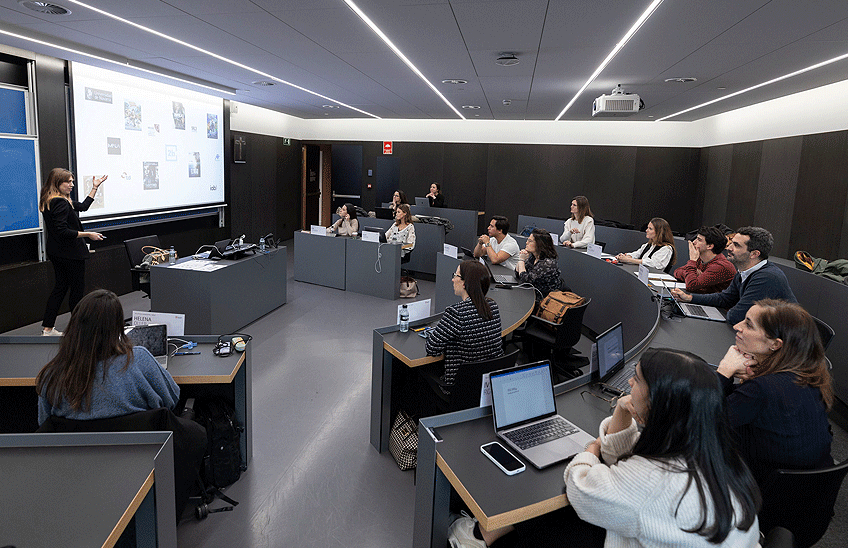
Photo byJosé Juan Rico/Attendees at the 11th Logistics workshop . Logistics in the fashion industry.
11 | 11 | 2026
On November 10, the Volkswagen School of Business (Chair ) at the University of Navarra ( business ) held the 11th “ workshop ” on Logistics in the Fashion Sector at its Madrid campus, in collaboration with the School of Economics and Business (School of Science Económicas y Empresariales). The “ meeting ” was part of the “ subject ” on Logistics and featured the “ partnership ” from ISEM Fashion Business School.
About 60 students from the “ Degrees ” programs in Business Administration, International Relations, Law, and Applied Management traveled from the “ campus ” in Pamplona to participate in the “ workshop ” with students from the new Logistics Club. There, they met with professionals affiliated with ISEM and alumni living in Madrid. The “ quotation ” thus served as a point of meeting between the two campus, the university community, and the professional world.
ISEM's Perspective: Logistics, Keeping Pace with the New Consumer
ISEM Fashion Business School brought to the forum a perspective that linked logistics operations with new consumer habits, the integration of in-store and online sales, and the demand for sustainability in the textile industry. For ISEM, this subject from conference reinforces its commitment to bridging the gap between academic knowledge and the realities of the industry.
“Logistics in the fashion industry has become the key factor in managing uncertainty: changes in international trade, transportation costs, and new demands regarding what to do with unsold inventory. In coordination with other departments, it is evolving into a strategic role capable of improving the business,” said Marta Torregrosa, director of ISEM.
What the Experts Say
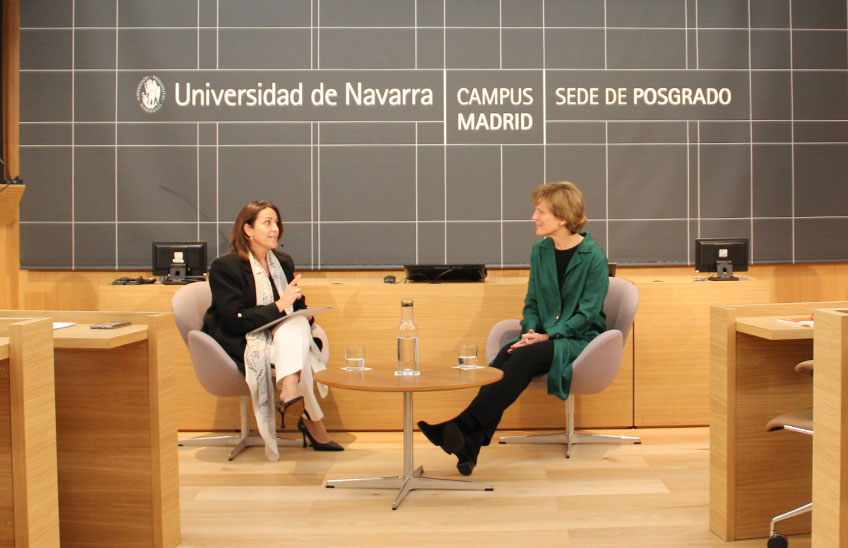
The " workshop " featured a panel of executives from the fashion and textile industries, moderated by María José Álvarez Gil, a professor of business administration at Carlos III University of Madrid.
Jaime Caro, Logistics director at Tendam, addressed the challenges and strategies of global logistics management and international distribution for major retail brands. “For me, these three elements are fundamental and must always go hand in hand when making any decision: compliance, service, and costs. You can’t make a decision without taking all three into account. Furthermore, it’s essential to have clear and transparent traceability. As business, we’re responsible for everything we sell, and we must uphold that commitment with complete transparency. In the end, the equation is simple: a brand’s reputation is everything,” he said.
Salvador García de Lucchi, a logistics and supply chain operations consultant in the retail sector and former technical director at Mayoral, discussed the key aspects of operational planning and supply optimization in company-owned store networks. “The importance of automating processes lies in the fact that, although technology is part of logistics, the fundamental purpose must be to serve the customer in a timely and appropriate manner,” he explained.
Juan Parés, president and CEO of Textil Santanderina and president of the International Textile Manufacturers Federation (ITMF), offered an industry perspective focused on raw material management and the resilience of the global supply chain. He also emphasized that “one of the challenges facing the fashion industry is selling products that meet consumer demand while also maintaining a profit margin.”
With a question-and-answer session led by students from the School, the eleventh edition of the “ workshop ” reaffirmed the ongoing efforts of the “ Chair ” ( business Volkswagen) and the “ School of Science Económicas y Empresariales” to bring the “ internship ” experience of the industrial sector into the classroom. The organizing “ committee ” was led by Professor José Antonio Alfaro, “ coordinator ” of the “ Chair ” ( business), and featured the active participation of student volunteers.
From left to right: José Antonio Alfaro, coordinator , from the Chair , business; María José Álvarez Gil, panel moderator; Jaime Caro, speaker; Salvador García de Lucchi, speaker; Juan Parés, speaker; and Cristina Fernández Saldaña, General Manager , from ISEM.