'Life Is a Dream… in Music': A production presents, for the first time, Calderón de la Barca's play set to music from the Golden Age
The Espurnes Barroques Festival, the Almagro International Classical Theater Festival, and the University of Navarra have collaborated to set Calderón de la Barca’s play to 17th-century music

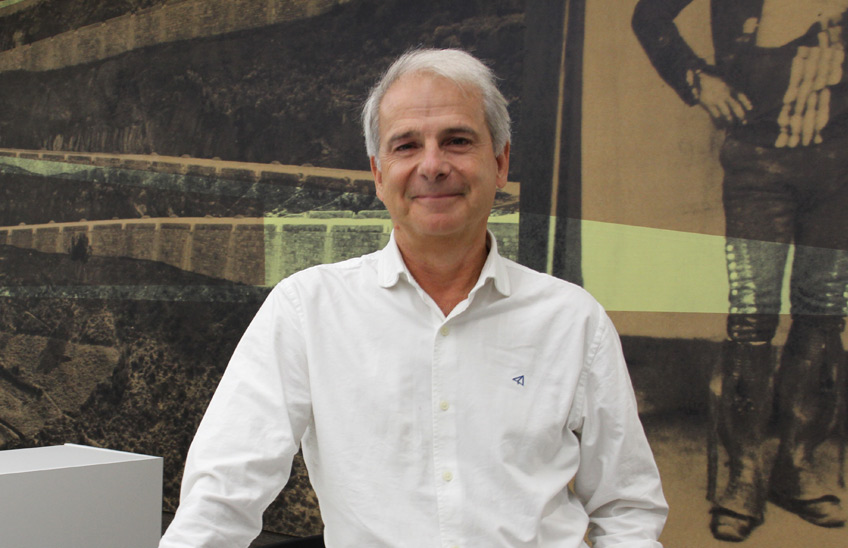
Photo: National Auditorium/ Albert Recasens is researcher the University of Navarra and director La Grande Chapelle.
06 | 05 | 2026
On Saturday, May 9, *Life Is a Dream… in Music*will be presented—areimagining of Calderón de la Barca’s play that combines, for the first time, original texts with music from Spain’s Golden Age. The performance, which opens the Espurnes Barroques Festival, was developed in partnership the University of research and in collaboration with the Almagro International Classical Theater Festival, which will present it again on July 21 and 22.
"Life Is a Dream… in Music " offers a new way of approaching Calderón’s work, as a comprehensive auditory experience in which words and music engage in dialogue. The original concept and script were developed by Albert Recasens, a musicologist and researcher Institute for Culture and Society (ICS) at the University of Navarra, as well as director ‘La Grande Chapelle,’ board member responsible for the musical performance, and Josep Barcons, director Espurnes Barroques Festival, musician, and PhD in Humanities. Likewise, the stage direction was position Eva Rufo, an actress who also plays one of the leading roles (Rosaura), alongside Sergio Adillo ( Segismundo) and Jesús Noguero (Basilio).
For his part, Ignacio Arellano, director group research group (GRISO) at the University of Navarra, has selected the texts for the play, staying true to the original verses. Up to 900 verses have been selected that revolve around the play’s two main conflicts: the tension between desire and self-control and the dilemma between fate and freedom, focusing the action on three core topic characters: Basilio, Rosaura, and Segismundo. This condensed plot allows for a more intimate and heart-wrenching dialogue between the characters and the music, as the organizers have emphasized.
’s Three-Dimensional Musical World
The musical selection is based on research into 17th-century songbooks and sources; he has chosen music that Calderón might have known or that belonged to his immediate musical world. “The program is thus structured around works by musicians active on the Madrid scene, such as Mateo Romero, Manuel Machado, Juan Hidalgo, Carlos Patiño, and Cristóbal Galán, ”he noted. Furthermore, the aim was to “respect the Iberian sound of the 17th century,” so the instrumentation has been limited to plucked string instruments and basso continuo, characteristic of the palace chamber and the theater courtyard: double-stringed harp, baroque guitar, and viola da gamba, in addition to percussion.
According to Recasens and Barcons, in this proposal, the music serves a threefold purpose. First, it sets the mood for the scenes and creates soundscapes that place the audience within the different levels of the action. Second, it paraphrases or comments on the text, both literally and more abstractly. Finally, the music acts as a true chorus in the style of classical tragedy, which can accompany, question, or even contradict what is happening on stage.
Cast and Crew
La Grande Chapelle
· RaquelMendes, soprano
· Rita Filipe, soprano
· Daniel Folqué, countertenor
· Joan Francesc Folqué, tenor
· Jorge Martínez Escutia, baritone
· Lixsania Fernández, viola da gamba
· Manuel Vilas, baroque harp
· Pablo Fitzgerald, guitar and theorbo
· Pere Olivé, percussion
· Sergio Adillo, Segismundo
· Jesús Noguero, Basilio
· Eva Rufo, Rosaura
· Josep Barcons and Albert Recasens, original concept and screenplay
· Albert Recasens, musical direction and research
· Eva Rufo, stage direction
· Ignacio Arellano, text adaptation