Ivo Ricardo Rafael Fuentes García, an architecture student, is the National award t of the Hispalyt Design Competition
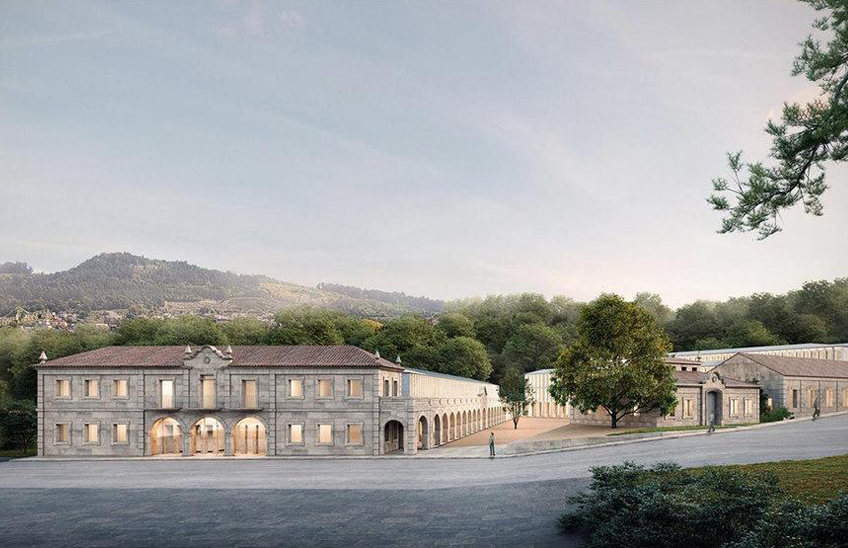
project , “IN3001,” is an astronomical observatory located in Cáceres, whose architectural design seeks to connect earth and sky

06 | 10 | 2026
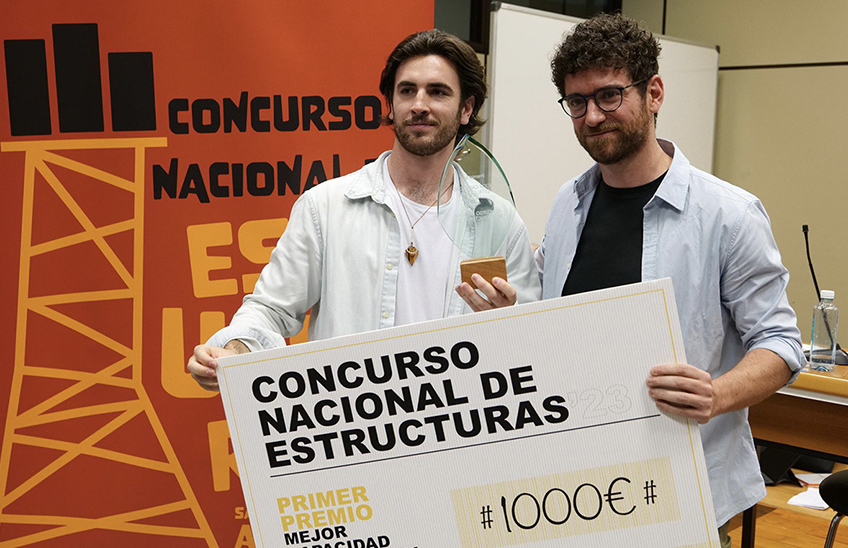
association Ivo Ricardo Rafael Fuentes García, a third-year architecture student from Nicaragua, has received the first National “ award ” Award from the Project Competition organized by the Spanish A of Brick and Tile Manufacturers (Hispalyt) for his “IN3001” project —an astronomical observatory located in the Los Barruecos Natural Monument in Cáceres.
With this proposal, the student seeks to “establish relationships between the earth and the sky, between the landscape and architecture, and between the park’s existing pathways and the building’s interior.” “During the process of documenting and research the site, I discovered that I wanted the building not to be perceived as an object placed on top of the landscape, but rather as an excavation capable of extending the very logic of the territory,” he explains. To achieve this, he designed a structure that extends partially below ground level and creates a new, habitable topography.
Thus, the “ project ” “establishes a constant connection between earth and sky” through courtyards, openings, and glimpses of the sky that appear along the route. In this way, astronomical observation ceases to be merely a technical act and becomes a spatial experience.
The Brick Seal and Sustainability
"Brick, which plays a central role both inside and outside the space to 'create the spatial experience,' becomes a material capable of shaping the building's entire identity," explains Ivo.
In addition, the project is characterized by an environmental strategy that takes advantage of the building’s underground location. In this way, the proposal harnesses the thermal inertia of the underground structure, and the green roofs extend the continuity of the landscape, while the courtyards and skylights allow natural light and vegetation to enter the interior and create a connection with the outdoors.
The “IN3001” project was selected from among 55 proposals submitted by 18 architecture schools by a jury composed of architects José Ignacio Linazasoro, José Antonio Martínez Lapeña, Tomás Carranza, and Elisa Valero. On October 30, the awards c submission will be held to present the prizes and certificates to the winners of the Local and National Awards of the Design Competition, as well as the “ award ” Master’s Thesis Award from the Ceramic Forum.
What excites the student the most is having been able to “convey something to others through an proposal that began with an abstract idea: to excavate the landscape and establish a connection between earth and sky.”