An Alexa culturally adapted to promote the integration of older migrants in Navarre
Students from Degree PPE Degree at the School Philosophy Letters have submitted a proposal the Red Cross in Navarre proposal care to elderly migrants.

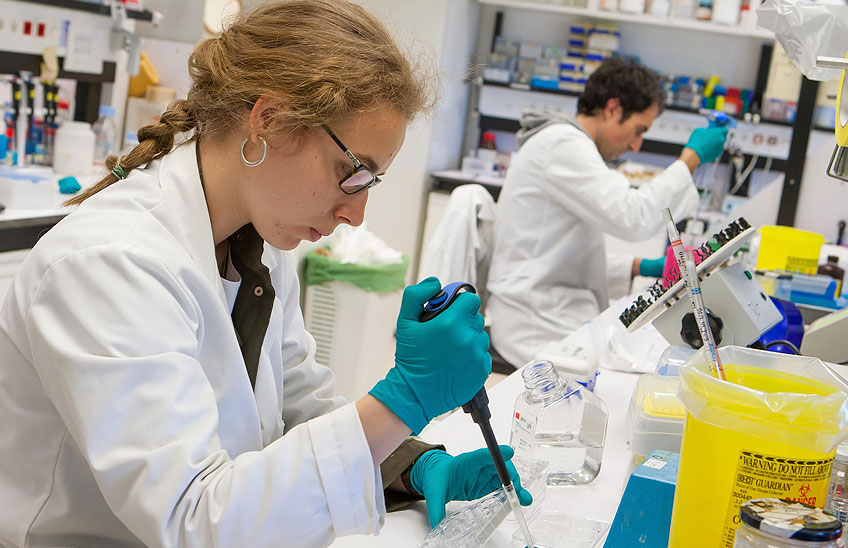
PhotoNataliaRouzaut/58 students from the subject Lab subject taught by Carolina Montoro have collaborated with the Navarre Red Cross.
09 | 12 | 2025
Fifty-eight students from the subject Lab subject , in the third year Degree , Philosophy, and EconomicsDegree the University of Navarra, have presented a proposal care and financial aid measures financial aid at elderly migrants for the Red Cross in Navarra. Through this subject, which uses the service learning methodology, the students have developed a proposal for the NGO to implement with migrants over the age of 65 who financial aid the region, taking into account their home country, adapted to their specific needs and situations, and supported by the artificial intelligence technological assistants (Alexa) that are currently in use.
The students divided into groups to research older migrants from countries such as Ukraine, China, Venezuela, Senegal, and Morocco in order to identify needs and shortcomings that could be addressed to promote their social inclusion. According to the students, migrants come to Navarre in search of a better quality of life, with the exception of Ukrainians, who are fleeing the war with Russia. Again, with the exception of Ukrainians, most older migrants have a well-established network in the region but no social contacts outside it. To achieve full integration, the students advocate expanding and consolidating social support networks.
Specifically, in their work, they propose adapting the technological assistant that the Red Cross offers to migrants. On the one hand, they have detected a language barrier, as Alexa speaks Spanish from Spain. For the students, it is imperative to adapt the language ensure that the assistant is familiar with the slang and culture of migrants. In this way, they avoid the language barrier and cultural bias. Furthermore, they have proposed programming Alexa to tell jokes, ask trivia questions, or give advice so that migrants can learn the local language culture. "Recognizing cultural differences can motivate them to use Alexa more and spark their curiosity about Spanish culture," they say.
They have also found that most of the problems faced by migrants in Navarre are related to bureaucratic procedures. They therefore propose that the technological assistant could help them with bureaucratic procedures, such as registering with the local council or joining the social security system.
"Alexa is a tool face-to-face interaction with other people is necessary to avoid loneliness," they add. To this end, they point out that the Red Cross has a large network volunteers that can be used, for example, to add the possibility of direct communication with volunteers in case of emergency to these assistants.
In this regard, another proposal these assistants is the possibility for migrants to provide their data allow them to contact people with similar profiles. This helps them avoid isolation and loneliness. Beyond Alexa, other suggested options for contact include: offering intercultural spaces where people from different backgrounds can meet and share experiences; conferences and talks on topics that may interest them and help with integration (such as bureaucracy, culture, or politics); or training courses training learn how to use Alexa or learn Spanish, for example.
This subject also part of the Chair Monnet Chair in European Union Policies on Asylum and Migration at the School Law, led by María Teresa Gil Bazo, who attended the presentation; and the Chair in New Longevity at the Institute for Culture and Society, of which Carolina Montoro, professor of the subject, is a member.