Children with obesity have less bacterial diversity in their microbiota.
The research, led by the University of Navarra and based on the analysis of more than 1,100 Spanish children between the ages of 3 and 6, opens the door to preventive strategies from the earliest years of life.

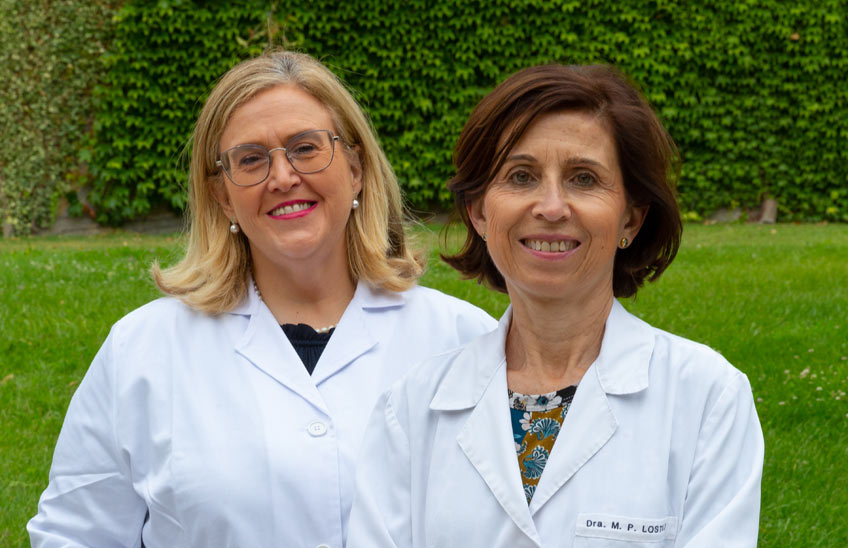
PhotoManuel Castells/Marta Cuervo, Natalia Vázquez-Bolea, and Santiago Navas-Carretero.
12 | 02 | 2026
A study led by the University of Navarra reveals that obese children have less bacterial diversity in their microbiota compared to those of normal weight. The work, published in the journal Clinical Nutrition, sheds light on how the microorganisms that inhabit our intestines can be early indicators of the risk of developing obesity at a very early age.
According to the National Strategic Plan for the Reduction of Childhood Obesity (2022–2030), four out of ten children in Spain are overweight, making it a national public health problem. "The consequences extend into adulthood, so understanding its mechanisms from childhood is core topic designing effective prevention strategies," says Natalia Vázquez-Bolea, a researcher at research center , part of the Institute of Nutrition and Health at the University of Navarra, and first author of the study.
The study was conducted within the framework the CORALS (Childhood Obesity Risk Assessment Longitudinal Study) project , promoted by the research center in network Physiopathology network Obesity and Nutrition network (CIBEROBN), one of the largest programs of study on childhood obesity, which follows using advanced Genetics sequencing techniques, more than 1,100 children between the ages of 3 and 6 in seven Spanish cities.
Less bacterial diversity, greater risk
"A less diverse community of bacteria in the gut—known scientifically as alpha diversity—appears to be associated with a higher body mass index, especially in obese children," explains Marta Cuervo, who, together with Santiago Navas-Carretero, both doctors at the School Pharmacy and Nutrition, is supervising Natalia thesis .
In addition, the team identified specific "enterotypes" or bacterial signatures. For example, Enterotype 3, dominated by the genus Segatella, was associated with a higher likelihood of obesity. In contrast, children of normal or low weight had a greater abundance of bacteria such as Akkermansia or Alistipes, which are often associated with a healthier profile .
Beyond "who lives" in the gut, the study analyzed "what these bacteria do." The results show that, in overweight children, the functions of the microbiota are altered. Specifically, a reduction was detected in the pathways responsible for producing essential vitamins (such as vitamin B6) and in the ability to break down complex carbohydrates.
The findings suggest that these changes could influence how the child's body manages energy and nutrients, reinforcing the idea that the microbiota is not just a reflection of current weight, but a metabolic actor that could influence the development obesity from the earliest stages of life.
The importance of nutrition in the early years
"The gut microbiota is mainly formed during the first years of life and is very sensitive to factors such as diet. promote healthy and balancedpromote from childhood can contribute to more favorable development and, potentially, reduce the risk of obesity," explains Navas-Carretero.
Researchers highlight the role of diets rich in fruits, vegetables, legumes, and fiber, which are essential for promoting a diverse and functional microbiota from an early age.
The study is funded by an agreement the Danone Institute and CIBEROBN, which promoted the creation of the cohort, with funds received from EIT-FOOD, co-financed by the European Union, the Ministry of Science, Innovation, and Universities, the Regional Government of Valencia, and the Government of Navarre.
In addition to the University of Navarra, the CORALS consortium includes the Maimónides Institute for research in Córdoba (IMIBIC), the research Institute of Santiago de Compostela, the Pere Virgili Health Research Institute, the research Institute of Aragón, the University of Valencia, and the ibs.GRANADA research Institute. The Institute of Agrochemistry and Food Technology (IATA-CSIC) and the Institute for research of Navarra (IdiSNA) also participated in this study of the microbiota.