Only 15 of 55 European countries require all their medical students to complete mandatory palliative care training .
The study “ research,” led by the University’s ATLANTES Global Palliative Care Observatory in collaboration with Oslo University Hospital as part of the JANE-2 project , has been published in the journal *The Lancet*

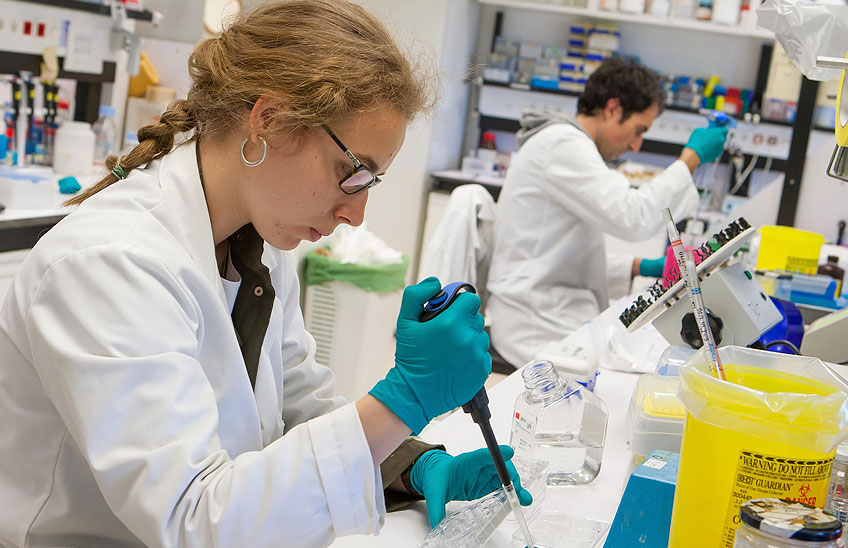
Photo by ManuelCastells/Medical students learn about palliative care at the University of Navarra
10 | 10 | 2026
Only 15 of 55 European countries (27%) guarantee mandatory university-level training t in palliative care for all their future physicians. Among them are Germany, Finland, France, Ireland, Hungary, and Latvia. This is revealed in a research led by the ATLANTES Global Palliative Care Observatory at the Institute for Culture and Societyreference letter (ICS) at the University of Navarra (Spain), in partnership with the European Palliative Care Research Center at Oslo University Hospital (Norway). The study has been published by *The Lancet Regional Health – Europe*, one of the world’s leading academic journals in the field of health research based on its impact factor.
The study, published on World Palliative Care Day, monitors the 55 countries in the World Health Organization’s (WHO) European Region, of which ATLANTES is a collaborating center. It highlights a core topic relationship: countries with a national regulatory framework —whether binding or not—have a significantly higher rate of palliative care teaching in their Schools of medicine. In the case of Spain, the regulation is not binding, and 43% of Schools offer the program.
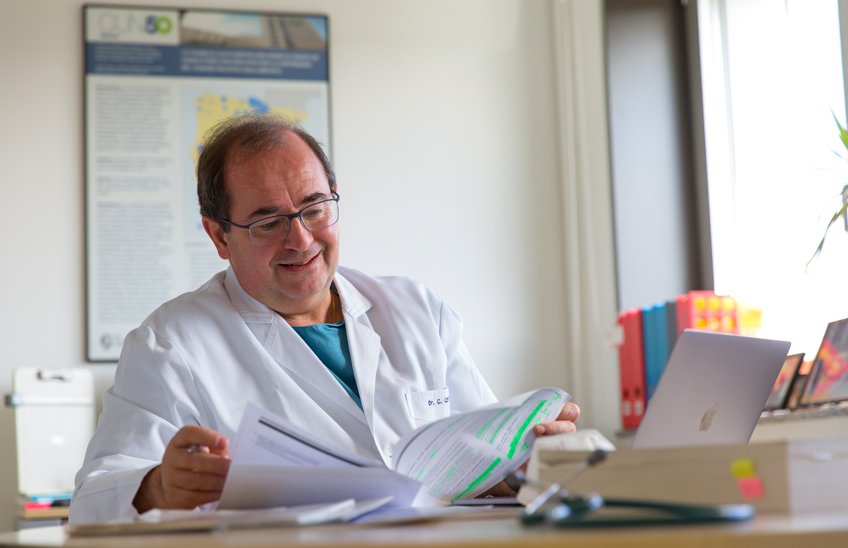
Dr. Carlos Centeno, the study’s principal researcher and director of ATLANTES and the Symptom Management and Palliative Care Service at the Clínica Universidad de Navarra, notes that in Spain, “although the status is far from satisfactory, significant progress is being made.” Among these improvements, he highlights the increase in medical professionals providing teaching in this field and the promotion of research: “Spain is one of the countries that has best documented the experience of teaching palliative care in the Degree of Medicine. At the University of Navarra, we have conducted qualitative and quantitative programs of study , as well as doctoral thesis , and the results are encouraging.”
Centeno, a professor at the School of Medicine, argues that “when a student understands that treating serious illness and alleviating suffering—even when a cure is not possible—is part of their medical identity, that attitude lasts a lifetime, whether they become a surgeon, a transplant specialist, or a microbiologist. They will always have a palliative care perspective.” For this reason, he believes that“teaching palliative care to all future doctors in a country over the course of ten years will completely transform the landscape of palliative medicine and patient care.”
Uneven Map
Titled “Association between national regulatory frameworks and compulsory undergraduate palliative care education in Europe: a cross-sectional study of 55 countries,” the “ research ” led by Dr. Centeno is part of the JANE-2 (Joint Action on Networks of Expertise on Cancer) project , funded by the EU4Health program and linked to the European Plan to Combat Cancer.
The map reveals profound inequality among countries, meaning that where a future doctor completes their programs of study continues to determine whether they will receive training in the field of palliative care and whether this will be through a mandatory subject or elective subject. Centeno notes that “although status is gradually improving compared to previous data , there is still a long way to go.” He notes that “in 17 European countries (31%), no School of Medicine mandates the teaching of basic concepts for caring for critically ill patients or those at the end of life as part of a subject required subject ”. In these cases, access to training ranges from non-existent to being offered through elective courses.
France and Finland: Two Approaches to Regulating
From a regulatory perspective, countries have opted for different frameworks to address the Education of palliative care in the university setting. In any case, the regulatory effect is positive and gradual: in the 15 countries with binding regulations, the “ training ” is offered— average —in all of their “ Schools ”; in the 9 countries where regulations are advisory or “recommendatory,” the “ subject ” is offered in 75% of their “ Schools.”
Notable examples include France, a country with binding regulations that require palliative care training ( teaching ) at all 36 medical schools ( Schools ). To achieve this, the country passed a standalone law in 2016 establishing the mandatory acquisition of this knowledge as part of initial medical training . Furthermore, the curriculum content is set by ministerial decrees. In Finland, where there is no binding law, the teaching is promoted through national curriculum recommendations and guidelines from the Ministry of Social Affairs and Health. As result, its five Schools of Medicine ensure that all their students have access to this training.
Regardless of the path each country chooses, Centeno points out that palliative care “ training ” is “ core topic ” to ensure access and care for patients who need it: “It is neither optional nor negotiable, but rather an essential requirement, aligned with the needs of society and the fundamental values of the medical profession.”
Professor Stein Kaasa, manager of the work palliative care package in JANE-2, calls for action: “It is a threat to patients and their families that only 27% of Europe’s medical Schools teach palliative medicine. Based on these findings data, the EU-funded JANE-2 program will take action, not only regarding the training of Degree but also regarding the postgraduate program in palliative medicine, as well as to formalize the specialization program of Palliative Medicine in Europe.”